01 Read
What happened
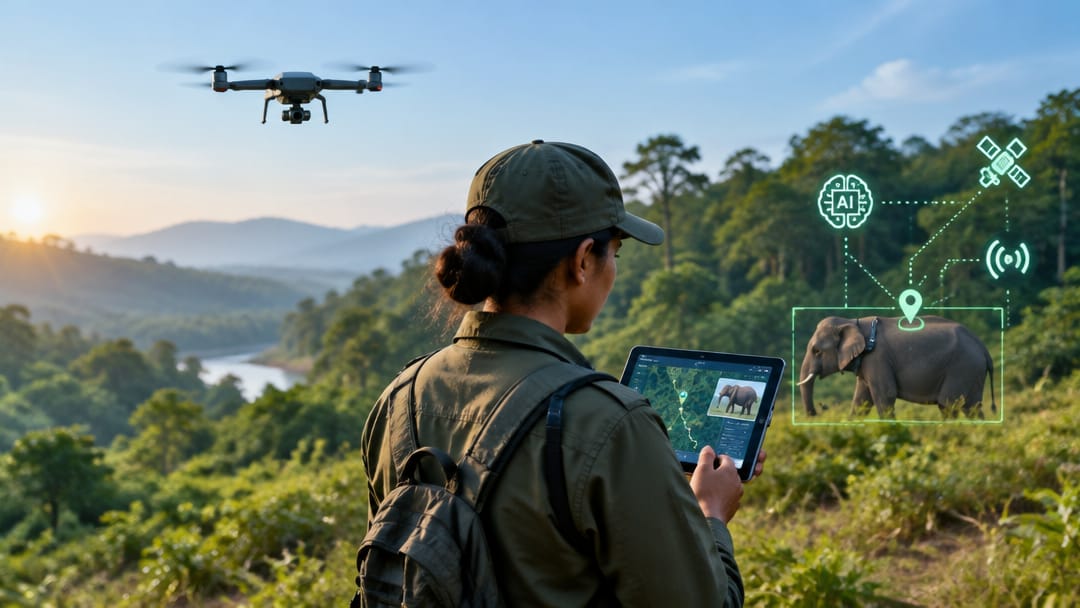
At the Eco Warrior Awards 2026 Conclave, experts outlined how artificial intelligence, drone surveillance, IoT sensors, and GPS tracking are being integrated into India's forest and wildlife protection systems. The technologies enable real-time poaching alerts, animal movement monitoring, and habitat mapping. The conclave highlighted that these tools complement — but do not replace — on-ground forest staff, and that data connectivity in remote forest areas remains a significant operational barrier to wider deployment.
02 Understand
Why it matters
India's wildlife conservation framework rests on two statutory pillars: the Wildlife Protection Act, 1972 and the Forest Conservation Act, 1980. Protected areas — National Parks, Wildlife Sanctuaries, Tiger Reserves, and Biosphere Reserves — are managed under these laws by state forest departments with central coordination through the National Tiger Conservation Authority (NTCA) and Wildlife Crime Control Bureau (WCCB).
Technology is now layered on top of this framework. Key tools include:
• Drones (UAVs): Used for aerial patrolling, anti-poaching surveillance, and post-fire damage assessment. NTCA has piloted drone deployment in several tiger reserves.
• AI-based camera traps: Machine learning algorithms identify individual animals by stripe or spot patterns (e.g., tigers, leopards), enabling population census without physical capture.
• GPS/satellite collaring: Tracks migration corridors and human-wildlife conflict hotspots. Critical for elephant corridors and Project Tiger reserves.
• IoT acoustic sensors: Detect chainsaw sounds or gunshots and trigger real-time alerts to forest rangers.
• Bioacoustic monitoring: AI analyses recorded soundscapes to assess biodiversity health.
India's M-STrIPES (Monitoring System for Tigers — Intensive Protection and Ecological Status) is the official digital platform for tiger reserve management, using GIS and mobile data collection. The integration of AI into such platforms represents the current frontier. The examiner will test both the technology names and the institutional frameworks that govern their deployment.
Remember + Why it matters
The key recall facts and exact examiner angle for UPSC CSE are in the Crux app.
01
Key figure and date from this topic
02
Specific number or threshold to remember
03
Policy or regulatory implication
Read + Understand free forever · 30-day free trial