01 Read
What happened
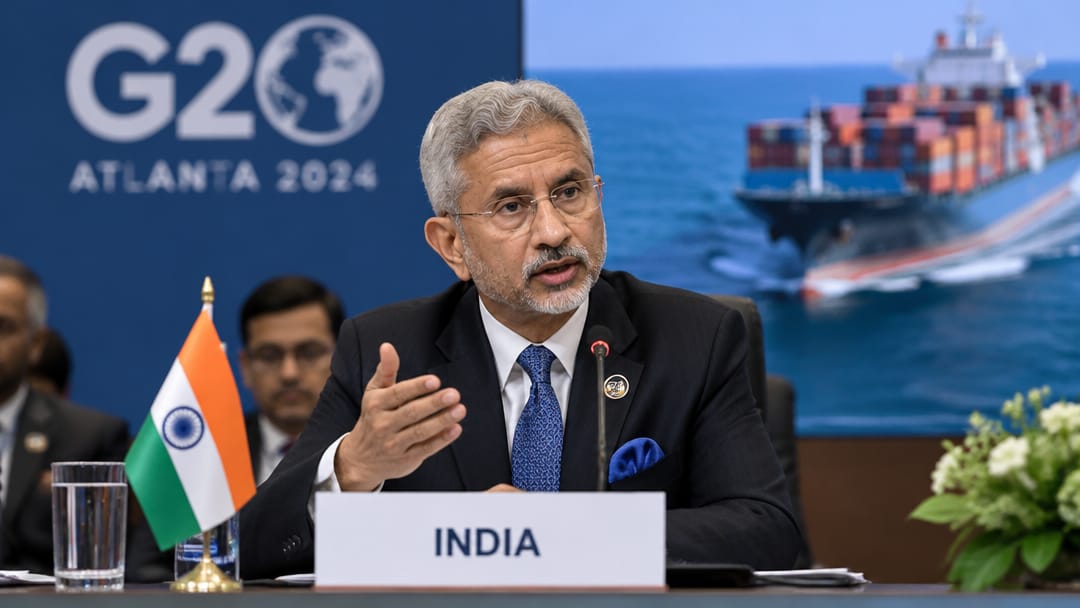
At the G20 meeting in Atlanta, External Affairs Minister S. Jaishankar called for stronger protection of civilian ships and seafarers facing rising conflict risks at sea. In the final session, he defended developing nations' right to industrialise and warned against predatory economic practices. India's position linked maritime security directly to global trade continuity, underscoring that disruptions to shipping lanes disproportionately harm emerging economies dependent on seaborne commerce.
02 Understand
Why it matters
India's statement at the G20 Atlanta meeting sits at the intersection of two distinct but related concerns: maritime security under international law and the economic sovereignty of developing nations.
On maritime security, the backdrop is the surge in attacks on commercial vessels in the Red Sea and Gulf of Aden since late 2023, primarily by Houthi forces targeting shipping linked to Israel. India, as one of the world's largest seafarer-supplying nations (over 240,000 Indian seafarers serve globally, roughly 12% of the world's total), has an acute interest in the safety of civilian vessels. The United Nations Convention on the Law of the Sea (UNCLOS, 1982) guarantees freedom of navigation and requires states to cooperate in suppressing piracy. India's stance aligns with these obligations while calling on the international community to extend them to conflict zones.
On industrialisation rights, Jaishankar's warning against 'predatory practices' references a longstanding Global South argument: that developed nations use trade rules, climate conditionalities, and technology restrictions to prevent developing countries from climbing the industrial value chain. This connects to India's consistent position in multilateral forums — from WTO negotiations to G20 — that equity in global economic governance is non-negotiable.
The G20 itself is the premier forum for international economic cooperation, comprising 19 countries plus the EU and the African Union (added under India's 2023 presidency). The Atlanta meeting, held under the US G20 presidency in 2025, signals continued engagement on trade and maritime issues.
Remember + Why it matters
The key recall facts and exact examiner angle for UPSC CSE are in the Crux app.
01
Key figure and date from this topic
02
Specific number or threshold to remember
03
Policy or regulatory implication
Read + Understand free forever · 30-day free trial