01 Read
What happened
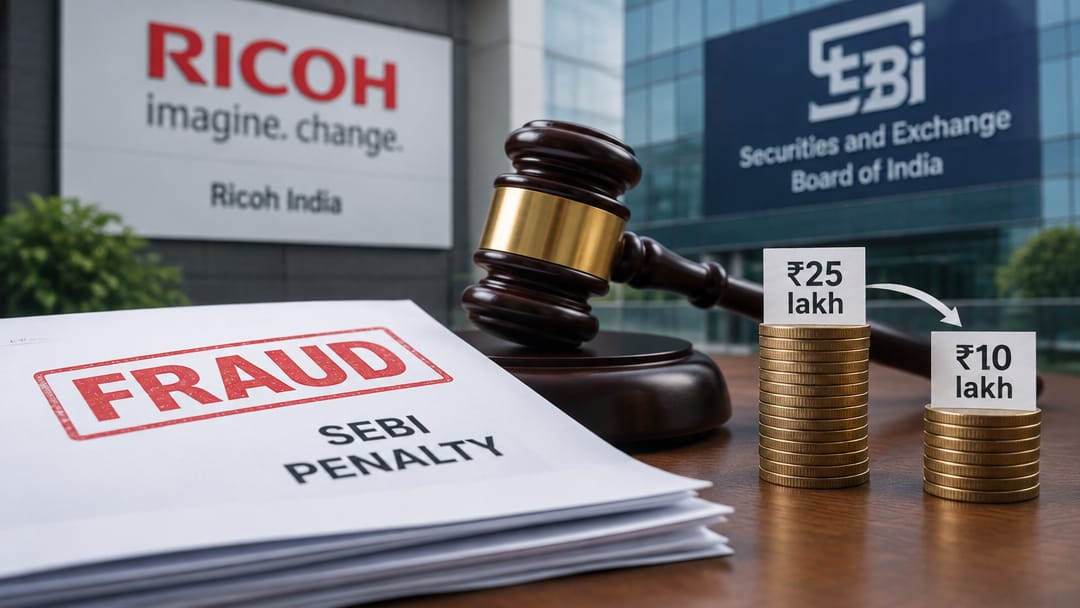
The Securities Appellate Tribunal upheld SEBI's fraud findings against Takano, former CEO of Ricoh India, for financial irregularities at the listed subsidiary of Japan's Ricoh Co. While confirming the fraud charge under SEBI's PFUTP Regulations, SAT reduced the monetary penalty imposed by SEBI from Rs 25 lakh to Rs 10 lakh. The case involved misrepresentation of financials, making it a significant instance of regulatory action against a foreign company's Indian listed arm.
02 Understand
Why it matters
This case sits at the intersection of two key SEBI enforcement pillars: the Prohibition of Fraudulent and Unfair Trade Practices (PFUTP) Regulations, 2003, and the appellate architecture under the Securities and Exchange Board of India Act, 1992.
The PFUTP Regulations prohibit fraud in securities markets — including manipulative devices, misleading statements, and financial misrepresentation by company insiders. When SEBI finds a violation, it can impose monetary penalties under Section 15HA of the SEBI Act (up to Rs 25 crore or three times the profit, whichever is higher), debar individuals from markets, and issue cease-and-desist orders.
The SAT is the statutory appellate body constituted under Section 15K of the SEBI Act, 1992. It hears appeals against SEBI orders. Critically, SAT can uphold the finding of violation while independently re-calibrating the quantum of penalty — which is exactly what happened here. The fraud finding stood; only the monetary sanction was reduced.
For exam purposes, the distinction between upholding a finding and reducing a penalty matters. It shows SAT's role is not merely to overturn or confirm SEBI orders wholesale — it exercises de novo discretion on the appropriateness of the remedy.
The Ricoh India case also raises governance questions about listed subsidiaries of foreign multinationals, where corporate oversight can be diffused across jurisdictions, and SEBI's jurisdiction over such entities' officers is confirmed by this judgment.
The PFUTP Regulations prohibit fraud in securities markets — including manipulative devices, misleading statements, and financial misrepresentation by company insiders. When SEBI finds a violation, it can impose monetary penalties under Section 15HA of the SEBI Act (up to Rs 25 crore or three times the profit, whichever is higher), debar individuals from markets, and issue cease-and-desist orders.
The SAT is the statutory appellate body constituted under Section 15K of the SEBI Act, 1992. It hears appeals against SEBI orders. Critically, SAT can uphold the finding of violation while independently re-calibrating the quantum of penalty — which is exactly what happened here. The fraud finding stood; only the monetary sanction was reduced.
For exam purposes, the distinction between upholding a finding and reducing a penalty matters. It shows SAT's role is not merely to overturn or confirm SEBI orders wholesale — it exercises de novo discretion on the appropriateness of the remedy.
The Ricoh India case also raises governance questions about listed subsidiaries of foreign multinationals, where corporate oversight can be diffused across jurisdictions, and SEBI's jurisdiction over such entities' officers is confirmed by this judgment.
Remember + Why it matters
The key recall facts and exact examiner angle for SEBI Grade A are in the Crux app.
01
Key figure and date from this topic
02
Specific number or threshold to remember
03
Policy or regulatory implication
Read + Understand free forever · 30-day free trial