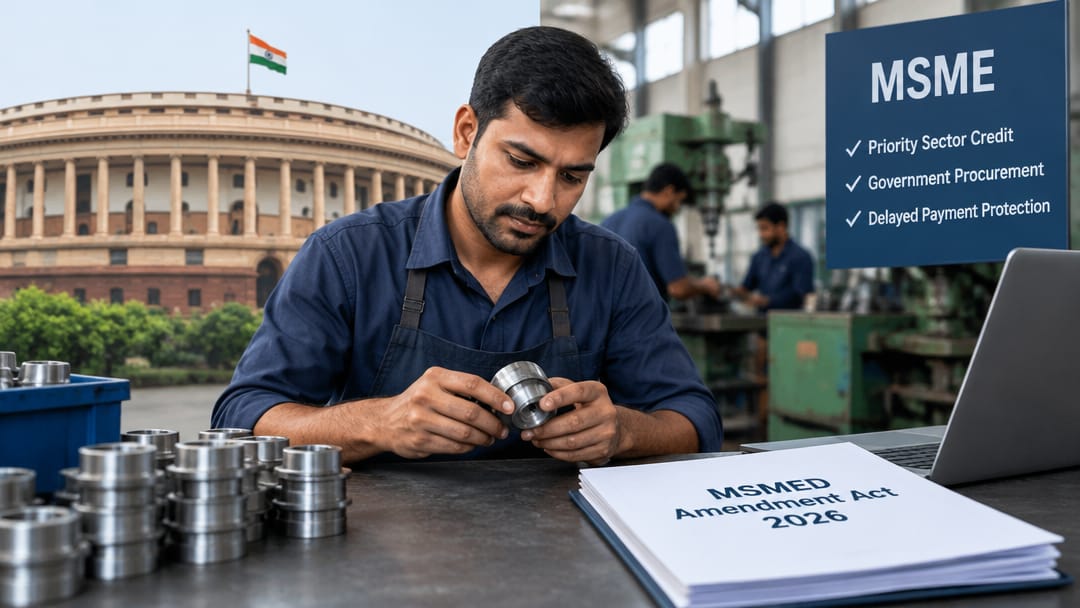
Parliament amends MSMED Act in 2026, revising MSME investment and turnover thresholds
What happened
Parliament passed the MSMED Amendment Bill in August 2026, updating the original 2006 Act. The amendment revises the investment and turnover-based classification thresholds for micro, small, and medium enterprises, aiming to bring more businesses under formal MSME status. This expands access to priority sector credit, government procurement preferences, and delayed-payment protections under MSMED Act provisions. The Ministry of MSME oversees implementation, with Udyam Registration as the portal for enterprise classification.
Why it matters
The MSMED Act, 2006 is the foundational statute governing India's MSME sector — covering definition, registration, credit facilitation, and dispute resolution for delayed payments. The original Act defined enterprises by investment in plant and machinery alone. The Atmanirbhar Bharat package (2020) introduced a dual criterion: investment plus annual turnover, and for the first time merged the manufacturing and services distinction.
The 2026 amendment goes further by revising the threshold ceilings upward — a response to inflation and enterprise growth that had pushed many businesses beyond MSME limits, stripping them of benefits. Higher thresholds mean more enterprises qualify as MSMEs, making them eligible for Priority Sector Lending (PSL) mandates (RBI requires banks to lend 7.5% of ANBC to micro enterprises), GeM procurement preferences, and SAMADHAAN portal protections against buyers who delay payments beyond 45 days.
For RBI and NABARD aspirants, the critical link is PSL: MSMEs classified under the MSMED Act directly feed into PSL sub-targets. NABARD's refinance operations also support MSME credit through regional rural banks and cooperative banks. For UPSC aspirants, the governance angle — Udyam Registration, formalisation of the informal sector, and the CHAMPIONS portal — ties into broader economic survey themes on formalisation and employment.
The MSME sector contributes approximately 30% of GDP, 45% of exports, and employs over 11 crore people, making its legislative framework a perennial exam topic.
🔒
Key figure and date from this topic
Specific number or threshold to remember
Policy or regulatory implication