India's Q1 2026-27 real GDP growth hits 7.8%, beating RBI's 7.0% estimate
What happened
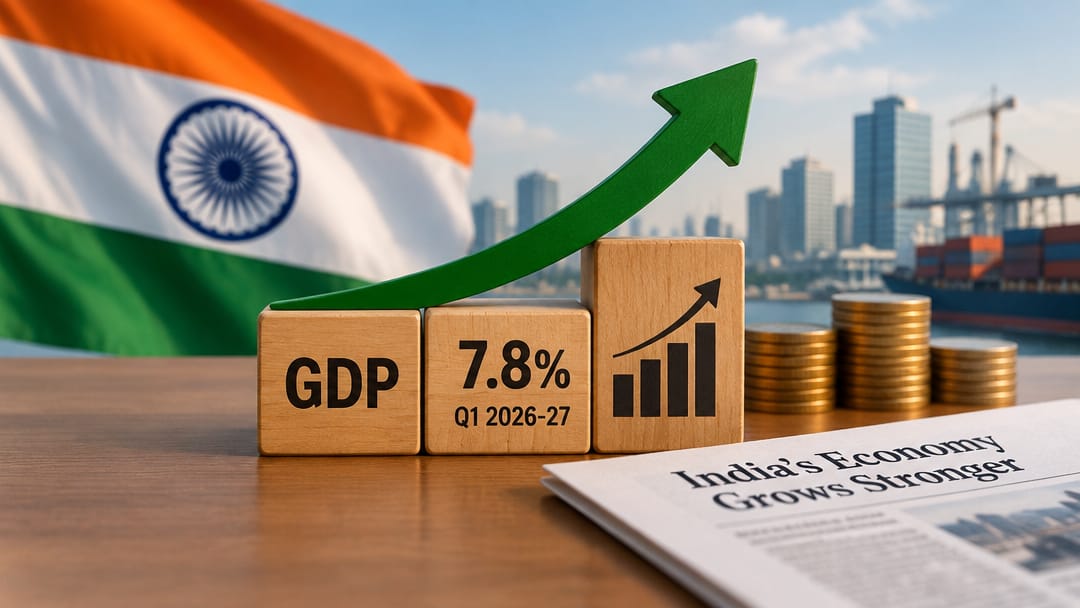
India's real GDP grew 7.8% in Q1 2026-27, the highest first-quarter growth in four years, exceeding RBI's estimate of 7.0%. Real GVA rose 8.2%. Gross Fixed Capital Formation surged 11.9%, exports grew 12.0%, and household consumption rose 7.1%. Manufacturing expanded 9.2% and the tertiary sector 10.0%. Revised estimates also lifted 2023-24 to 7.3%, 2024-25 to 7.2%, and 2025-26 to 7.8%. S&P affirmed India's BBB/A-2 rating with a Stable Outlook in August 2026.
Why it matters
This data release from MoSPI illustrates how GDP is measured from two sides — the expenditure side and the production side — and why both matter for exams.
From the expenditure side, GDP = Private Consumption (PFCE) + Investment (GFCF) + Government Expenditure + Net Exports. In Q1 2026-27, investment (GFCF) was the lead driver at 11.9%, signalling private and public capex revival. Household consumption at 7.1% shows demand resilience despite global uncertainty.
From the production side, GVA (Gross Value Added) captures sectoral contributions. GVA + Net Taxes on Products = GDP. Real GVA grew 8.2%, faster than nominal GVA growth implies real price-adjusted output gains. The tertiary sector (services, finance, IT) at 10.0% and manufacturing at 9.2% drove this.
The revision methodology is also exam-relevant: MoSPI updated base-year indices to 2022-23, incorporating the new Output Producer Price Index (PPI) and Banking Services Price Index (BkSPI), which revised past years upward.
Credit growth data matters for the RBI angle: industry credit grew 20.0% and services 22.9% in July 2026 — a sharp jump from 6.5% and 10.2% respectively a year earlier, signalling monetary transmission gaining traction.
S&P's BBB rating upgrade in 2025 (after an 18-year gap) and its August 2026 affirmation with a Stable Outlook anchors India's sovereign creditworthiness narrative — a fact examiners test directly.
Puttaswamy (2017): privacy became a fundamental right, but its limits remain contested
What happened
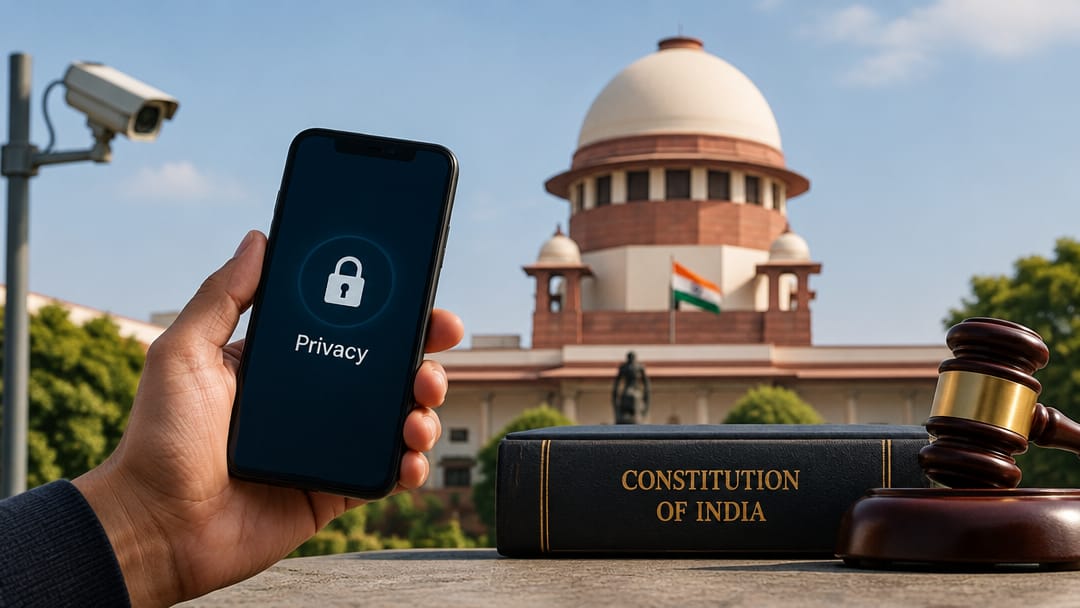
In 2017, a nine-judge Supreme Court bench in Justice K.S. Puttaswamy v. Union of India unanimously held that privacy is a fundamental right under Article 21 of the Constitution, overruling the 1954 M.P. Sharma and 1962 Kharak Singh judgments. The court held that privacy is intrinsic to life and liberty, not a gift of the state. It laid down a three-part test for valid state interference: legality, legitimate aim, and proportionality.
Why it matters
The Puttaswamy judgment is constitutionally significant on three levels.
**The right established:** Privacy under Article 21 is not a standalone right — the court located it at the intersection of Articles 14, 19, and 21, making it part of the golden triangle of fundamental rights. It covers informational privacy, bodily autonomy, decisional autonomy, and identity. This means surveillance, Aadhaar-mandated disclosures, data collection by the state, and sexual orientation laws all engage the right to privacy.
**The limitation recognised:** Privacy is not absolute. The court acknowledged that the state may restrict privacy for legitimate public purposes — national security, public order, health, or welfare. Crucially, privacy must yield to reasonable restrictions, just as Art. 19 rights do.
**The test applied:** The court adopted a three-pronged proportionality test drawn from comparative constitutional law: (1) the restriction must be backed by law (legality); (2) it must pursue a legitimate state aim; and (3) the means must be proportionate to the aim — the least restrictive measure must be used. This test has since been applied in Navtej Singh Johar (decriminalising homosexuality), the Aadhaar judgment (Puttaswamy II, 2018), and Justice Chandrachud's concurrence on adultery in Joseph Shine v. Union of India.
**The overruling:** M.P. Sharma v. Satish Chandra (1954, 8-judge bench) and Kharak Singh v. State of U.P. (1962, 6-judge bench) had held that privacy was not a fundamental right. The 9-judge bench in Puttaswamy expressly overruled both, settling a six-decade constitutional question.
NVS-03 restores NavIC constellation, with private firms shaping the build
What happened
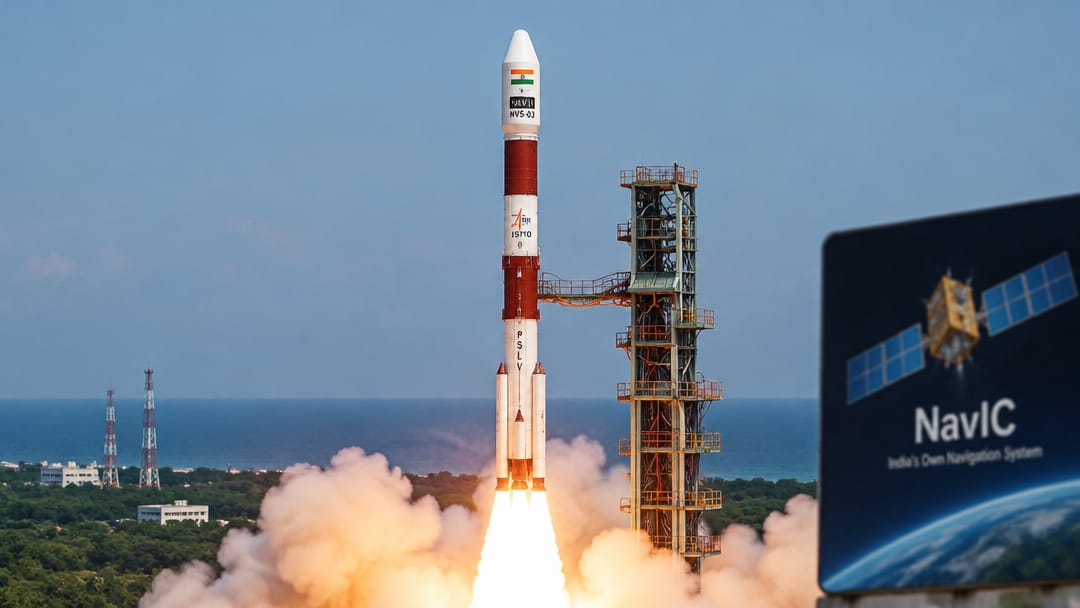
ISRO launched NVS-03, a 2,250 kg navigation satellite, from Satish Dhawan Space Centre to restore and expand the NavIC constellation. The launch marks a significant milestone as private Indian space firms played a role in manufacturing satellite components, reflecting the growing commercialisation of India's space sector following the 2020 space reforms. NavIC, India's regional navigation system, provides positioning services across the Indian subcontinent and surrounding oceanic regions, reducing dependence on GPS.
Why it matters
NavIC (Navigation with Indian Constellation), formerly known as IRNSS (Indian Regional Navigation Satellite System), is India's indigenously developed satellite navigation system operated by ISRO. It is designed to provide accurate position, velocity, and time services to users in India and up to 1,500 km beyond its borders — a region classified as its primary and extended service areas.
The constellation is designed around seven satellites: three in geostationary orbit (GEO) and four in geosynchronous inclined orbit (GSO). NVS-03 belongs to the second generation NVS (NavIC with enhanced features) series, which improves upon the original IRNSS satellites by incorporating the L1 frequency band in addition to L5 and S bands — making NavIC-compatible chips usable in civilian smartphones without special hardware.
The 2020 space sector reforms, which opened ISRO's supply chain to private players through IN-SPACe (Indian National Space Promotion and Authorisation Centre) and NewSpace India Limited (NSIL), now mean private firms contribute to satellite fabrication, sub-system manufacturing, and launch services. This launch signals a maturing public-private partnership model in India's strategic space infrastructure.
NavIC's strategic importance lies in its independence from foreign navigation systems (GPS, GLONASS, Galileo, BeiDou) during conflict or technical disruption — a lesson drawn from the 1999 Kargil War when the US denied India GPS access.
Parliament amends MSMED Act in 2026, revising MSME investment and turnover thresholds
What happened
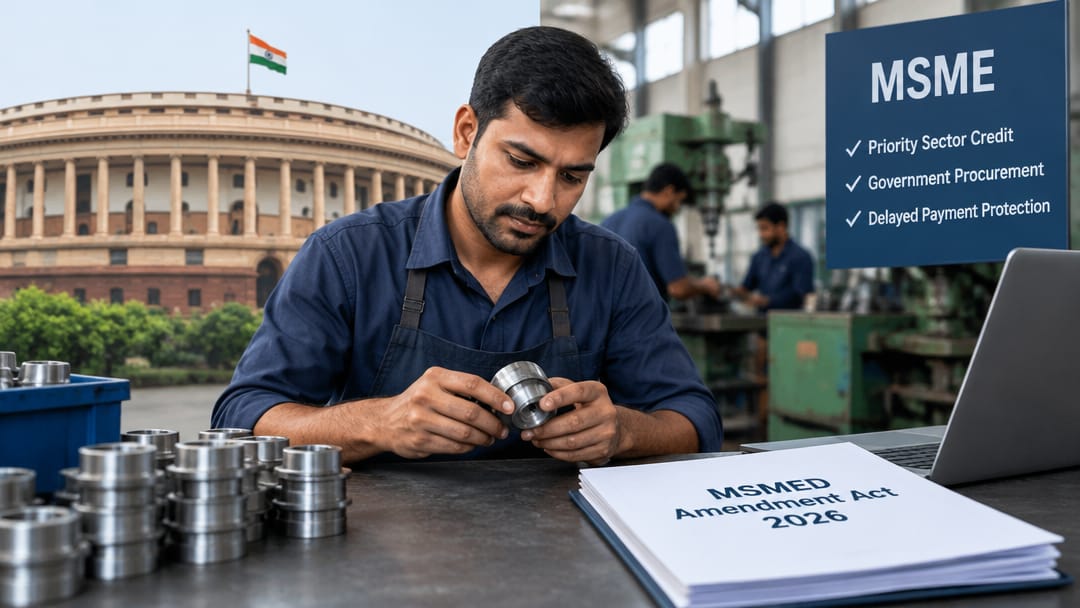
Parliament passed the MSMED Amendment Bill in August 2026, updating the original 2006 Act. The amendment revises the investment and turnover-based classification thresholds for micro, small, and medium enterprises, aiming to bring more businesses under formal MSME status. This expands access to priority sector credit, government procurement preferences, and delayed-payment protections under MSMED Act provisions. The Ministry of MSME oversees implementation, with Udyam Registration as the portal for enterprise classification.
Why it matters
The MSMED Act, 2006 is the foundational statute governing India's MSME sector — covering definition, registration, credit facilitation, and dispute resolution for delayed payments. The original Act defined enterprises by investment in plant and machinery alone. The Atmanirbhar Bharat package (2020) introduced a dual criterion: investment plus annual turnover, and for the first time merged the manufacturing and services distinction.
The 2026 amendment goes further by revising the threshold ceilings upward — a response to inflation and enterprise growth that had pushed many businesses beyond MSME limits, stripping them of benefits. Higher thresholds mean more enterprises qualify as MSMEs, making them eligible for Priority Sector Lending (PSL) mandates (RBI requires banks to lend 7.5% of ANBC to micro enterprises), GeM procurement preferences, and SAMADHAAN portal protections against buyers who delay payments beyond 45 days.
For RBI and NABARD aspirants, the critical link is PSL: MSMEs classified under the MSMED Act directly feed into PSL sub-targets. NABARD's refinance operations also support MSME credit through regional rural banks and cooperative banks. For UPSC aspirants, the governance angle — Udyam Registration, formalisation of the informal sector, and the CHAMPIONS portal — ties into broader economic survey themes on formalisation and employment.
The MSME sector contributes approximately 30% of GDP, 45% of exports, and employs over 11 crore people, making its legislative framework a perennial exam topic.
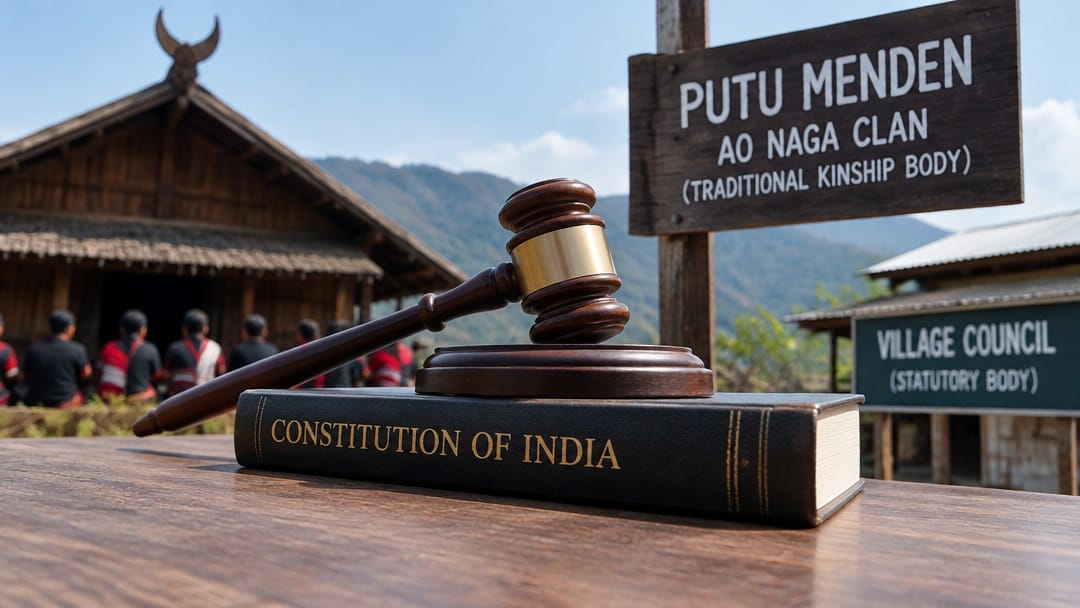
The Gauhati High Court Kohima Bench struck down excommunication orders issued by a village in Mokokchung district, Nagaland, ruling that the Putu Menden — a traditional Ao Naga clan or kinship body — is distinct from a statutory Village Council. The court held that excommunication violating fundamental rights under Articles 19 and 21 cannot be shielded by customary law, and that only bodies with statutory recognition can exercise coercive authority affecting civil rights.
Why it matters
This judgment sits at the intersection of three constitutional doctrines examined heavily in CLAT PG: the scope of fundamental rights against non-state actors, the limits of customary law as a shield against constitutional guarantees, and the distinction between statutory and non-statutory bodies under Article 13.
The core legal principle is that customary or traditional bodies — however socially authoritative — cannot exercise powers that infringe Articles 19 (freedom of movement, residence, profession) and 21 (right to life and personal liberty) unless they are recognised by statute and operate within constitutional limits. The Putu Menden is a traditional Ao Naga clan assembly rooted in custom, whereas the Village Council in Nagaland draws its authority from the Nagaland Village and Area Councils Act, 1978. The HC drew a sharp line: statutory recognition is not merely a procedural label — it determines whether a body's actions can be treated as 'law' or 'state action' and therefore whether they are subject to constitutional scrutiny.
Excommunication — total social ostracism — was held to violate the right to dignity embedded in Article 21 (Maneka Gandhi v. Union of India, 1978; Francis Coralie Mullin v. Union Territory of Delhi, 1981) and the right to reside in Article 19(1)(e). The court followed the principle that even where Article 13 does not directly reach private bodies, practices that are enforced through community coercion and deprive individuals of basic civil rights cannot stand.
For CLAT PG, the examiner will likely extract: (1) the test for distinguishing customary from statutory authority, (2) the applicability of fundamental rights to excommunication orders, and (3) whether Sixth Schedule protection covers such tribal bodies in Nagaland — it does not, because Nagaland operates under Article 371(A), not the Sixth Schedule.
India's AI pivot: from importing foundation models to Bharat-specific deployment
What happened
India's sovereign AI strategy is moving beyond access to global foundation models toward building homegrown AI applications suited to Indian languages, agriculture, healthcare, and governance needs. Policymakers and technologists argue that adopting foreign-built models without contextual adaptation fails India's diverse population. The push now focuses on fine-tuning models on Indian datasets, developing inference infrastructure, and deploying AI in public services — reflecting a shift from capability acquisition to real-world deployment for Bharat.
Why it matters
India's AI policy operates under the broader IndiaAI Mission, approved in March 2024 with a ₹10,372 crore outlay. The mission has several pillars: compute infrastructure (IndiaAI Compute Capacity), a curated dataset platform (IndiaAI Datasets Platform), a foundational model development push, and application deployment across sectors.
The distinction between 'foundational models' and 'applications' is exam-critical. Foundation models (like GPT or Llama) are large pre-trained AI systems that can be adapted for downstream tasks. Sovereign AI refers to a country's capacity to develop, own, and control AI systems — including data, compute, and algorithms — rather than depending on foreign technology stacks.
India's challenge is that global foundation models are trained predominantly on English-language data and Western contexts, making them poorly suited for India's 22 scheduled languages, agrarian economy, and informal healthcare systems. The strategic pivot is toward 'fine-tuning' these base models on Indian datasets — or building indigenous models — and then deploying them through government portals, Jan Dhan accounts, or ASHA worker interfaces.
The Ministry of Electronics and Information Technology (MeitY) oversees AI policy through the IndiaAI Mission. The Digital India Corporation operates as the implementing agency. India's AI governance framework is still evolving — unlike the EU AI Act, India has not yet passed binding AI legislation, relying instead on advisory frameworks from the IT Ministry.
For UPSC, this connects to GS-3 topics: technology policy, digital governance, and India's science and technology strategy.
India's first snow leopard census counts 718 across the Himalayas, 477 in Ladakh
What happened
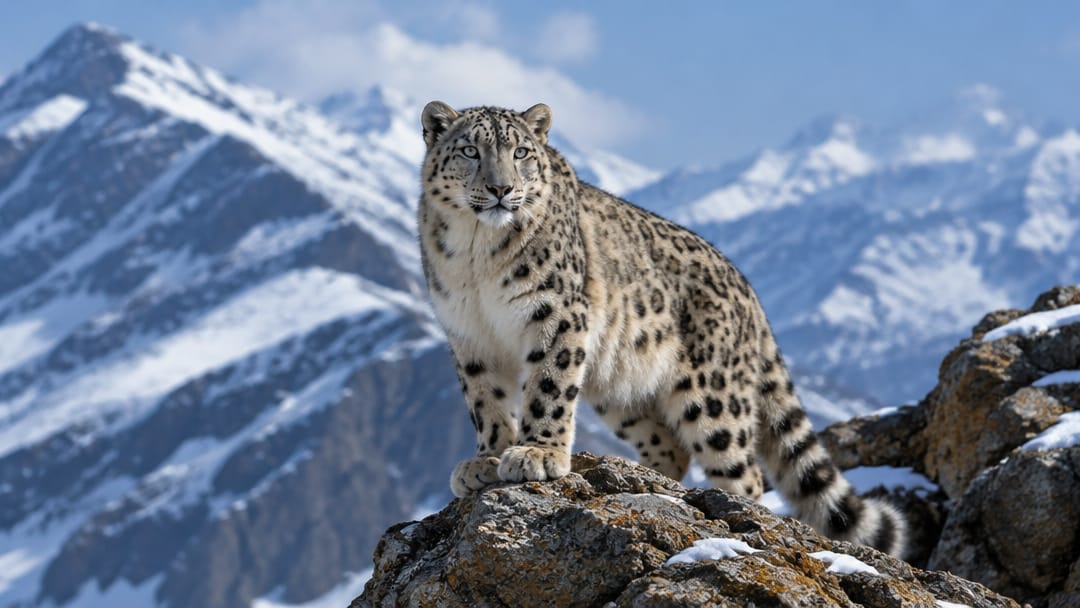
India's first-ever Snow Leopard Population Assessment recorded 718 snow leopards across the Indian Himalayas, with Ladakh alone hosting 477, making it the single largest habitat. The survey was conducted by the Wildlife Institute of India under the Snow Leopard Conservation Programme. Snow leopards are listed as Vulnerable on the IUCN Red List and under Schedule I of the Wildlife Protection Act, 1972, giving them the highest domestic legal protection.
Why it matters
The Snow Leopard Population Assessment in India (SPAI) is the country's first scientifically rigorous, range-wide estimate of snow leopard numbers. It used camera traps, sign surveys, and occupancy modelling across five Himalayan states and union territories — Ladakh, Himachal Pradesh, Uttarakhand, Sikkim, and Arunachal Pradesh. The Wildlife Institute of India (WII), under the Ministry of Environment, Forest and Climate Change (MoEFCC), led the effort.
Snow leopards (Panthera uncia) inhabit high-altitude zones between 3,000–5,400 metres. They are classified as Vulnerable on the IUCN Red List — a downlisting from Endangered in 2017 — and are protected under Schedule I of the Wildlife Protection Act, 1972, and Appendix I of CITES. India is a signatory to the Global Snow Leopard and Ecosystem Protection Programme (GSLEP), which aims to secure 23 snow leopard landscapes across 12 range countries by 2020 and beyond.
Ladakh's dominance (477 of 718, or roughly 66%) reflects its vast, relatively undisturbed high-altitude terrain. The survey matters beyond species conservation: snow leopards are apex predators that regulate prey populations like bharal (blue sheep) and ibex, and their presence indicates healthy high-altitude ecosystem function — directly linked to glacier and watershed health that sustains rivers critical to rural livelihoods.
CJI Surya Kant questions whether courts are truly responsive to those who seek justice
What happened
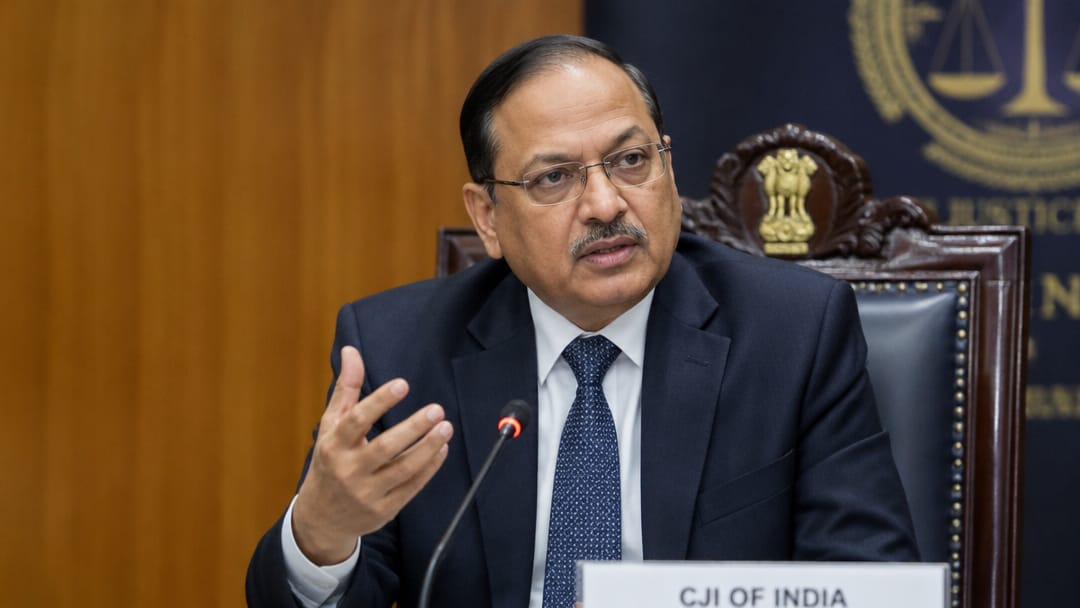
Chief Justice of India Surya Kant publicly called for judicial introspection on whether India's courts are adequately responsive to litigants. Speaking at a formal event, he acknowledged systemic gaps between judicial processes and the actual experience of those seeking justice. The remarks are significant as they come from the head of India's judiciary and signal an openness to institutional self-reform, touching directly on access to justice as a constitutional value under Article 21.
Why it matters
CJI Surya Kant's remarks sit at the intersection of judicial accountability and the constitutional right to access justice. Article 21 of the Constitution guarantees the right to life and personal liberty, which the Supreme Court has progressively interpreted to include the right to speedy trial and meaningful access to courts. In Hussainara Khatoon v. State of Bihar (1979), the Court held that a procedure that is not fair, just, and reasonable cannot be a valid procedure under Article 21, and that speedy trial is a fundamental right embedded within it.
The concept of 'judicial responsiveness' goes beyond mere speed — it encompasses whether courts communicate clearly, whether orders are intelligible to ordinary litigants, and whether procedural mechanisms serve or obstruct justice. This is closely linked to the principle of natural justice, which requires not just a hearing but a meaningful one.
For CLAT PG, the critical doctrine here is that access to justice is not merely a procedural right but a substantive component of Article 21. When the CJI speaks of responsiveness, he is implicitly invoking the standard from Anita Kushwaha v. Pushap Sudan (2016), where the Supreme Court held that access to justice is itself a fundamental right and that the State has a positive obligation to ensure it.
The remarks also implicate Article 14's guarantee of equality before law — delays and opacity in judicial process disproportionately affect the poor and marginalized, creating systemic inequality that the Constitution prohibits.
BRIC-ILS Bhubaneswar puts two scientists in Stanford's global top 2% list
What happened
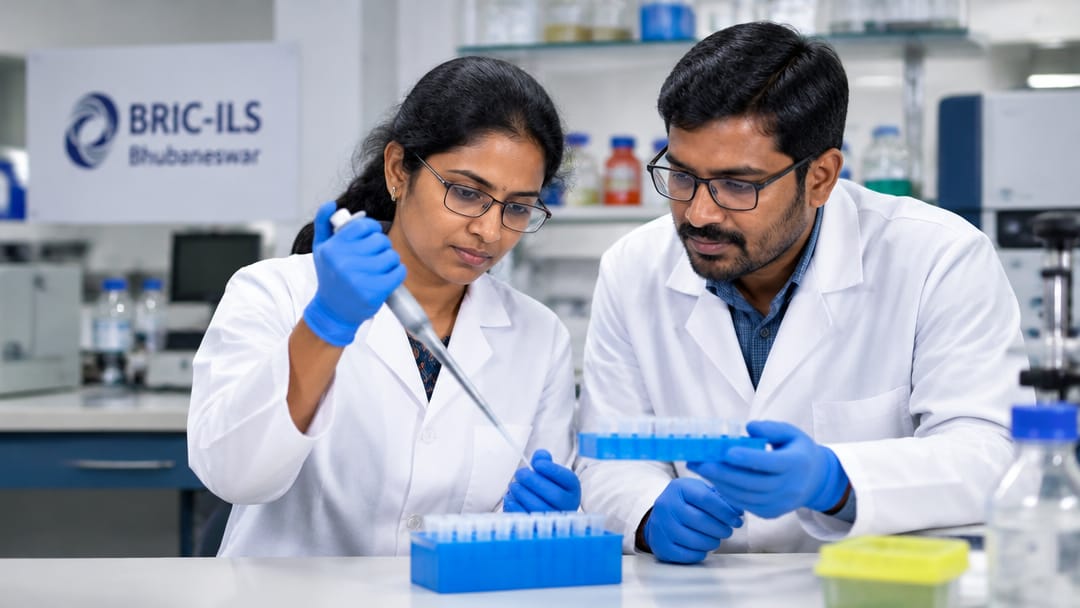
Two scientists from BRIC-Institute of Life Sciences (BRIC-ILS), Bhubaneswar, have been included in the 2026 edition of Stanford University's World's Top 2% Scientists list. This ranking, compiled by Stanford in collaboration with Elsevier, evaluates researchers globally based on citation metrics including h-index, co-authorship adjusted citations, and career-long and single-year impact. BRIC-ILS operates under the Biotechnology Research and Innovation Council, formerly DBT, under India's Ministry of Science and Technology.
Why it matters
The Stanford-Elsevier World's Top 2% Scientists list is one of the most widely cited global academic rankings. It covers over 200,000 researchers across 22 major scientific fields and 174 sub-fields, evaluated on standardised citation data from the Scopus database. Two separate lists are published: one for career-long impact and one for single-year citation performance.
BRIC-ILS (Biotechnology Research and Innovation Council – Institute of Life Sciences) is a premier autonomous institution located in Bhubaneswar, Odisha. It was formerly under the Department of Biotechnology (DBT) and now operates under BRIC — the Biotechnology Research and Innovation Council — which was constituted in 2023 by merging multiple DBT-funded autonomous institutions to streamline India's biotech research ecosystem. BRIC functions under the Ministry of Science and Technology.
For UPSC aspirants, the significance lies in the static hinterland: the institutional structure of India's biotechnology research, the role of DBT/BRIC, and how India measures and advances its science output globally. The examiner uses such rankings as entry points to test knowledge of the organisation's mandate, its parent ministry, and India's broader science and technology ecosystem. ILS Bhubaneswar specifically works on infectious diseases, cancer biology, and stem cell research — areas that frequently appear in S&T questions.
India set to join the Ibero-American Conference as an observer at its 30th Summit
What happened
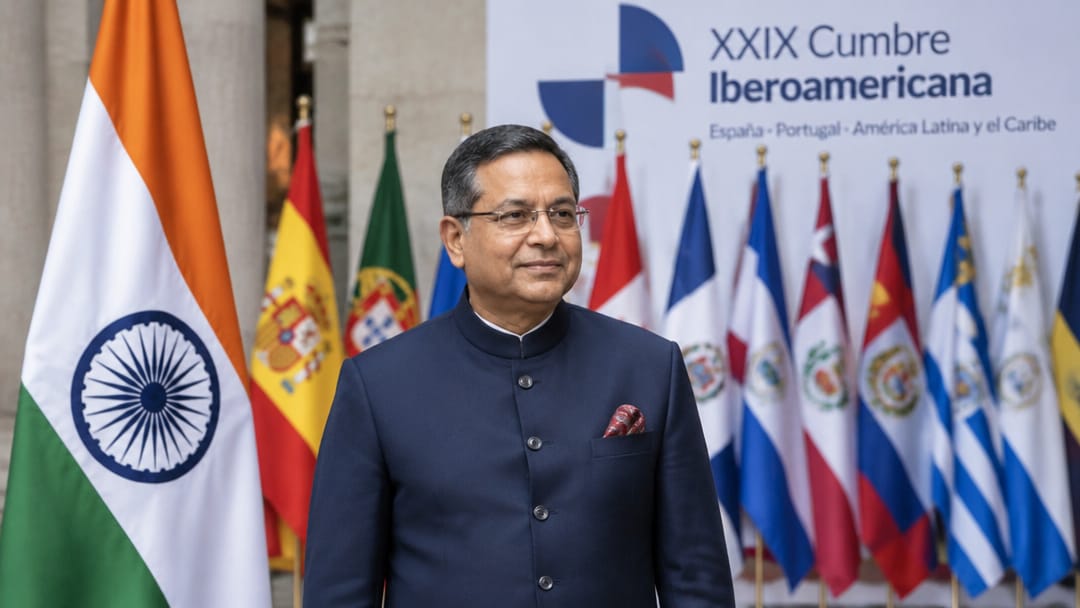
Minister of State for External Affairs Pabitra Margherita visited Spain from November 3 to 5 to attend the 30th Summit of the Ibero-American Conference, hosted in Spain. India is set to join the Conference as an observer state. The Ibero-American Conference brings together Spain, Portugal, and Latin American nations sharing Iberian heritage. India's observer status marks a formal entry into a bloc it had not previously been formally associated with.
Why it matters
The Ibero-American Conference (Conferencia Iberoamericana) is a multilateral forum comprising Spain, Portugal, Andorra, and 19 Latin American countries — all nations historically connected through Iberian (Spanish and Portuguese) colonial heritage. It was formally established in 1991 following the first Ibero-American Summit held in Guadalajara, Mexico. The Secretariat General (SEGIB) was created in 2003 to give the body a permanent institutional structure, headquartered in Madrid.
India gaining observer status is significant for several reasons. First, it expands India's diplomatic footprint into a bloc of 22 nations it was previously outside of. Second, Latin America is increasingly important for India's mineral security (lithium in Chile, Bolivia, Argentina — the 'Lithium Triangle'), agricultural trade, and pharmaceutical exports. Third, observer status in multilateral forums is a recurring UPSC theme — the examiner tests which country holds what status in which body, and when that status was acquired.
The Ibero-American Conference is distinct from the Iberian Peninsula (Spain + Portugal geographically) and from the broader Lusophone (Portuguese-speaking) Commonwealth of Nations (CPLP). UPSC frequently tests such distinctions. The conference operates on an annual summit cycle; the 30th Summit being hosted by Spain in 2024 marks a milestone year. India's participation under MoS (not the full External Affairs Minister) signals diplomatic engagement at a calibrated level — worth noting for statement-validity questions.
Jaishankar visits Azerbaijan on October 23 to review bilateral ties
What happened
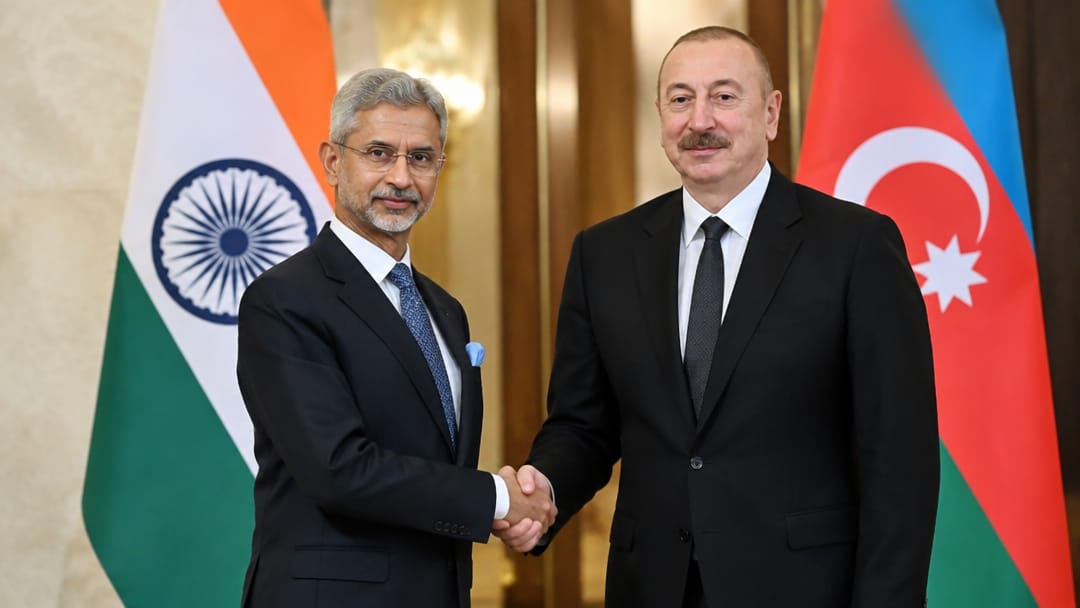
External Affairs Minister S. Jaishankar visited Azerbaijan on October 23, 2024, as confirmed by the Ministry of External Affairs. The visit aimed to review and strengthen bilateral relations between India and Azerbaijan. Azerbaijan, a South Caucasus nation bordering the Caspian Sea, holds strategic relevance for India through energy cooperation, connectivity corridors, and engagement with the broader Central Asian region. The visit reflects India's active diplomacy toward Eurasian nations under its Connect Central Asia policy.
Why it matters
India–Azerbaijan relations, though not always in the spotlight, sit at the intersection of several strategic frameworks that UPSC tests rigorously. Azerbaijan is a key node in the International North–South Transport Corridor (INSTC), a 7,200 km multi-modal route linking India to Russia and Europe via Iran and Azerbaijan. India has been a significant investor in Azerbaijan's energy sector, including stakes in the Azeri–Chirag–Gunashli oil field through ONGC Videsh. Diplomatically, Azerbaijan is important because of its position in the South Caucasus — a region contested between Russian, Turkish, and Iranian spheres of influence — and its recent military victory over Armenia in the Nagorno-Karabakh conflict, which reshuffled the region's geopolitics.
Azerbaijan also hosted COP29 in Baku in November 2024, making Jaishankar's October visit a potential precursor to climate-related diplomatic groundwork. India and Azerbaijan established diplomatic ties in 1992, shortly after Azerbaijan's independence from the Soviet Union. The bilateral framework includes a Joint Commission on Trade and Economic Cooperation. For UPSC aspirants, this visit is best understood not as an isolated event but as part of India's broader Eurasian engagement — connecting dots between INSTC, energy security, and the reconfiguring South Caucasus after the 2023 Nagorno-Karabakh ceasefire.