Article 19 grants six freedoms to citizens, but each carries its own constitutional limits
What happened
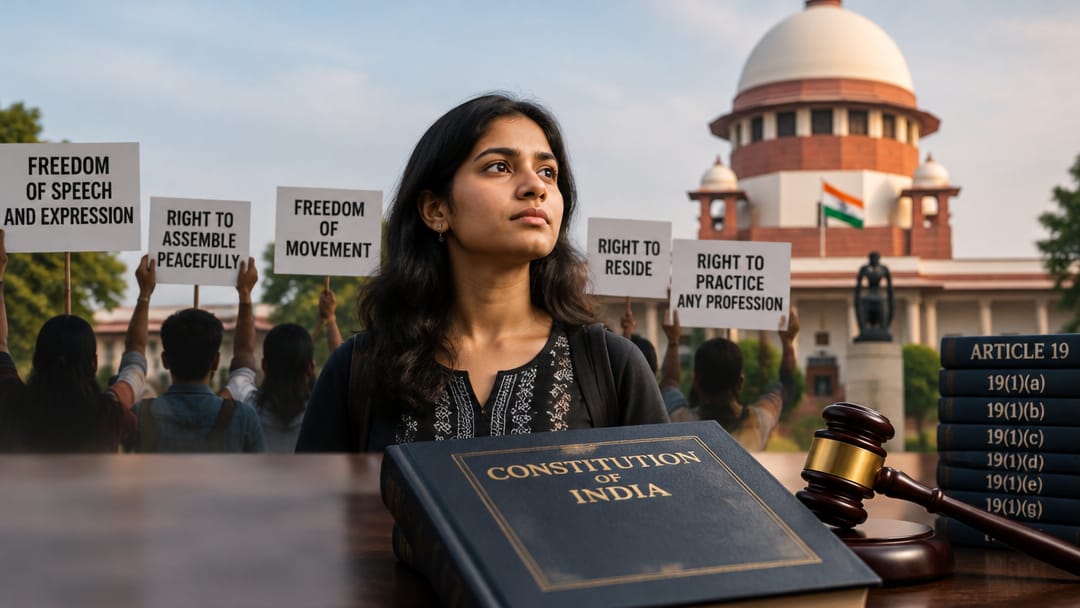
Article 19 of the Indian Constitution guarantees six fundamental freedoms to citizens — speech and expression, peaceful assembly, association, movement, residence, and profession. Each freedom is paired with specific grounds on which the state may impose reasonable restrictions. Courts have repeatedly tested these restrictions against constitutional standards. Landmark rulings from Romesh Thappar to Shreya Singhal have shaped exactly where citizen liberty ends and permissible state regulation begins under Articles 19(1)(a) through 19(1)(g).
Why it matters
Article 19 is the operational core of Part III's freedom guarantees. Originally, it protected seven freedoms — the right to acquire, hold, and dispose of property under 19(1)(f) was deleted by the 44th Constitutional Amendment in 1978, leaving six.
The structure of Article 19 is deliberate: every clause in 19(1) has a corresponding restriction clause (19(2) to 19(6)) that allows the state to impose 'reasonable restrictions' on specified grounds. The word 'reasonable' is the constitutional battleground — it requires courts to apply a proportionality test: is the restriction proportionate to the legitimate aim pursued?
For free speech under 19(1)(a), restrictions under 19(2) can only be imposed on grounds listed in the clause — sovereignty, integrity, security of the state, friendly relations with foreign states, public order, decency, morality, contempt of court, defamation, and incitement to offence. Courts have held this list is exhaustive, not illustrative.
The doctrinal evolution is critical. In Romesh Thappar v State of Madras (1950), the Supreme Court struck down press restrictions not traceable to 19(2) grounds. In Bennett Coleman v Union of India (1972), newsprint restrictions were tested against 19(1)(a). In Shreya Singhal v Union of India (2015), Section 66A of the IT Act was struck down because it penalised speech far beyond 19(2)'s permissible grounds. The court in Shreya Singhal also distinguished 'discussion,' 'advocacy,' and 'incitement' — only incitement to a cognisable offence can be restricted.
For CLAT PG, the examiner consistently uses passage-based questions to test whether candidates can identify: (1) which freedom is engaged, (2) which restriction clause applies, and (3) whether the restriction satisfies the reasonableness standard from the passage's ruling.
Puttaswamy (2017): privacy became a fundamental right, but its limits remain contested
What happened
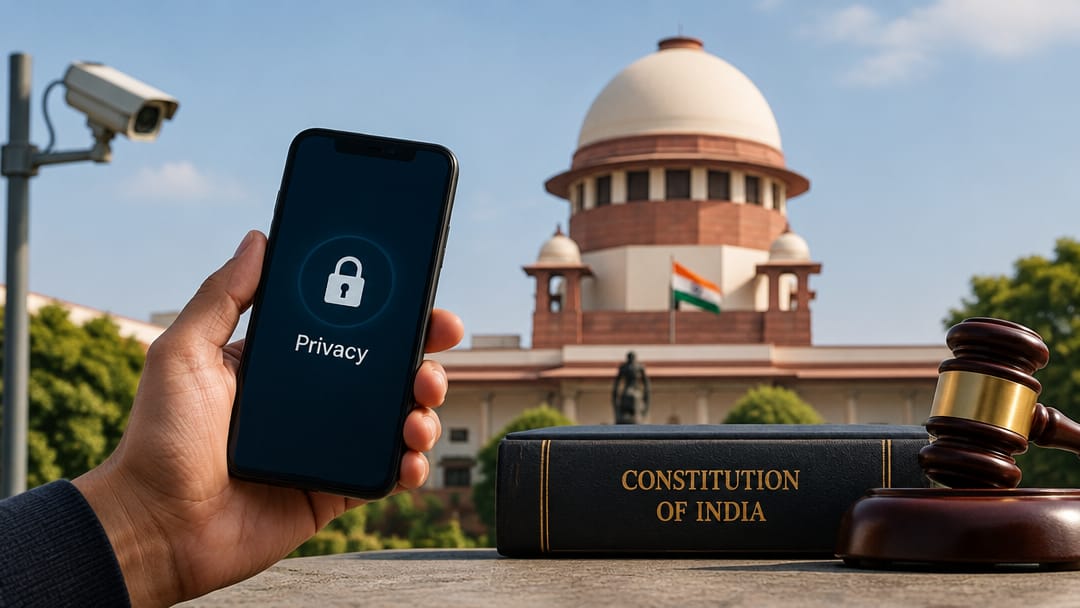
In 2017, a nine-judge Supreme Court bench in Justice K.S. Puttaswamy v. Union of India unanimously held that privacy is a fundamental right under Article 21 of the Constitution, overruling the 1954 M.P. Sharma and 1962 Kharak Singh judgments. The court held that privacy is intrinsic to life and liberty, not a gift of the state. It laid down a three-part test for valid state interference: legality, legitimate aim, and proportionality.
Why it matters
The Puttaswamy judgment is constitutionally significant on three levels.
**The right established:** Privacy under Article 21 is not a standalone right — the court located it at the intersection of Articles 14, 19, and 21, making it part of the golden triangle of fundamental rights. It covers informational privacy, bodily autonomy, decisional autonomy, and identity. This means surveillance, Aadhaar-mandated disclosures, data collection by the state, and sexual orientation laws all engage the right to privacy.
**The limitation recognised:** Privacy is not absolute. The court acknowledged that the state may restrict privacy for legitimate public purposes — national security, public order, health, or welfare. Crucially, privacy must yield to reasonable restrictions, just as Art. 19 rights do.
**The test applied:** The court adopted a three-pronged proportionality test drawn from comparative constitutional law: (1) the restriction must be backed by law (legality); (2) it must pursue a legitimate state aim; and (3) the means must be proportionate to the aim — the least restrictive measure must be used. This test has since been applied in Navtej Singh Johar (decriminalising homosexuality), the Aadhaar judgment (Puttaswamy II, 2018), and Justice Chandrachud's concurrence on adultery in Joseph Shine v. Union of India.
**The overruling:** M.P. Sharma v. Satish Chandra (1954, 8-judge bench) and Kharak Singh v. State of U.P. (1962, 6-judge bench) had held that privacy was not a fundamental right. The 9-judge bench in Puttaswamy expressly overruled both, settling a six-decade constitutional question.
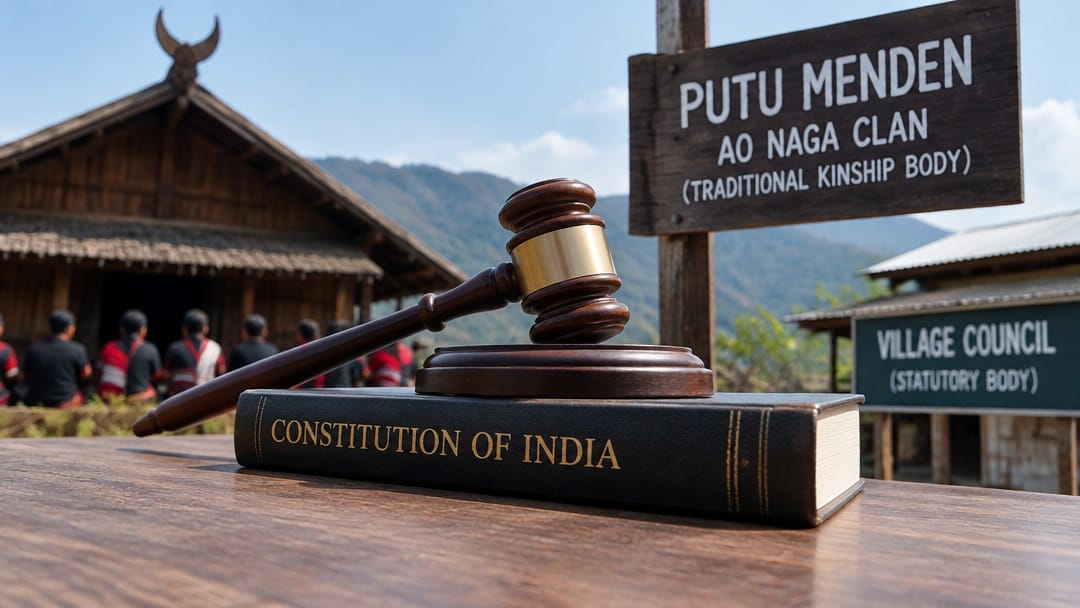
The Gauhati High Court Kohima Bench struck down excommunication orders issued by a village in Mokokchung district, Nagaland, ruling that the Putu Menden — a traditional Ao Naga clan or kinship body — is distinct from a statutory Village Council. The court held that excommunication violating fundamental rights under Articles 19 and 21 cannot be shielded by customary law, and that only bodies with statutory recognition can exercise coercive authority affecting civil rights.
Why it matters
This judgment sits at the intersection of three constitutional doctrines examined heavily in CLAT PG: the scope of fundamental rights against non-state actors, the limits of customary law as a shield against constitutional guarantees, and the distinction between statutory and non-statutory bodies under Article 13.
The core legal principle is that customary or traditional bodies — however socially authoritative — cannot exercise powers that infringe Articles 19 (freedom of movement, residence, profession) and 21 (right to life and personal liberty) unless they are recognised by statute and operate within constitutional limits. The Putu Menden is a traditional Ao Naga clan assembly rooted in custom, whereas the Village Council in Nagaland draws its authority from the Nagaland Village and Area Councils Act, 1978. The HC drew a sharp line: statutory recognition is not merely a procedural label — it determines whether a body's actions can be treated as 'law' or 'state action' and therefore whether they are subject to constitutional scrutiny.
Excommunication — total social ostracism — was held to violate the right to dignity embedded in Article 21 (Maneka Gandhi v. Union of India, 1978; Francis Coralie Mullin v. Union Territory of Delhi, 1981) and the right to reside in Article 19(1)(e). The court followed the principle that even where Article 13 does not directly reach private bodies, practices that are enforced through community coercion and deprive individuals of basic civil rights cannot stand.
For CLAT PG, the examiner will likely extract: (1) the test for distinguishing customary from statutory authority, (2) the applicability of fundamental rights to excommunication orders, and (3) whether Sixth Schedule protection covers such tribal bodies in Nagaland — it does not, because Nagaland operates under Article 371(A), not the Sixth Schedule.
CJI Surya Kant questions whether courts are truly responsive to those who seek justice
What happened
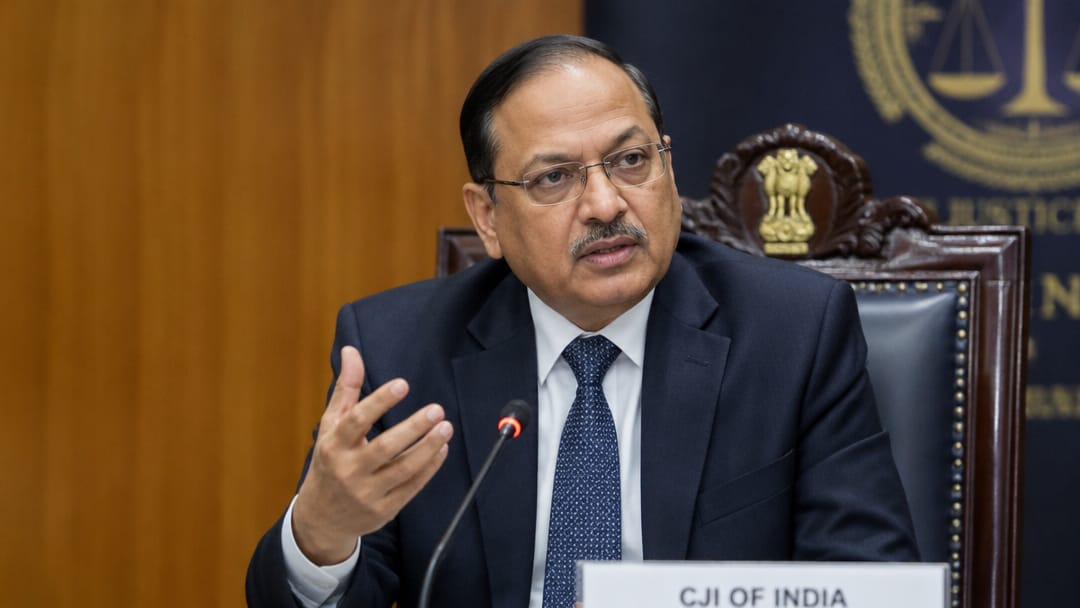
Chief Justice of India Surya Kant publicly called for judicial introspection on whether India's courts are adequately responsive to litigants. Speaking at a formal event, he acknowledged systemic gaps between judicial processes and the actual experience of those seeking justice. The remarks are significant as they come from the head of India's judiciary and signal an openness to institutional self-reform, touching directly on access to justice as a constitutional value under Article 21.
Why it matters
CJI Surya Kant's remarks sit at the intersection of judicial accountability and the constitutional right to access justice. Article 21 of the Constitution guarantees the right to life and personal liberty, which the Supreme Court has progressively interpreted to include the right to speedy trial and meaningful access to courts. In Hussainara Khatoon v. State of Bihar (1979), the Court held that a procedure that is not fair, just, and reasonable cannot be a valid procedure under Article 21, and that speedy trial is a fundamental right embedded within it.
The concept of 'judicial responsiveness' goes beyond mere speed — it encompasses whether courts communicate clearly, whether orders are intelligible to ordinary litigants, and whether procedural mechanisms serve or obstruct justice. This is closely linked to the principle of natural justice, which requires not just a hearing but a meaningful one.
For CLAT PG, the critical doctrine here is that access to justice is not merely a procedural right but a substantive component of Article 21. When the CJI speaks of responsiveness, he is implicitly invoking the standard from Anita Kushwaha v. Pushap Sudan (2016), where the Supreme Court held that access to justice is itself a fundamental right and that the State has a positive obligation to ensure it.
The remarks also implicate Article 14's guarantee of equality before law — delays and opacity in judicial process disproportionately affect the poor and marginalized, creating systemic inequality that the Constitution prohibits.
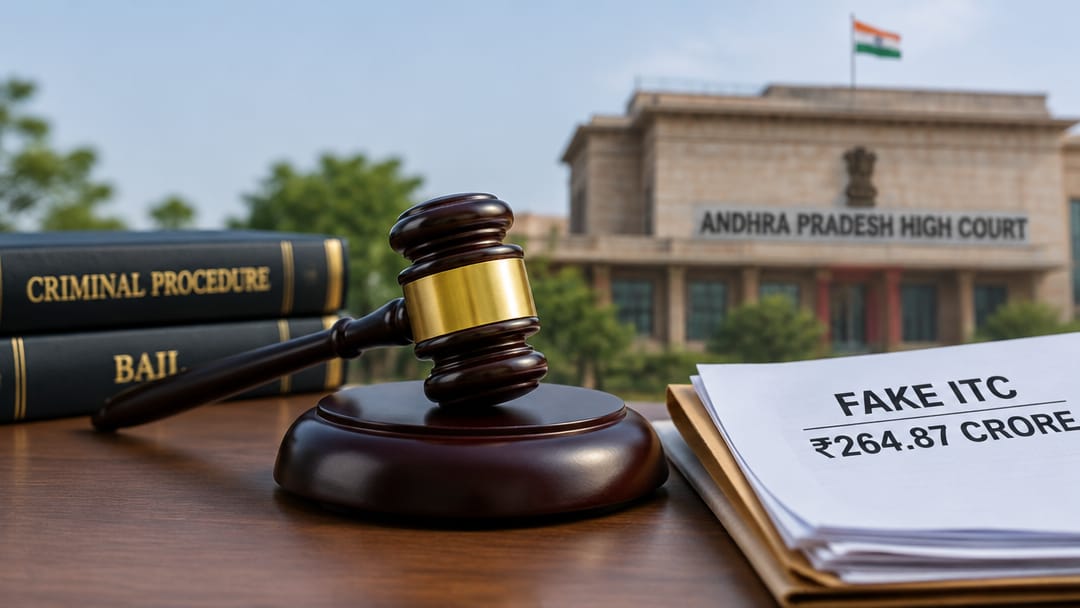
AP HC refuses to cancel bail in ₹264.87 crore fake ITC case, finds no liberty misuse
What happened
The Andhra Pradesh High Court rejected the Directorate General of GST Intelligence's plea to cancel bail granted to an accused in an alleged ₹264.87 crore fake Input Tax Credit fraud case. The court found no perversity in the original bail order and no evidence that the accused had misused liberty since release. DGGI failed to satisfy the threshold required for bail cancellation under established criminal procedure principles.
Why it matters
This ruling turns on a fundamental principle of bail law: bail cancellation requires a significantly higher threshold than bail refusal. A court granting bail exercises judicial discretion; to cancel that bail, the applicant must show either that the order was perverse — meaning no reasonable court could have granted it — or that the accused has subsequently misused liberty (tampering with witnesses, absconding, committing fresh offences). Mere severity of the alleged offence is insufficient after bail is granted.
In GST fraud cases, the DGGI frequently seeks bail cancellation by re-emphasising the magnitude of alleged fraud. However, Indian courts have consistently held that the quantum of alleged fraud alone cannot substitute for proof of actual post-bail misconduct. The AP HC's reasoning follows the Supreme Court's settled position in cases like Dolat Ram v. State of Haryana and Kashmira Singh v. State of Punjab, which distinguish between the standard for refusing bail and the stricter standard for cancelling it.
For CLAT PG aspirants, this case connects to CrPC Section 439(2) (and its BNSS equivalent), which empowers the High Court or Sessions Court to cancel bail. The examiner tests whether aspirants can distinguish the initial grant threshold from the cancellation threshold — a distinction that is frequently obscured by the drama of large fraud numbers in the facts.
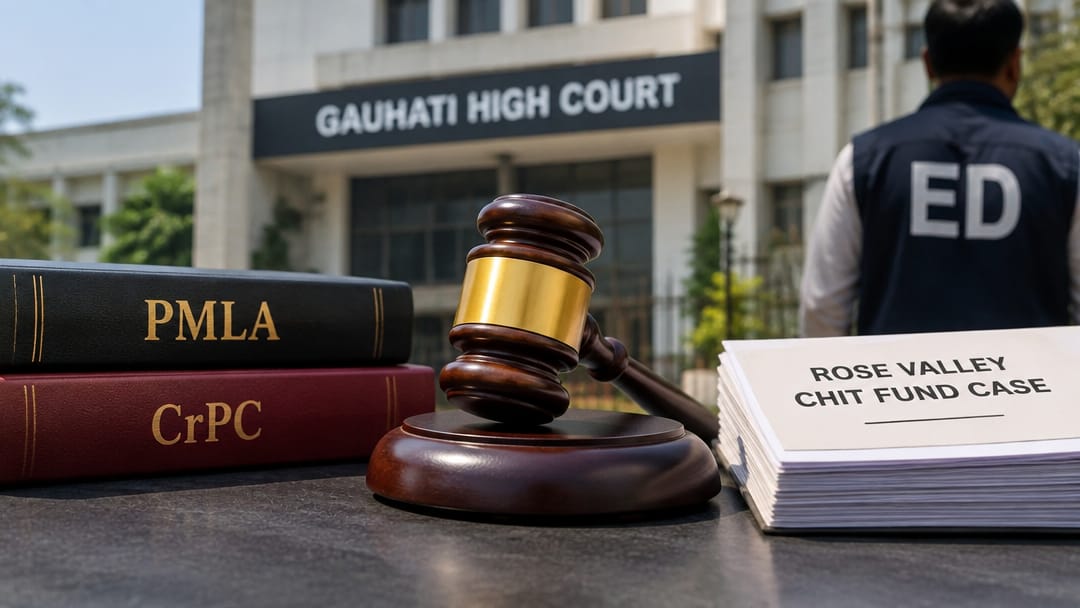
Gauhati HC bars ED from interrogating Rose Valley accused after trial begins
What happened
The Gauhati High Court rejected the Enforcement Directorate's plea to interrogate an accused in the Rose Valley chit-fund money-laundering case after the trial had already commenced. The court held that once a Special Court takes cognizance and trial begins under PMLA, the ED cannot initiate fresh investigation or summon the accused for interrogation. The ruling interprets PMLA provisions alongside CrPC to draw a clear line between pre-trial investigation and post-cognizance proceedings.
Why it matters
This ruling turns on a foundational distinction in criminal procedure: the moment a court takes cognizance of an offence, the accused's legal position changes from a suspect under investigation to a person facing trial. At that stage, the rights of the accused under the CrPC (and now BNSS) crystallise, and the investigating agency cannot bypass the court to conduct fresh interrogation.
Under the Prevention of Money Laundering Act (PMLA), the ED has sweeping powers to summon, arrest, and investigate — but these powers are pre-trial in nature. Section 50 PMLA allows the ED to summon persons during investigation. Once the Special Court takes cognizance under Section 44 PMLA, however, the trial machinery takes over. Any further examination of the accused must follow the CrPC framework — cross-examination as a witness, or examination under Section 313 CrPC — not fresh agency interrogation.
The Gauhati HC's ruling also protects Article 20(3) rights (protection against self-incrimination) and Article 21 (personal liberty). Allowing the ED to interrogate an accused mid-trial could effectively force self-incrimination outside the court's supervision.
For CLAT PG, the principle here is the classic pre-cognizance versus post-cognizance divide. Examiners frequently test whether a student understands that investigative powers of police/agencies are curtailed once the court takes cognizance — a principle traceable to Abhinandan Jha v. Dinesh Mishra and the general scheme of CrPC Chapters XII and XVI.