01 Read
What happened
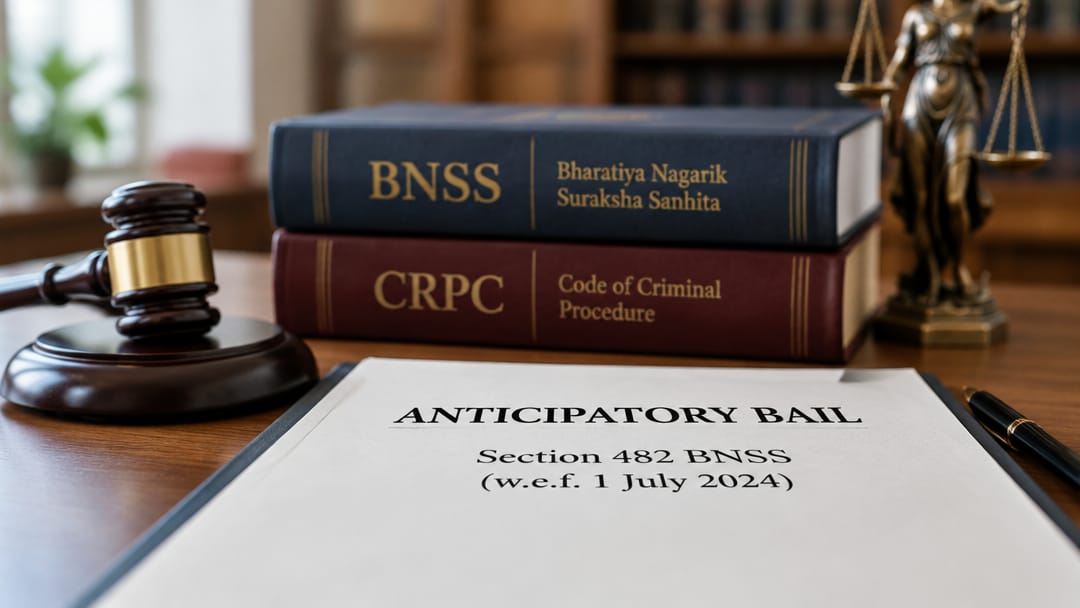
From 1 July 2024, anticipatory bail applications are filed under Section 482 of the Bharatiya Nagarik Suraksha Sanhita, replacing Section 438 CrPC. The petition is addressed to the Sessions Court or High Court, seeking a direction that, if arrested for a specified non-bailable offence, the applicant shall be released on bail. The core relief — pre-arrest bail — remains unchanged, but practitioners must now cite BNSS for all proceedings initiated after the BNSS commencement date.
02 Understand
Why it matters
Anticipatory bail is a pre-arrest remedy: it does not prevent arrest but directs that if an arrest occurs for a named offence, bail shall be granted immediately. The constitutional anchor is Article 21 — protection of personal liberty — and the statutory anchor shifted on 1 July 2024 from Section 438 CrPC to Section 482 BNSS.
Key structural features:
• Jurisdiction: Sessions Court (primary) or High Court (concurrent). The High Court may entertain directly, but conventions favour the Sessions Court first.
• Conditions: The court may impose conditions such as making oneself available for interrogation, not leaving the country without permission, surrendering the passport, and not tampering with evidence. For offences punishable with death, life imprisonment, or imprisonment of ten years or more (and for gang-rape under Section 70 BNSS), the court must hear the public prosecutor before granting bail.
• Duration: Unlike Section 438 CrPC (which was silent), BNSS discussions in Parliament flagged that interim anticipatory bail may be time-bound; the final order's duration is court-determined.
• Key distinction from regular bail: Anticipatory bail is granted before arrest; regular bail under Section 480/483 BNSS is post-arrest.
• Landmark cases: Gurbaksh Singh Sibbia v. State of Punjab (1980) — SC held anticipatory bail provisions should be interpreted liberally; Sushila Aggarwal v. State (NCT of Delhi) (2020) — SC (Constitution Bench) held anticipatory bail need not be time-limited and can continue until end of trial.
The examiner tests the section number change, the conditions attached, the category of offences requiring special treatment, and the Sibbia/Sushila Aggarwal precedents.
Remember + Why it matters
The key recall facts and exact examiner angle for CLAT PG are in the Crux app.
01
Key figure and date from this topic
02
Specific number or threshold to remember
03
Policy or regulatory implication
Read + Understand free forever · 30-day free trial