01 Read
What happened
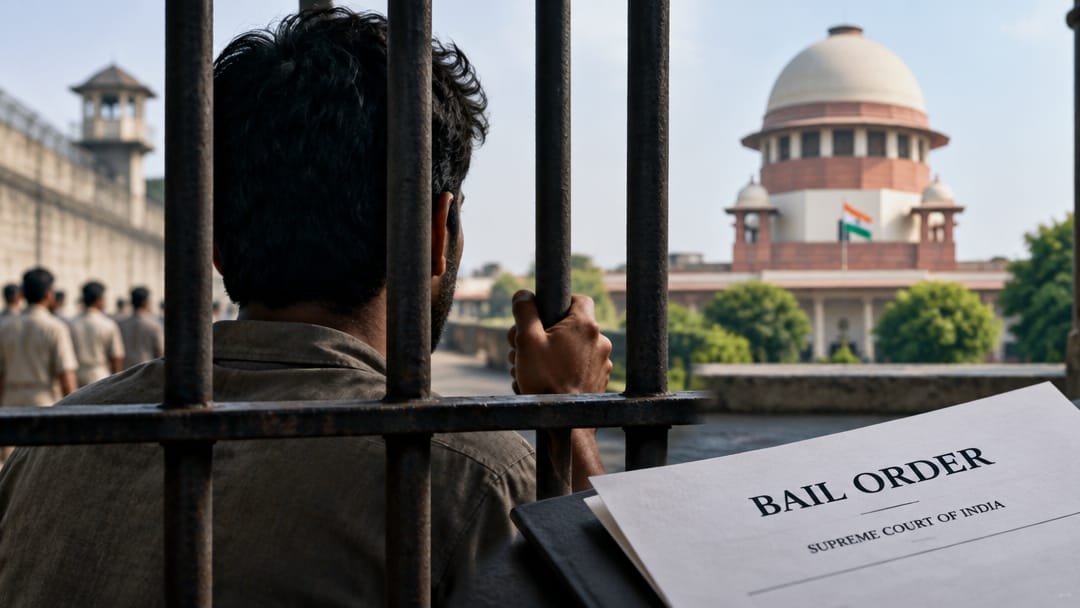
The Supreme Court has directed the Uttar Pradesh government to identify all undertrial prisoners across 55 districts who have been granted bail but remain in custody — typically because they cannot meet surety or other bail conditions. The order highlights a systemic failure where legal release has been ordered but physical release has not followed. The Court's intervention reflects its ongoing concern about personal liberty being denied despite judicial orders in UP's overcrowded prison system.
02 Understand
Why it matters
This Supreme Court direction addresses one of the most troubling gaps in India's criminal justice system: the difference between being legally entitled to bail and actually walking free. An undertrial is a person in custody awaiting trial — not yet convicted. Indian prisons hold a disproportionately large undertrial population; NCRB data consistently shows undertrials constitute over 75% of India's prison population.
Bail, under the Code of Criminal Procedure (CrPC) or the Bharatiya Nagarik Suraksha Sanhita (BNSS) 2023, is a right for bailable offences and a discretionary remedy for non-bailable ones. However, even after bail is granted, release is conditional on furnishing sureties and bail bonds. Poor undertrials — unable to arrange sureties — remain imprisoned despite court orders. This is precisely what the Supreme Court targeted in Hussainara Khatoon v. State of Bihar (1979), where it held that the right to speedy trial is a fundamental right under Article 21, and that prolonged undertrial detention without trial violates personal liberty.
Section 436A CrPC (Section 479 BNSS) provides that an undertrial who has served half the maximum sentence for the offence can be released on personal bond. The Supreme Court has repeatedly directed its enforcement. This UP direction continues that line — it is supervisory jurisdiction to ensure executive compliance with judicial orders, rooted in Article 32 and Article 142 of the Constitution.
For CLAT PG, the examiner will test whether you can distinguish bail granted (court order) from bail executed (actual release), and identify the constitutional and statutory anchors — Article 21, Section 436A CrPC / Section 479 BNSS.
Remember + Why it matters
The key recall facts and exact examiner angle for UPSC CSE are in the Crux app.
01
Key figure and date from this topic
02
Specific number or threshold to remember
03
Policy or regulatory implication
Read + Understand free forever · 30-day free trial