01 Read
What happened
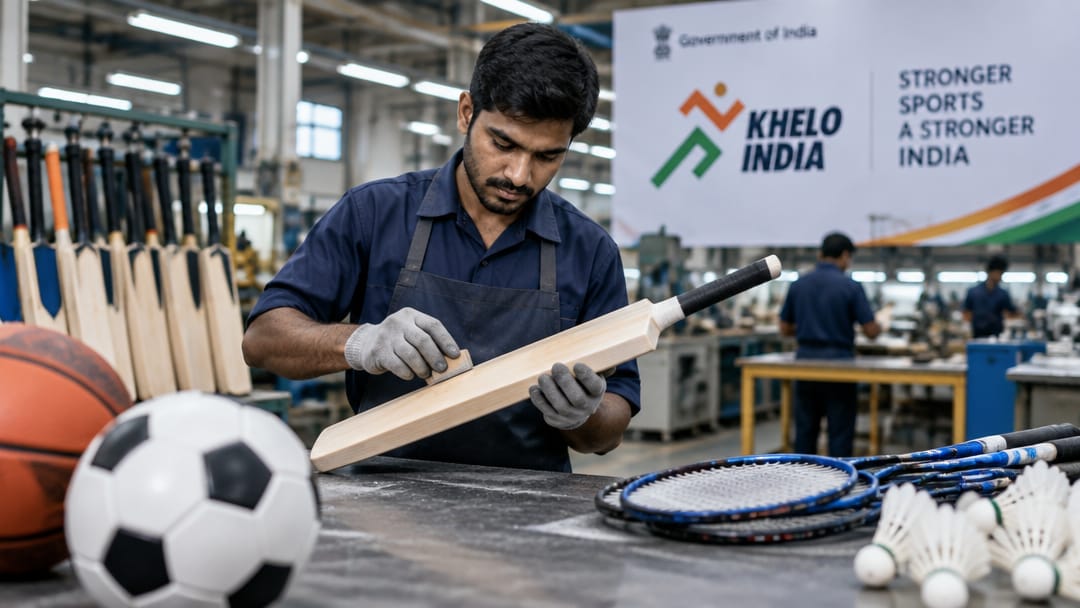
The Union Cabinet approved the Khelo India Sports Goods Manufacturing Scheme on 28 October 2026 with a total outlay of ₹1,856.67 crore covering FY 2026-27 to FY 2031-32. The scheme aims to boost domestic sports goods production, reduce import dependence, and position India as a global sports equipment manufacturing hub, with a focus on clusters like Jalandhar and Meerut that already dominate India's sports goods export market.
02 Understand
Why it matters
India's sports goods manufacturing sector is heavily concentrated in a few clusters — Jalandhar (Punjab) for leather sports goods and Meerut (Uttar Pradesh) for cricket equipment — yet these clusters remain technologically underdeveloped and heavily dependent on informal labour. India imports high-performance sports equipment while simultaneously exporting lower-value goods, creating a structural trade gap. The Khelo India Sports Goods Manufacturing Scheme addresses this by channelling production-linked and cluster-development support toward sports goods manufacturers.
The scheme sits at the intersection of three policy streams: (1) the broader Khelo India mission under the Ministry of Youth Affairs and Sports, which targets grassroots sports development; (2) the Make in India / Atmanirbhar Bharat manufacturing push; and (3) employment generation in MSME-dominated industrial clusters. For UPSC, the scheme tests understanding of how industrial policy connects to welfare outcomes — skilled employment, import substitution, and sports diplomacy. For RBI Grade B, the relevant angle is MSME credit, priority sector lending to sports goods SMEs, and the scheme's potential to improve export earnings and current account dynamics.
The five-year outlay (₹1,856.67 crore) signals medium-term fiscal commitment rather than a one-off allocation, making the scheme's financial architecture — how funds flow to clusters, whether through PLI-style incentives or direct grants — an examiner-favourite data point. The Cabinet approval date (28 October 2026) and the implementing ministry are standard fill-in-the-blank targets.
Remember + Why it matters
The key recall facts and exact examiner angle for RBI Grade B are in the Crux app.
01
Key figure and date from this topic
02
Specific number or threshold to remember
03
Policy or regulatory implication
Read + Understand free forever · 30-day free trial