01 Read
What happened
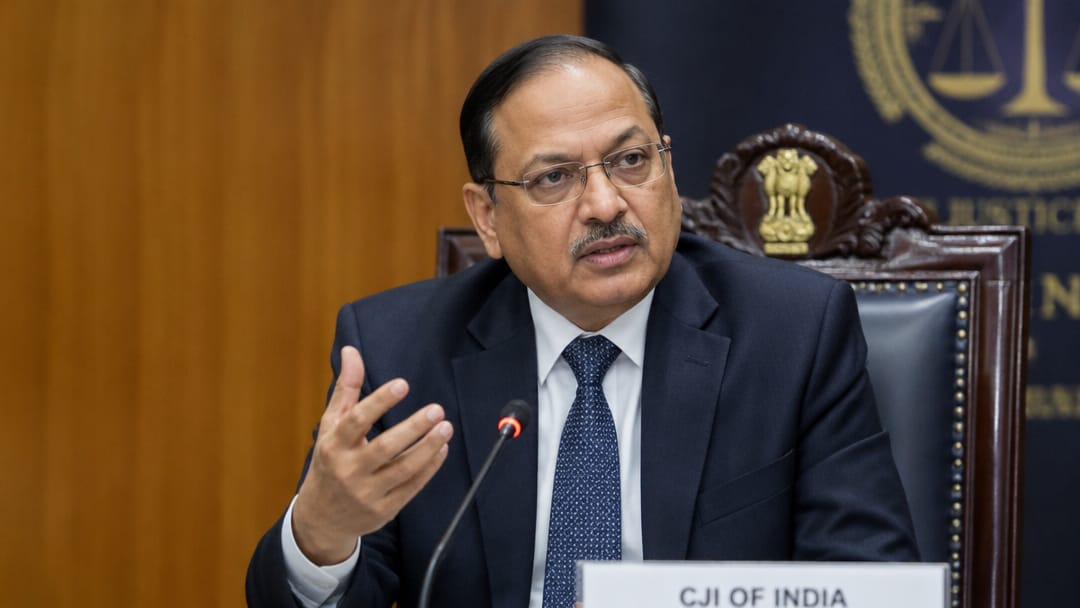
Chief Justice of India Surya Kant publicly called for judicial introspection on whether India's courts are adequately responsive to litigants. Speaking at a formal event, he acknowledged systemic gaps between judicial processes and the actual experience of those seeking justice. The remarks are significant as they come from the head of India's judiciary and signal an openness to institutional self-reform, touching directly on access to justice as a constitutional value under Article 21.
02 Understand
Why it matters
CJI Surya Kant's remarks sit at the intersection of judicial accountability and the constitutional right to access justice. Article 21 of the Constitution guarantees the right to life and personal liberty, which the Supreme Court has progressively interpreted to include the right to speedy trial and meaningful access to courts. In Hussainara Khatoon v. State of Bihar (1979), the Court held that a procedure that is not fair, just, and reasonable cannot be a valid procedure under Article 21, and that speedy trial is a fundamental right embedded within it.
The concept of 'judicial responsiveness' goes beyond mere speed — it encompasses whether courts communicate clearly, whether orders are intelligible to ordinary litigants, and whether procedural mechanisms serve or obstruct justice. This is closely linked to the principle of natural justice, which requires not just a hearing but a meaningful one.
For CLAT PG, the critical doctrine here is that access to justice is not merely a procedural right but a substantive component of Article 21. When the CJI speaks of responsiveness, he is implicitly invoking the standard from Anita Kushwaha v. Pushap Sudan (2016), where the Supreme Court held that access to justice is itself a fundamental right and that the State has a positive obligation to ensure it.
The remarks also implicate Article 14's guarantee of equality before law — delays and opacity in judicial process disproportionately affect the poor and marginalized, creating systemic inequality that the Constitution prohibits.
Remember + Why it matters
The key recall facts and exact examiner angle for UPSC CSE are in the Crux app.
01
Key figure and date from this topic
02
Specific number or threshold to remember
03
Policy or regulatory implication
Read + Understand free forever · 30-day free trial