01 Read
What happened
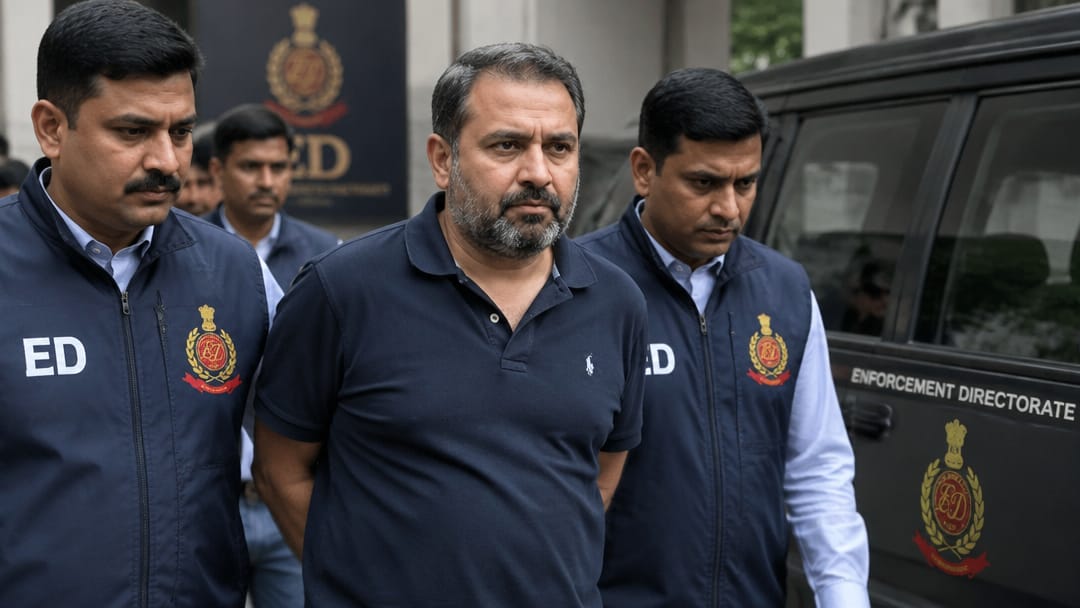
The Enforcement Directorate arrested Baneet Singh Talwar in a money laundering case linked to an alleged cross-border narcotics smuggling and hawala network. The ED alleges proceeds of crime worth ₹89 crore were routed through shell businesses operated by Talwar and his brother. The case draws on predicate offences under the NDPS Act, with the ED tracing layered transactions across suspicious commercial entities to establish the money trail under the Prevention of Money Laundering Act.
02 Understand
Why it matters
This case sits at the intersection of three statutory frameworks that CLAT PG tests rigorously: the Prevention of Money Laundering Act 2002 (PMLA), the Narcotic Drugs and Psychotropic Substances Act 1985 (NDPS Act), and extradition law when accused persons are abroad.
Under PMLA, the ED investigates 'proceeds of crime' — property derived or obtained, directly or indirectly, as a result of criminal activity relating to a scheduled offence. Narcotics trafficking under the NDPS Act is a scheduled offence, which is what gives the ED jurisdiction here. The critical statutory concept is 'money laundering' under Section 3 PMLA: whosoever directly or indirectly attempts to indulge in, or knowingly assists, or is a party to any process or activity connected with the proceeds of crime constitutes the offence.
Hawala transactions — informal cross-border value transfers that bypass the banking system — are a classic layering mechanism. The ED must trace the money through placement, layering, and integration stages to establish that the ₹89 crore constitutes proceeds of crime.
For CLAT PG, the examiner will likely test: (1) which authority investigates money laundering versus predicate offences; (2) the burden-of-proof reversal under Section 24 PMLA, where the accused must prove the property is untainted; and (3) the distinction between SFIO's powers under Companies Act Section 212 and ED's powers under PMLA — both investigate corporate fraud but with different triggers, timelines, and director liability standards.
Remember + Why it matters
The key recall facts and exact examiner angle for CLAT PG are in the Crux app.
01
Key figure and date from this topic
02
Specific number or threshold to remember
03
Policy or regulatory implication
Read + Understand free forever · 30-day free trial