01 Read
What happened
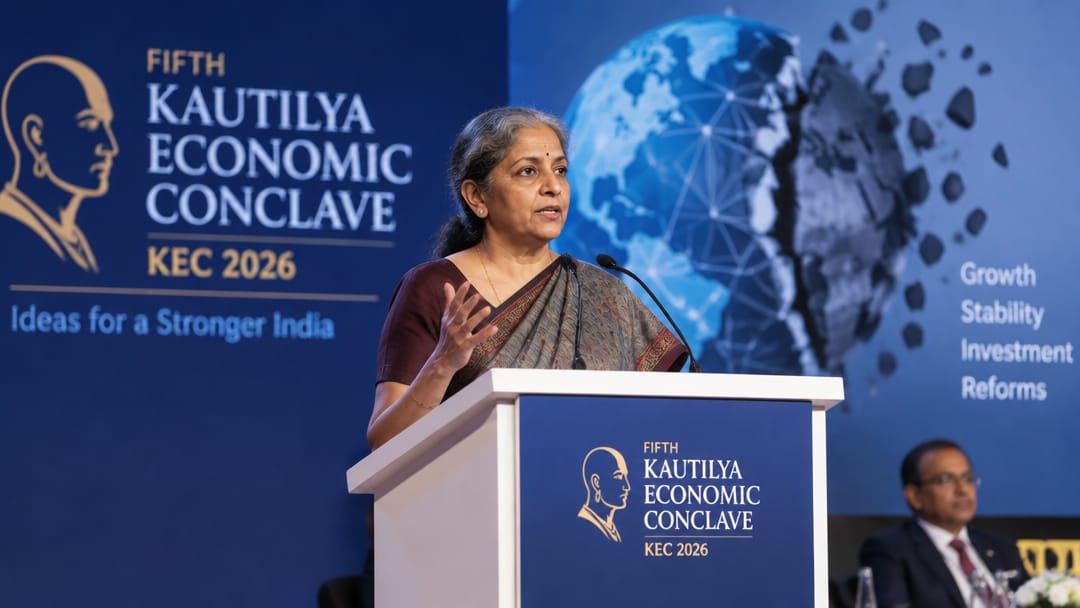
The Fifth Kautilya Economic Conclave (KEC 2026) convened to examine how India can sustain growth, maintain macroeconomic stability, and expand investment amid global fragmentation and technological disruption. Organised by the Institute of Economic Growth, the annual conclave brings together policymakers, economists, and global leaders to deliberate on India's economic strategy. The 2026 edition focused on navigating a fractured world order while keeping India's development trajectory on course through structural reforms and resilient institutions.
02 Understand
Why it matters
The Kautilya Economic Conclave is an annual high-level policy forum organised by the Institute of Economic Growth (IEG), New Delhi — a premier autonomous research institution established in 1958. Named after Kautilya (Chanakya), the ancient Indian economist and statesman whose Arthashastra laid foundational principles of statecraft and economic governance, the conclave serves as India's equivalent of Davos-style economic dialogue with a distinctly domestic and emerging-market focus.
For competitive exam aspirants, the KEC is significant across multiple dimensions. First, it reflects India's foreign economic policy posture — particularly how India positions itself amid de-globalisation, supply chain realignment, and the China+1 strategy. Second, it surfaces key macroeconomic themes that RBI and NABARD examiners frequently test: inflation management, fiscal consolidation, capital account convertibility, and agricultural investment flows.
The 2026 theme — sustaining growth amid global fragmentation — directly connects to static concepts like the World Trade Organisation's crisis of relevance, the rise of plurilateral trade agreements, and India's membership in forums like G20, BRICS, and SCO. Examiners often use such conclaves as a hook to test knowledge of India's bilateral trade commitments, the role of multilateral development banks, or the mandate of bodies like the IMF and World Bank in stabilising fragmented global economies.
The IEG itself, as the organising body, is an autonomous institution under the Ministry of Education, funded partly by the ICSSR — a distinction that sometimes appears in institutional-identification questions.
Remember + Why it matters
The key recall facts and exact examiner angle for SEBI Grade A are in the Crux app.
01
Key figure and date from this topic
02
Specific number or threshold to remember
03
Policy or regulatory implication
Read + Understand free forever · 30-day free trial