01 Read
What happened
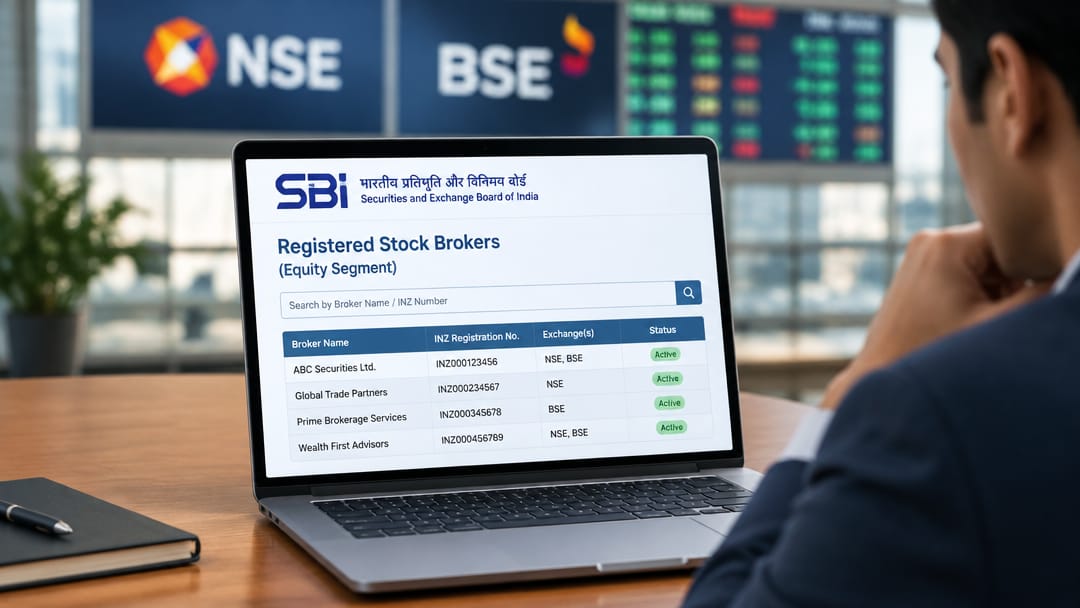
SEBI maintains a public registry of stock brokers authorised to operate in the equity segment, identified by unique registration numbers prefixed INZ. Each registered broker must comply with SEBI (Stock Brokers) Regulations, 1992, and exchange membership norms. The registry allows investors to verify broker credentials before engaging their services. Registration is exchange-specific, and brokers operating across NSE, BSE, or other recognised exchanges must hold valid, current SEBI registration to legally execute trades on behalf of clients.
02 Understand
Why it matters
Stock broker registration sits at the heart of SEBI's intermediary oversight framework. Under the SEBI Act, 1992, and the SEBI (Stock Brokers and Sub-Brokers) Regulations, 1992, no person can act as a stock broker without a certificate of registration from SEBI. The registration number format INZ followed by nine digits is a standardised identifier — 'INZ' signals that the entity is a broker registered for trading in the cash/equity segment on recognised stock exchanges.
The registration process requires a broker to first obtain membership of a recognised stock exchange, then apply to SEBI for a certificate. SEBI evaluates financial soundness, infrastructure, compliance history, and fit-and-proper criteria. Once registered, brokers must maintain a minimum net worth, segregate client funds from own funds, file periodic compliance reports, and ensure their sub-brokers and authorised persons are also registered.
For investor protection, SEBI publishes the registry online. An investor can verify whether a broker is validly registered before trading, reducing the risk of falling prey to unregistered entities. If a broker's registration is cancelled or suspended, it appears in the public record. This transparency mechanism is a direct investor protection tool — linking regulation to public accountability.
The equity segment registration is distinct from commodity derivatives, currency derivatives, or debt segment registrations, each carrying different codes and norms — a distinction SEBI examiners frequently test.
Remember + Why it matters
The key recall facts and exact examiner angle for SEBI Grade A are in the Crux app.
01
Key figure and date from this topic
02
Specific number or threshold to remember
03
Policy or regulatory implication
Read + Understand free forever · 30-day free trial