01 Read
What happened
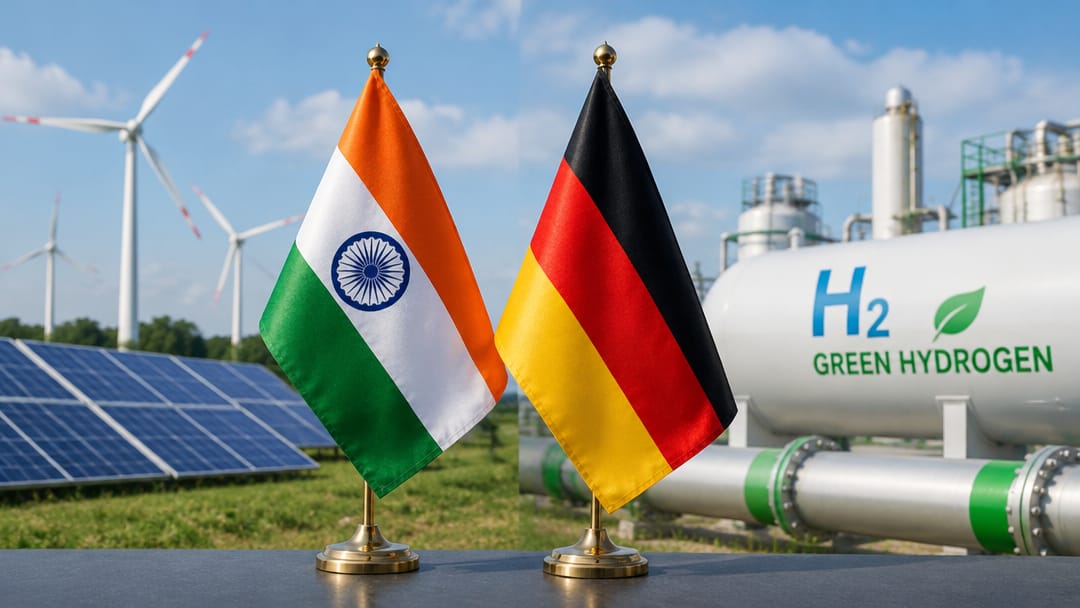
India and Germany have expanded their bilateral clean energy partnership to cover green hydrogen production, renewable energy supply chains, and technology exchange. The partnership builds on existing Indo-German cooperation frameworks and aligns with India's National Green Hydrogen Mission target of producing 5 million metric tonnes annually by 2030. Germany, transitioning away from Russian fossil fuels, sees India as a strategic supplier and technology co-developer in the global green energy transition.
02 Understand
Why it matters
The India-Germany clean energy partnership sits at the intersection of three major policy frameworks: India's National Green Hydrogen Mission (launched January 2023), the Indo-German Partnership for Green and Sustainable Development signed at the 6th Inter-Governmental Consultations (IGC) in 2022, and the broader UNFCCC-linked NDC commitments both countries have made.
Green hydrogen — produced by electrolyzing water using renewable electricity — is central to decarbonizing hard-to-abate sectors like steel, fertilizers, and heavy transport. India's mission targets 5 MMT annual production by 2030, aiming to make India a global export hub. Germany, which needs to replace Russian gas and meet its own 2045 carbon-neutrality target, is an ideal off-take partner.
For exam purposes, the key mechanisms here are: (1) bilateral technology transfer under the Indo-German Energy Forum (IGEF), which has operated since 2006; (2) green hydrogen's classification as a strategic commodity under India's energy security doctrine; and (3) supply chain resilience — ensuring critical minerals like platinum (used in electrolyzers) flow reliably.
NABARD's angle is agricultural: green hydrogen enables green ammonia, which could domestically source fertilizer production and reduce import dependence — directly relevant to rural input cost stability and food security.
Remember + Why it matters
The key recall facts and exact examiner angle for NABARD Grade A are in the Crux app.
01
Key figure and date from this topic
02
Specific number or threshold to remember
03
Policy or regulatory implication
Read + Understand free forever · 30-day free trial