01 Read
What happened
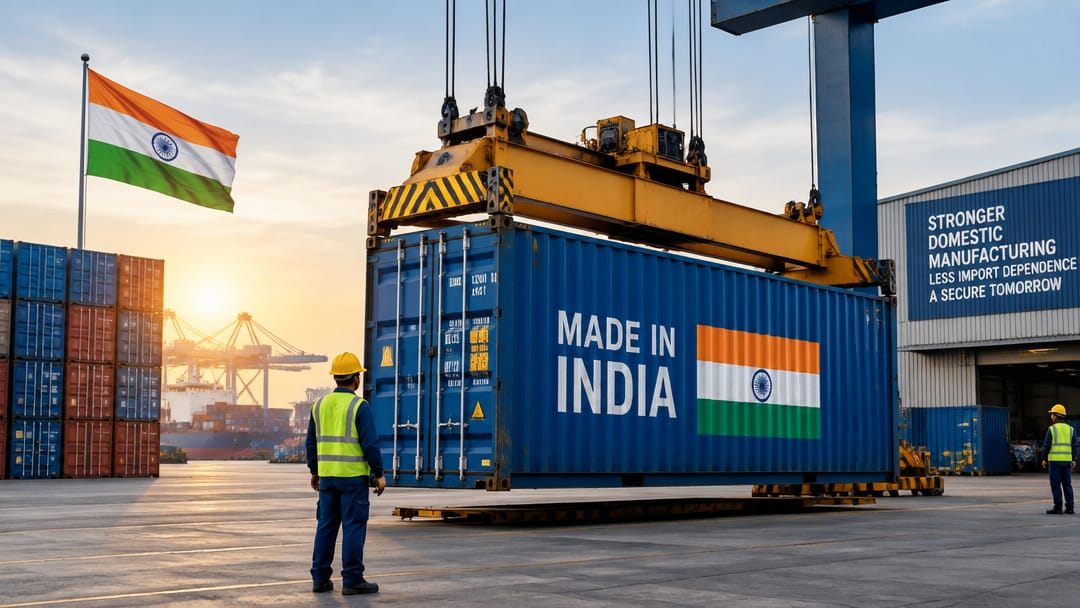
The Union Cabinet approved the Container Manufacturing Promotion Scheme, running from FY 2027-28 to FY 2039-40. The scheme provides three years for facility setup and ten years of production-linked support. India currently imports most of its shipping containers, largely from China, creating a strategic logistics vulnerability. The scheme aims to build domestic manufacturing capacity, reduce freight cost volatility, and strengthen India's position in global supply chains amid rising container demand post-COVID.
02 Understand
Why it matters
India's near-total dependence on imported shipping containers — overwhelmingly sourced from China — became a critical vulnerability during the COVID-19 pandemic when container shortages caused freight rates to spike by 500–800%. Domestic exporters, particularly in textiles, pharmaceuticals, and agriculture, bore the brunt as container availability dictated export timelines and costs.
The Container Manufacturing Promotion Scheme addresses this structural gap by incentivising domestic production over a 13-year window (FY 2027-28 to FY 2039-40). The architecture mirrors the Production-Linked Incentive (PLI) model: a setup phase (3 years) followed by an extended production support phase (10 years). This long horizon is deliberate — container manufacturing requires heavy capital investment in steel fabrication, welding infrastructure, and quality certification, so shorter incentive windows do not justify the capital commitment.
For exam purposes, the scheme connects several syllabus threads simultaneously. From a trade and logistics angle (UPSC GS-III), it addresses Make in India, supply chain resilience, and export competitiveness. From an RBI/macroeconomic angle, lower container costs reduce the landed cost of imports and the freight component embedded in the WPI and CPI, with direct implications for trade balance and inflation. The Ministry of Ports, Shipping and Waterways is the nodal ministry, connecting it to Sagarmala and maritime infrastructure policy. The scheme also reflects India's broader industrial policy shift toward strategic import substitution in logistics inputs, not just finished goods.
Remember + Why it matters
The key recall facts and exact examiner angle for RBI Grade B are in the Crux app.
01
Key figure and date from this topic
02
Specific number or threshold to remember
03
Policy or regulatory implication
Read + Understand free forever · 30-day free trial