01 Read
What happened
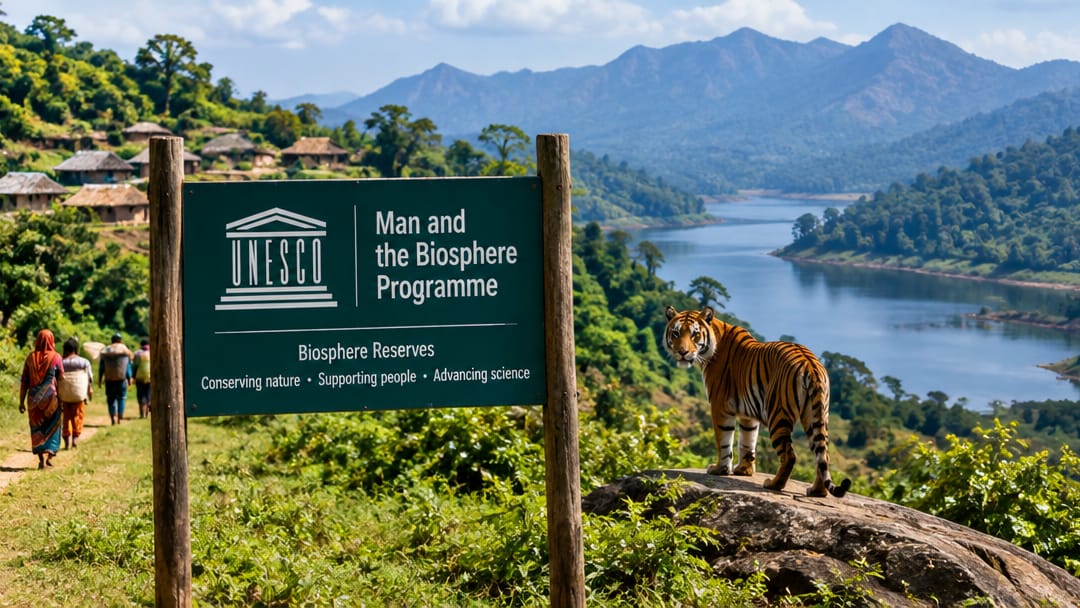
India observed Biosphere Reserves Day highlighting its network of 18 notified biosphere reserves, of which 13 have been recognised under UNESCO's Man and the Biosphere Programme. These sites serve a triple mandate — conserving biodiversity, supporting scientific research, and sustaining local livelihoods through buffer and transition zones. The Ministry of Environment, Forest and Climate Change is the nodal authority. The gap between total notified reserves and UNESCO-recognised ones is a key number examiners test.
02 Understand
Why it matters
A biosphere reserve is not a standard protected area. Unlike national parks or wildlife sanctuaries — which are purely exclusionary — biosphere reserves operate on a zoned model defined by UNESCO's Man and the Biosphere (MAB) Programme launched in 1971. Each reserve has three concentric zones: a core zone (strictly protected, no human activity), a buffer zone (limited research and education), and a transition or cooperation zone (sustainable human use, local communities, tourism). This design is what makes them distinct from Tiger Reserves or Ramsar sites in examination contexts.
India's 18 biosphere reserves are notified by the central government under the Environment (Protection) Act, but UNESCO recognition is a separate, higher-prestige designation awarded by the MAB Programme's International Coordinating Council. India currently has 13 UNESCO-recognised sites, making it one of the larger national networks globally.
For exam purposes, the critical distinctions are: (1) biosphere reserves vs. wildlife sanctuaries vs. national parks — the legal authority and purpose differ; (2) UNESCO MAB recognition is not automatic — India has 5 reserves that are nationally notified but not yet internationally recognised; (3) the nodal ministry is MoEFCC; (4) biosphere reserves support sustainable livelihoods, which connects them directly to rural development themes tested in NABARD exams. The overlap of biosphere reserves with Ramsar sites, Tiger Reserves, and biodiversity hotspots is a classic multi-layered UPSC question trap.
Remember + Why it matters
The key recall facts and exact examiner angle for NABARD Grade A are in the Crux app.
01
Key figure and date from this topic
02
Specific number or threshold to remember
03
Policy or regulatory implication
Read + Understand free forever · 30-day free trial