01 Read
What happened
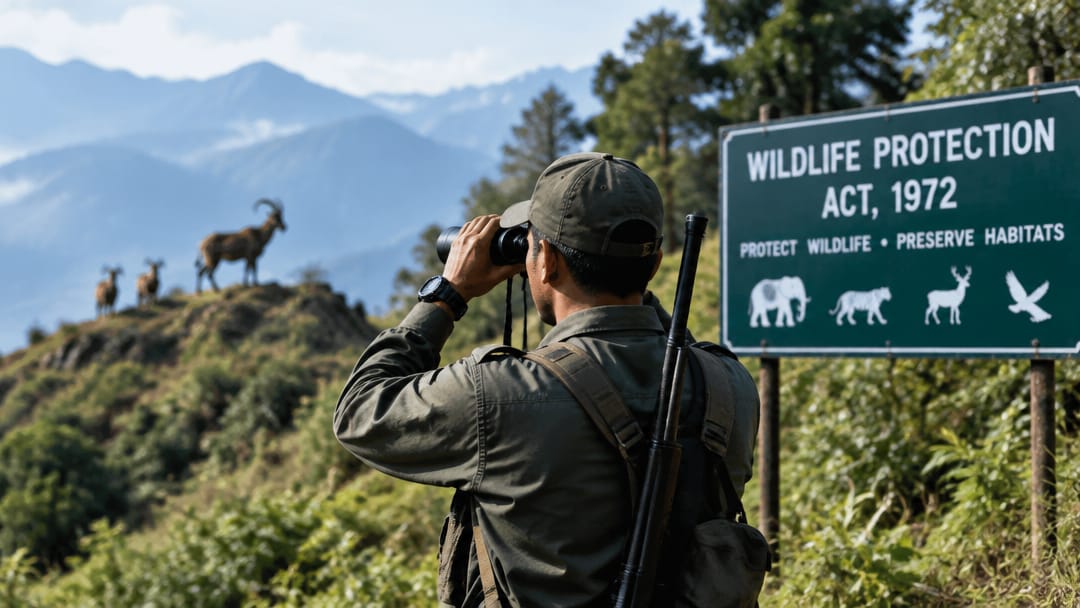
Nagaland's Environment, Forests and Climate Change Minister CL John has called for effective implementation of the Wildlife Protection Act, 1972, highlighting enforcement gaps in the state. The appeal comes amid ongoing concerns about poaching and habitat destruction in Northeast India, a biodiversity hotspot. The Wildlife Protection Act governs protection of wild animals, birds, and plants, and establishes the framework for protected areas including wildlife sanctuaries and national parks across India.
02 Understand
Why it matters
The Wildlife Protection Act, 1972 (WPA) is the foundational statute for wildlife conservation in India. Enacted before India's constitutional 42nd Amendment (1976) placed 'forests' and 'protection of wild animals and birds' in the Concurrent List, the WPA was originally a central law under Entry 97 of the Union List. Post-1976, it operates under the Concurrent List (Entry 17A and 17B), meaning both Parliament and state legislatures can legislate, but central law prevails on repugnancy.
The Act creates six categories of protected areas: National Parks, Wildlife Sanctuaries, Conservation Reserves, Community Reserves, Tiger Reserves (under Project Tiger), and closed areas. Schedule I and Part II of Schedule II animals receive the highest protection — hunting them is an absolute offence with no exceptions. Schedules I through VI classify species by protection level, with Schedule VI protecting specified plants.
The 2022 Amendment to the WPA was significant: it reduced the Schedules from six to four, implemented CITES obligations domestically, and introduced provisions for invasive alien species. The National Board for Wildlife (NBWL), chaired by the Prime Minister, is the apex advisory body. The Chief Wildlife Warden in each state is the primary enforcement authority.
Northeast India, including Nagaland, sits within the Indo-Burma biodiversity hotspot — one of only 36 globally recognised biodiversity hotspots. Nagaland's Intanki National Park and Fakim Wildlife Sanctuary fall under WPA protections. The call by Minister CL John directly engages the state's obligation under the Concurrent List framework to enforce central wildlife law.
Remember + Why it matters
The key recall facts and exact examiner angle for CLAT PG are in the Crux app.
01
Key figure and date from this topic
02
Specific number or threshold to remember
03
Policy or regulatory implication
Read + Understand free forever · 30-day free trial