01 Read
What happened
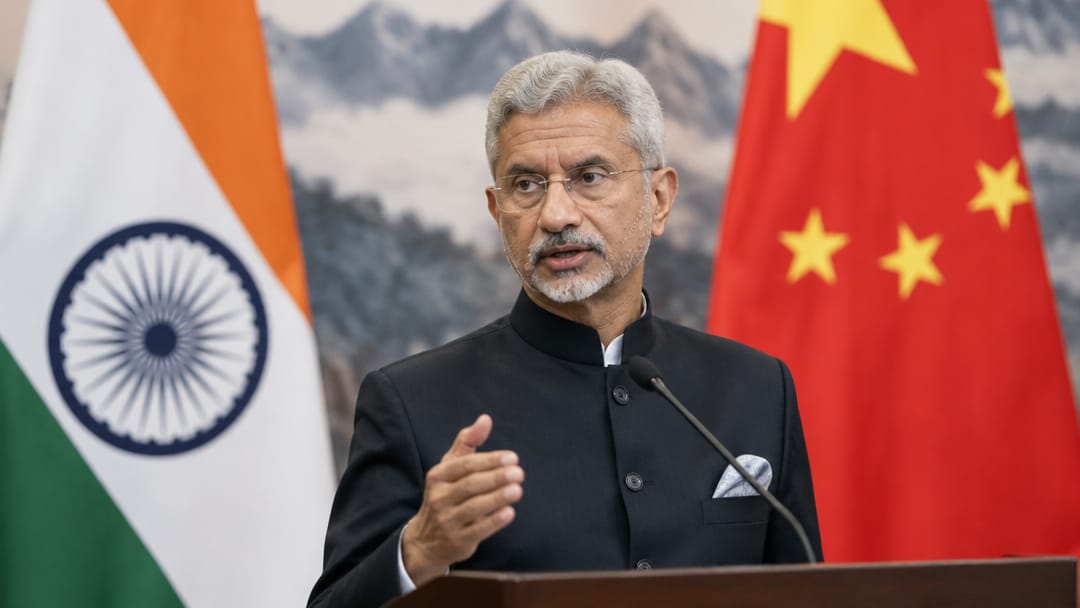
External Affairs Minister S. Jaishankar stated that restoring peace along the Line of Actual Control is a prerequisite before India-China relations can return to normal. He outlined a phased diplomatic approach: first resolving border friction, then rebuilding trust, and finally expanding broader bilateral engagement. His remarks come after the October 2024 disengagement agreement at Depsang and Demchok ended the standoff that began with the Galwan clash of June 2020.
02 Understand
Why it matters
Jaishankar's framing reflects a deliberate sequencing in India's foreign policy posture toward China — a country with which India shares a 3,488-km border, much of it disputed and governed by no formally demarcated Line of Actual Control (LAC).
The Galwan Valley clash of June 2020 (in eastern Ladakh) marked the deadliest India-China border confrontation since 1967, killing 20 Indian soldiers. It triggered a cascade of diplomatic and economic responses: India banned over 200 Chinese apps, tightened FDI rules requiring government approval for investment from land-bordering countries, and suspended direct flights. These measures remain partly in place.
The October 2024 disengagement deal at Depsang Plains and Demchok — the last two friction points in eastern Ladakh — is significant because it re-established patrolling rights India had lost since 2020. However, Jaishankar's caution that 'border peace is precondition, not outcome' signals India will not rush to restore pre-2020 trade, visa, and diplomatic normalcy simply because troops have stepped back.
The static framework behind this is India's 'Three Mutuals' — mutual respect, mutual sensitivity, and mutual interests — articulated by Jaishankar as the foundational test for the relationship. For UPSC, the key institutional mechanisms include the Working Mechanism for Consultation and Coordination (WMCC), the Special Representatives dialogue (currently paused), and the 1993, 1996, 2005, and 2013 border peace agreements that form the legal backbone of LAC management.
Remember + Why it matters
The key recall facts and exact examiner angle for UPSC CSE are in the Crux app.
01
Key figure and date from this topic
02
Specific number or threshold to remember
03
Policy or regulatory implication
Read + Understand free forever · 30-day free trial