01 Read
What happened
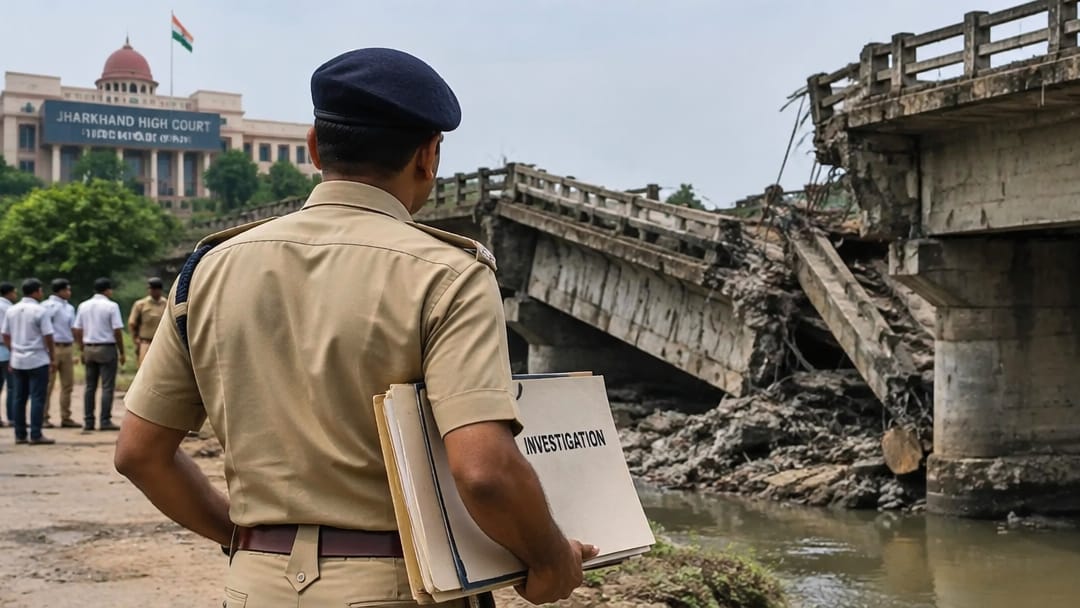
The Jharkhand High Court has directed police to complete investigations into long-pending bridge collapse cases in Dhanbad, Palamau, and Gumla within three months. The cases had remained unresolved for an extended period despite involving public safety failures. The High Court's intervention reflects judicial oversight over executive inaction in criminal investigations. The order underscores the court's power to supervise police investigations through suo motu or petition-based proceedings to ensure accountability in infrastructure-related criminal cases.
02 Understand
Why it matters
This order illustrates a foundational principle in criminal procedure: High Courts possess supervisory jurisdiction over police investigations and can issue directions to ensure timely completion of probes. Under Section 482 CrPC (now Section 528 BNSS), High Courts retain inherent powers to prevent abuse of process and secure ends of justice, which includes compelling investigating agencies to act when probes stagnate.
The bridge collapse cases sit at the intersection of criminal negligence, public safety, and state accountability. When infrastructure collapses due to potential negligence or corruption, IPC sections relating to culpable homicide not amounting to murder (Section 304), causing death by negligence (Section 304A), and criminal breach of trust (Section 409) typically apply. Under BNSS equivalents, these are Sections 106, 125, and 316 respectively.
Judicial intervention in stalled investigations can take multiple forms: directions to submit status reports, transfer of investigation to CBI or SIT, and in extreme cases, orders for registration of FIR under Section 156(3) CrPC (Section 175(3) BNSS). The three-month deadline here is a supervisory direction, not a transfer order.
For CLAT PG, the key doctrinal point is that the right to a fair and expeditious investigation is traceable to Article 21 — the Supreme Court in Lalita Kumari v. State of UP (2014) held that registration of FIR is mandatory when a cognizable offence is disclosed, limiting police discretion. Courts use this doctrine to push stalled probes forward.
Remember + Why it matters
The key recall facts and exact examiner angle for UPSC CSE are in the Crux app.
01
Key figure and date from this topic
02
Specific number or threshold to remember
03
Policy or regulatory implication
Read + Understand free forever · 30-day free trial