01 Read
What happened
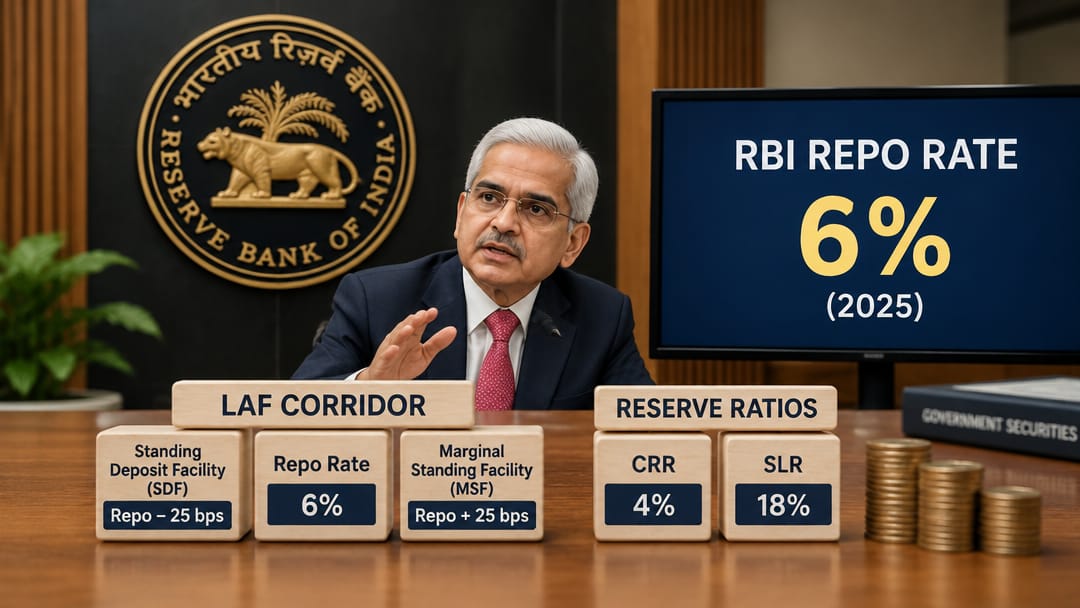
The RBI's Monetary Policy Committee cut the repo rate to 6% in 2025, continuing an accommodative shift. The repo rate — at which RBI lends overnight to commercial banks against government securities — anchors the LAF corridor. The Standing Deposit Facility sits 25 basis points below repo; the Marginal Standing Facility sits 25 basis points above. CRR remains at 4% and SLR at 18%, together shaping how much credit banks can extend into the economy.
02 Understand
Why it matters
India's monetary policy operates through a layered transmission mechanism. At its centre is the repo rate — the RBI's primary policy signal. When the MPC changes this rate, it cascades through the financial system: banks adjust their cost of funds, which flows into lending rates (EBLR/MCLR), which influences credit demand, investment, consumption, and ultimately inflation and GDP growth.
The Liquidity Adjustment Facility (LAF) corridor is the operational architecture around the repo rate. The Standing Deposit Facility (SDF) rate forms the floor — banks park surplus funds with RBI at this rate. The Marginal Standing Facility (MSF) rate forms the ceiling — banks borrow emergency overnight funds from RBI at this rate. The repo rate sits in the middle. This corridor prevents overnight rates from drifting far from the policy signal.
Reserve ratios work differently. The Cash Reserve Ratio (CRR) requires banks to hold a percentage of their Net Demand and Time Liabilities (NDTL) as cash with RBI — earning no interest. The Statutory Liquidity Ratio (SLR) requires them to hold an additional percentage in approved liquid assets (government securities, cash, gold). CRR directly controls money supply; SLR ensures banks hold safe assets and also finances government borrowing.
For NABARD, the repo rate affects refinancing costs: when repo falls, NABARD's borrowing cost from RBI falls, allowing cheaper agricultural credit to cooperative banks and RRBs. This is the exam-relevant transmission chain aspirants must map end-to-end.
Remember + Why it matters
The key recall facts and exact examiner angle for RBI Grade B are in the Crux app.
01
Key figure and date from this topic
02
Specific number or threshold to remember
03
Policy or regulatory implication
Read + Understand free forever · 30-day free trial