01 Read
What happened
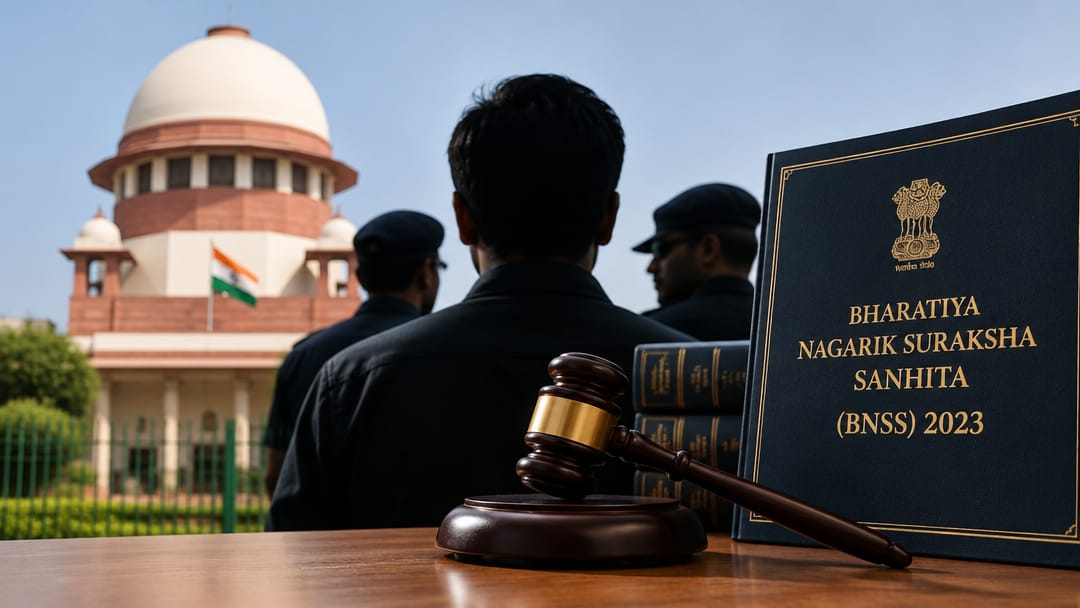
The Supreme Court approved India's first Witness Protection Scheme on December 5, 2018, in Mahender Chawla v. Union of India, treating it as law until Parliament legislated. The Bharatiya Nagarik Suraksha Sanhita (BNSS) 2023 later codified witness protection provisions, replacing the CrPC framework. The scheme creates three threat categories and mandates a Witness Protection Fund, with the State Legal Services Authority overseeing applications. This marks the shift from judicial direction to statutory protection.
02 Understand
Why it matters
Before 2018, India had no statutory witness protection framework despite chronic problems of witness tampering, intimidation, and hostile witnesses derailing prosecutions. The Supreme Court in Mahender Chawla v. Union of India (2018) filled this gap by approving a model Witness Protection Scheme and declaring it binding under Articles 21 and 141 of the Constitution, holding that the right to a fair trial necessarily includes protection of witnesses.
The scheme classifies witnesses into three threat categories: Category A (threat to life), Category B (threat to safety or property), and Category C (threat to reputation or livelihood). Based on this, a Threat Analysis Report is prepared by the police, and the competent authority — the District and Sessions Judge — decides the protection measure.
Protection measures range from identity concealment and in-camera proceedings to relocation, voice and face distortion during testimony, and use of special courts. Applications are made to the State Witness Protection Fund Authority.
When the BNSS replaced the CrPC in 2023, it incorporated witness-related protections more formally into the statutory scheme. BNSS Section 398 deals with the power to tender a pardon to witnesses, while provisions on hostile witnesses and in-camera proceedings are carried forward with modifications.
For CLAT PG, the critical exam angle is: the constitutional basis (Articles 21 and 141), the case name (Mahender Chawla), the three threat categories, and the competent authority structure. Examiners test whether aspirants can apply the scheme's principles to hypothetical fact patterns involving witness intimidation.
Remember + Why it matters
The key recall facts and exact examiner angle for CLAT PG are in the Crux app.
01
Key figure and date from this topic
02
Specific number or threshold to remember
03
Policy or regulatory implication
Read + Understand free forever · 30-day free trial