01 Read
What happened
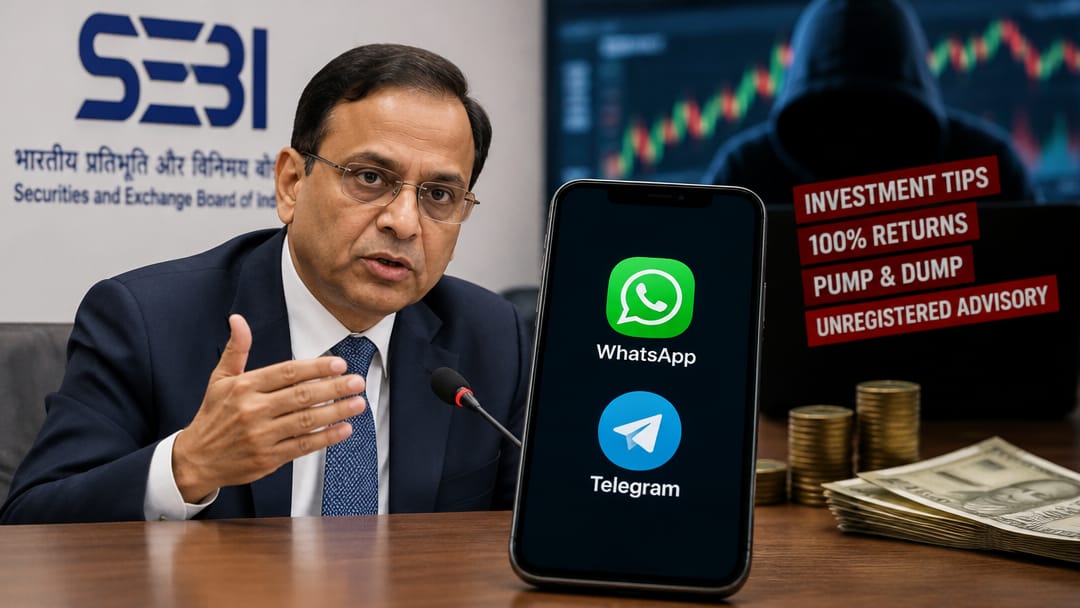
SEBI Chairperson Tuhin Kanta Pandey has signalled a strict enforcement stance against fraudulent investment advisory groups operating on WhatsApp and Telegram. These platforms are routinely used to run unregistered tip-sharing schemes, pump-and-dump operations, and fake advisory services targeting retail investors. SEBI's concern centres on entities providing investment advice without registration under the Investment Advisers Regulations, 2013, and Securities Law, bypassing regulatory oversight and causing significant financial harm to retail participants.
02 Understand
Why it matters
SEBI regulates investment advisers under the SEBI (Investment Advisers) Regulations, 2013, which require anyone providing personalised investment advice for a fee to register with SEBI. Operating without such registration is a violation of the Securities and Exchange Board of India Act, 1992, specifically Section 12, which mandates registration for market intermediaries.
Social media platforms like WhatsApp and Telegram have become vectors for two distinct frauds: first, 'finfluencer' schemes where unregistered individuals charge subscriptions for stock tips; second, 'pump-and-dump' operations where operators accumulate a stock, hype it in closed groups, and exit once retail buyers inflate the price.
SEBI has progressively tightened this space. In August 2023, SEBI issued a consultation paper on regulating finfluencers. In 2024, SEBI amended the Investment Advisers Regulations to restrict unregistered persons from using associations with SEBI-registered entities as implicit endorsements. SEBI can take action under Section 11(4) of the SEBI Act — imposing penalties, issuing cease-and-desist orders, and referring cases to SFIO or law enforcement.
The distinction between 'research analysts' (regulated under RA Regulations, 2014) and 'investment advisers' (regulated under IA Regulations, 2013) is a recurring exam trap: research analysts publish impersonal reports; investment advisers give personalised advice. Both require SEBI registration. Unregistered activity on social media platforms violates both frameworks simultaneously.
Remember + Why it matters
The key recall facts and exact examiner angle for UPSC CSE are in the Crux app.
01
Key figure and date from this topic
02
Specific number or threshold to remember
03
Policy or regulatory implication
Read + Understand free forever · 30-day free trial