01 Read
What happened
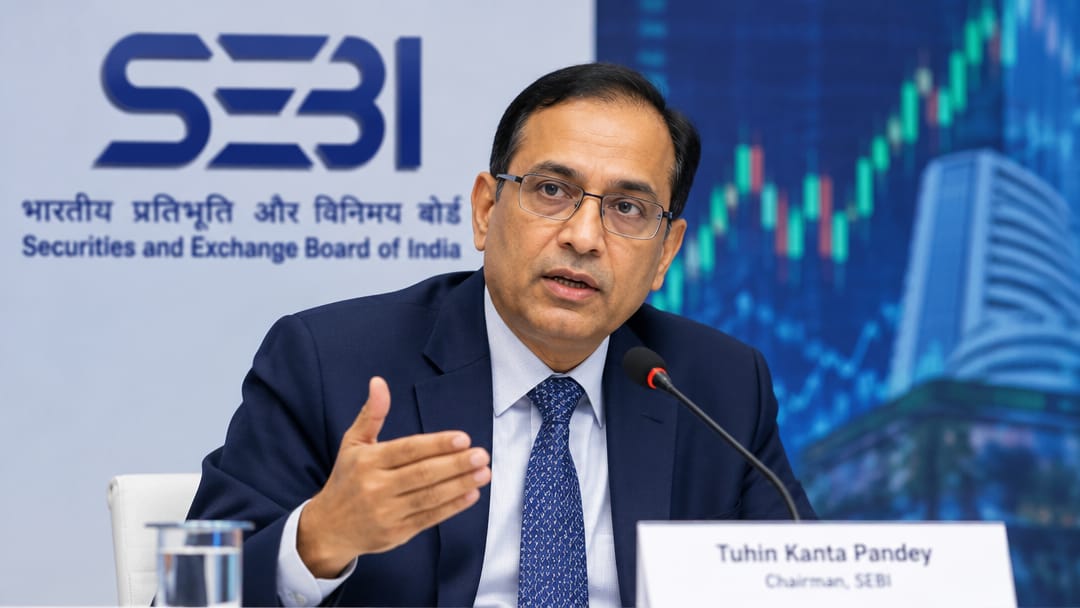
SEBI chairman Tuhin Kanta Pandey stated that the regulator is continuously working to strengthen India's capital markets by enhancing resilience and deepening investor protection frameworks. Speaking at a public forum, Pandey emphasised SEBI's dual mandate of market development and safeguarding investor interests. His remarks signal ongoing regulatory focus on systemic stability, transparent market infrastructure, and accessible grievance redressal mechanisms for retail investors participating in India's rapidly growing securities markets.
02 Understand
Why it matters
SEBI's dual mandate — market development and investor protection — sits at the heart of its statutory charter under the SEBI Act, 1992. The chairman's remarks reflect this tension: a regulator must simultaneously encourage capital formation and shield retail investors from mis-selling, fraud, and systemic risk.
Market resilience refers to the ability of capital markets to absorb shocks — whether from global volatility, liquidity crunches, or operational failures at intermediaries — without systemic breakdown. SEBI pursues resilience through circuit breakers on exchanges, margin requirements, stress-testing of clearing corporations, and oversight of systemically important market infrastructure institutions (MIIs).
Investor protection mechanisms under SEBI include: the SCORES (SEBI Complaint Redress System) portal for grievance filing; the Investor Protection and Education Fund (IPEF); mandatory KYC norms; the prohibition of fraudulent and unfair trade practices under SEBI (PFUTP) Regulations, 2003; and the SEBI (Prohibition of Insider Trading) Regulations, 2015.
For SEBI Grade A aspirants, this topic connects static knowledge of SEBI's powers, functions, and investor protection tools with current regulatory priorities. Examiners test whether candidates know the exact legislative provision, the grievance mechanism, or the threshold that operationalises investor protection — not just the broad principle. Pandey's public emphasis on these themes signals that upcoming policy circulars and consultation papers are likely to cluster around these areas.
Remember + Why it matters
The key recall facts and exact examiner angle for RBI Grade B are in the Crux app.
01
Key figure and date from this topic
02
Specific number or threshold to remember
03
Policy or regulatory implication
Read + Understand free forever · 30-day free trial