01 Read
What happened
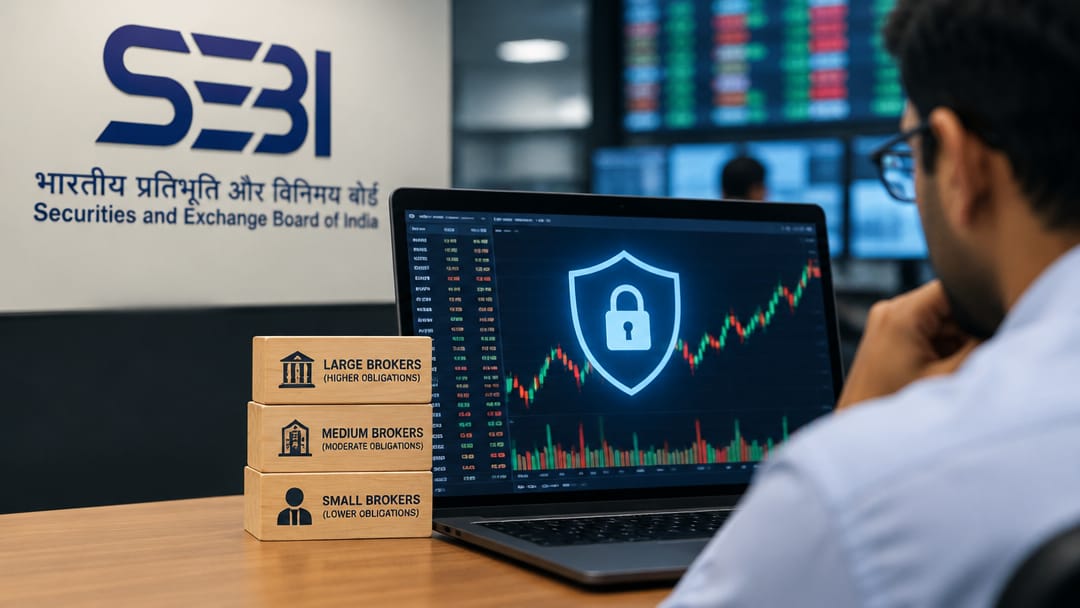
SEBI is developing a framework to prevent misuse of trading terminals by brokers and is exploring a graded compliance structure that calibrates regulatory obligations based on broker size and risk profile. The initiative, signalled by SEBI Chairperson Tuhin Kanta Pandey, aims to strengthen market integrity while reducing compliance burden on smaller brokers. The framework is still under development and has not yet been issued as a formal circular or regulation.
02 Understand
Why it matters
Trading terminals are software systems through which stockbrokers execute buy and sell orders on exchanges on behalf of clients. Misuse can include unauthorised trades, front-running, or providing third-party access to terminals — all of which harm investors and market integrity. SEBI's proposed safeguards would create clear accountability rules for brokers operating these terminals.
The concept of graded compliance is significant. Currently, all registered stockbrokers face broadly uniform compliance obligations regardless of their size, client base, or systemic importance. A graded or proportionate compliance framework would tier obligations — larger brokers with more clients and higher turnover would face stricter scrutiny, while smaller brokers could operate under a lighter regulatory touch. This is consistent with international best practices (e.g., the FCA's proportionality principle in the UK) and SEBI's own recent moves toward risk-based supervision.
For SEBI Grade A aspirants, this development sits at the intersection of two tested themes: (1) intermediary regulation — who brokers are, how they are registered, and what obligations they carry under SEBI (Stock Brokers) Regulations, 1992; and (2) SEBI's evolving supervisory architecture. The examiner has historically tested acronyms, institutional roles, and the regulatory rationale behind SEBI frameworks. Understanding why graded compliance matters — investor protection with proportionality — is exactly the kind of conceptual depth that supports both MCQ and descriptive answers.
Remember + Why it matters
The key recall facts and exact examiner angle for SEBI Grade A are in the Crux app.
01
Key figure and date from this topic
02
Specific number or threshold to remember
03
Policy or regulatory implication
Read + Understand free forever · 30-day free trial