01 Read
What happened
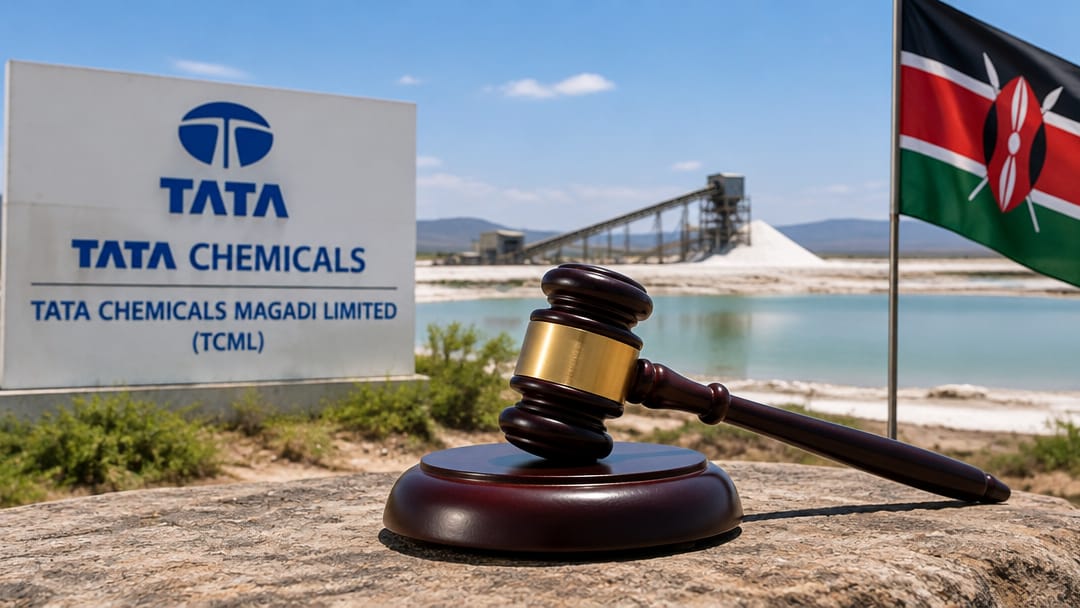
Tata Chemicals has challenged the jurisdiction of the Kenya High Court to adjudicate a dispute involving its subsidiary, Tata Chemicals Magadi Limited (TCML), which operates soda ash mining at Lake Magadi in Kenya. The company disclosed it is examining the court's order and will determine legal and other measures to address the matter. The dispute centres on TCML's operations, and Tata Chemicals argues the Kenyan court lacks authority to hear the case under applicable legal frameworks.
02 Understand
Why it matters
This dispute turns on a foundational principle of private international law: jurisdiction. When a multinational corporation operates through a foreign subsidiary, the question of which court can adjudicate disputes involving that entity depends on factors including where the company is incorporated, where the contract was performed, where the cause of action arose, and what dispute resolution clause governs the relationship.
Tata Chemicals Magadi Limited is incorporated and operates in Kenya, making the jurisdictional challenge notable — Tata Chemicals (the Indian parent) appears to be arguing that either an arbitration clause, a different forum selection agreement, or principles of corporate separateness mean the Kenyan High Court cannot exercise jurisdiction.
For CLAT PG, this event connects to two static concepts: (1) the doctrine of forum selection and how courts in cross-border disputes determine their own competence (kompetenz-kompetenz), and (2) the distinction between a parent company and its foreign subsidiary for purposes of jurisdiction and liability — a principle tested in corporate law questions. The examiner frequently tests whether aspirants understand that incorporation in a jurisdiction generally does confer that country's courts with jurisdiction, making Tata Chemicals' challenge legally interesting and potentially dependent on a contractual arbitration clause ousting court jurisdiction.
Remember + Why it matters
The key recall facts and exact examiner angle for CLAT PG are in the Crux app.
01
Key figure and date from this topic
02
Specific number or threshold to remember
03
Policy or regulatory implication
Read + Understand free forever · 30-day free trial