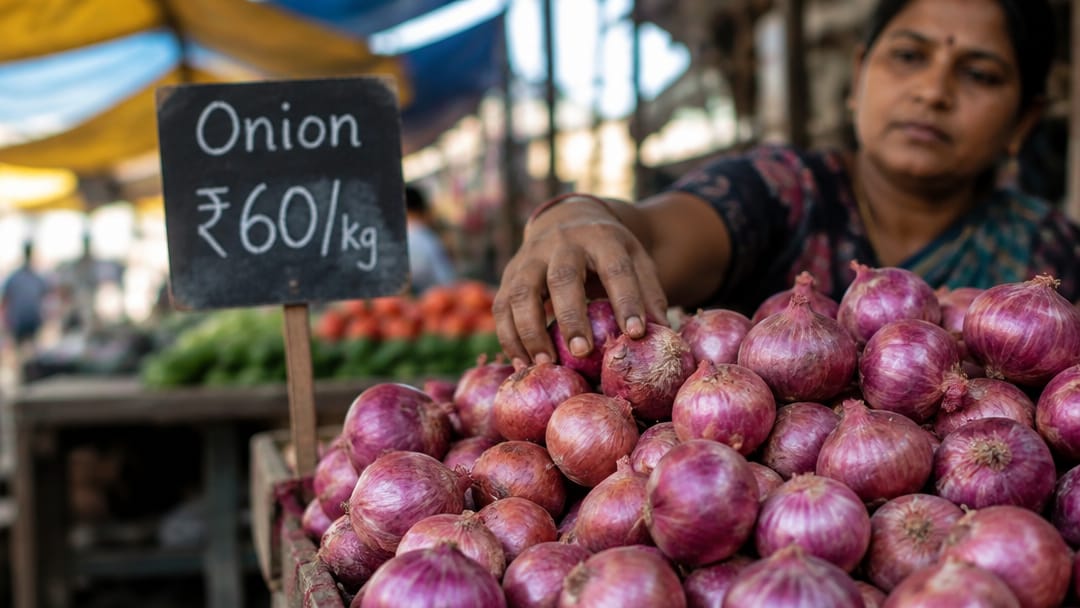
Onion prices up 99.6% year-on-year as El Niño pushes October inflation near 6%
What happened
India's October 2023 retail inflation is expected to breach 6%, breaching the RBI's upper tolerance band, driven by a 99.6% year-on-year spike in onion prices. Bank of Baroda flagged El Niño-linked weather risks compounding food inflation pressures. With the MPC's December meeting approaching, sustained food price shocks complicate any pivot toward rate cuts, keeping the RBI in a holding pattern despite broader disinflation in core categories.
Why it matters
India's inflation targeting framework, adopted under the amended RBI Act 1934, mandates the MPC to keep CPI inflation at 4% with a tolerance band of ±2% — meaning the upper limit is 6%. When headline CPI breaches this band, the RBI is legally required to submit an explanation to the Government detailing the reasons and the remedial path.
Food and beverages carry roughly 45.86% weight in India's CPI basket, making vegetable price spikes — especially onions — disproportionately impactful. Onions are a classic example of supply-side inflation, where a monetary policy rate hike has limited effectiveness. Raising the repo rate cannot plant more onions or reverse a monsoon deficit.
This creates a policy dilemma: the MPC must respond to headline inflation breaching the target, but the instrument available (repo rate) addresses demand-pull inflation more effectively than cost-push or supply-shock inflation. The RBI typically 'looks through' transient food shocks, but El Niño risks make the duration of the shock uncertain — which is what the article highlights.
El Niño events historically reduce India's southwest monsoon rainfall, hurting kharif output. If the weather shock persists into rabi sowing, it could trigger second-round effects, turning a temporary food spike into a broader inflationary episode. This uncertainty is precisely what complicates the December 2023 MPC decision — the committee must weigh the risk of premature rate cuts against choking already-slowing growth.
🔒
Key figure and date from this topic
Specific number or threshold to remember
Policy or regulatory implication