India's Constitution rejects absolute separation of powers, but not the principle itself
What happened
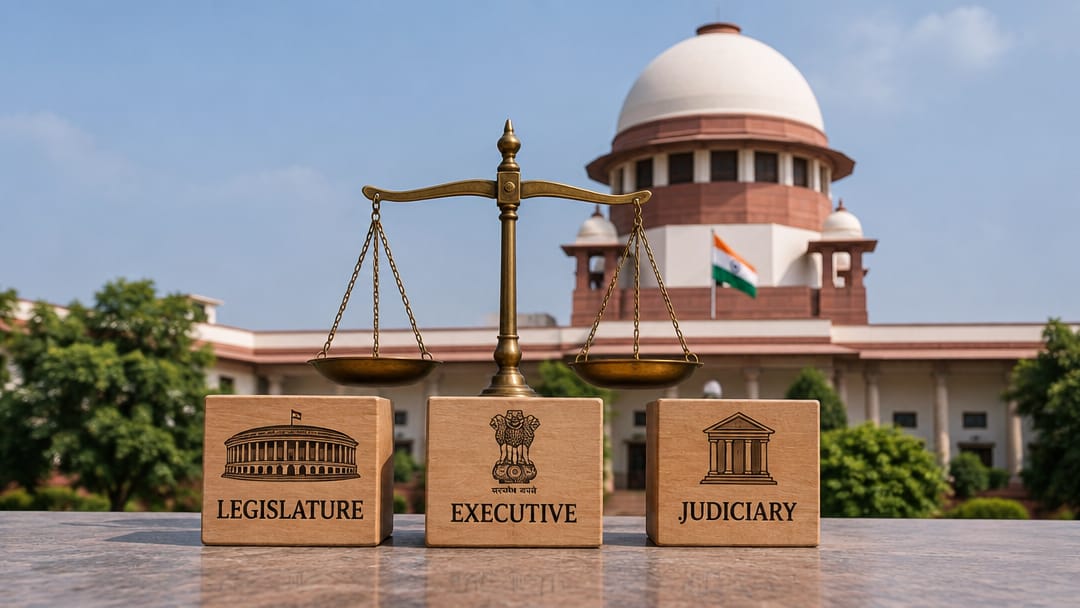
The Supreme Court has consistently held that India's Constitution does not adopt the doctrine of separation of powers in its strict or absolute form. The three organs — Legislature, Executive, and Judiciary — are not watertight compartments. However, the Constitution does distribute functions and builds in checks and balances. Each organ exercises some functions of the other, yet the core constitutional functions of each are protected from usurpation by another organ.
Why it matters
The doctrine of separation of powers, classically articulated by Montesquieu in 'The Spirit of the Laws' (1748), proposes that the legislative, executive, and judicial powers of a state must be vested in distinct and independent organs to prevent tyranny. The United States Constitution comes closest to a strict separation model.
India adopted a modified version. The Constitution does not expressly use the term 'separation of powers,' yet Articles 50, 121, 122, 211, and 212 reflect the principle in specific contexts — for instance, Article 50 directs separation of the judiciary from the executive in public services.
The Supreme Court in Ram Jawaya Kapur v. State of Punjab (1955) first clarified that India does not follow the strict doctrine, but its Constitution does differentiate and assign functions. In Indira Nehru Gandhi v. Raj Narain (1975), the Supreme Court held that separation of powers is part of the basic structure of the Constitution — meaning Parliament cannot destroy it through amendment. The Kesavananda Bharati (1973) judgment underpins this by establishing that core constitutional features, including checks and balances, are unamendable.
Practically, the overlap is real: the President (executive) summons Parliament (legislative); ordinances are executive legislation; judges are appointed through a collegium system that keeps executive interference limited. The key test is whether the essential function of one organ is being usurped, not merely whether some functions overlap. Judicial review — the court's power to strike down laws — is itself a check by the judiciary on the legislature and executive, and is a cornerstone of this modified doctrine.
Dicey's rule of law meets its limits in the modern administrative state
What happened
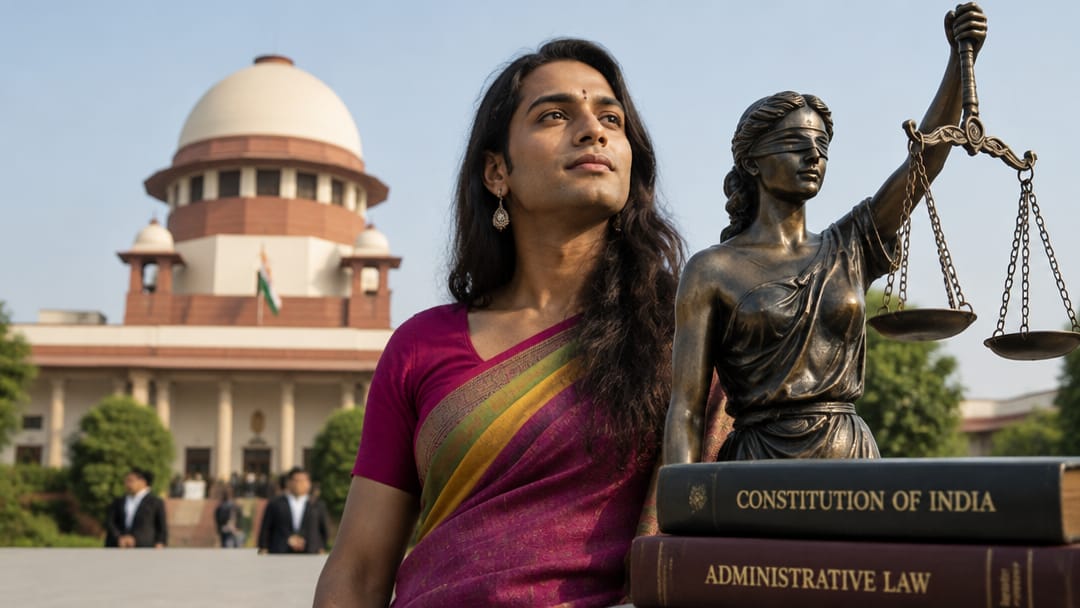
Dicey's rule of law doctrine holds that no one is above the law, equality before law must prevail, and constitutional rights flow from judicial decisions rather than government grants. Administrative law grows directly from this foundation by subjecting executive action to legal scrutiny. Indian courts have used this relationship to strike arbitrary state action under Articles 14, 19, and 21. The NALSA judgment on transgender rights reinforced that rule of law demands equal legal recognition regardless of identity.
Why it matters
The rule of law, as formulated by A.V. Dicey in 1885, rests on three pillars: (1) supremacy of law — no punishment except for a breach of established law; (2) equality before law — every person, including government officials, is subject to the ordinary courts; and (3) the constitution is a consequence of individual rights, not their source.
Administrative law is the direct institutional response to Dicey's second pillar. As the state expanded its welfare functions in the 20th century, executive agencies multiplied. Administrative law developed to ensure these agencies acted within their statutory powers (intra vires), followed natural justice, and did not exercise arbitrary discretion. This is where Dicey's model shows its limits: he distrusted French-style droit administratif (separate administrative courts), yet the complexity of modern governance forced India to develop specialised administrative tribunals under Article 323-A and 323-B.
In India, the rule of law operates through several constitutional guarantees. Article 14 (equality before law and equal protection), Article 21 (right to life and liberty), and Article 32/226 (judicial review) collectively operationalise Dicey's principles. The Supreme Court in NALSA v. Union of India (2014) extended this logic: denying legal recognition to transgender persons violated the rule of law because it placed them outside the equal protection of law — precisely the inequality Dicey's second pillar was designed to eliminate.
The critical tension for the examiner: administrative discretion is necessary for governance, but uncanalised discretion is antithetical to the rule of law. The test Indian courts apply is whether the discretion is guided by intelligible differentia with a rational nexus to the object — the Article 14 doctrine of reasonable classification.
Onion prices up 99.6% year-on-year as El Niño pushes October inflation near 6%
What happened
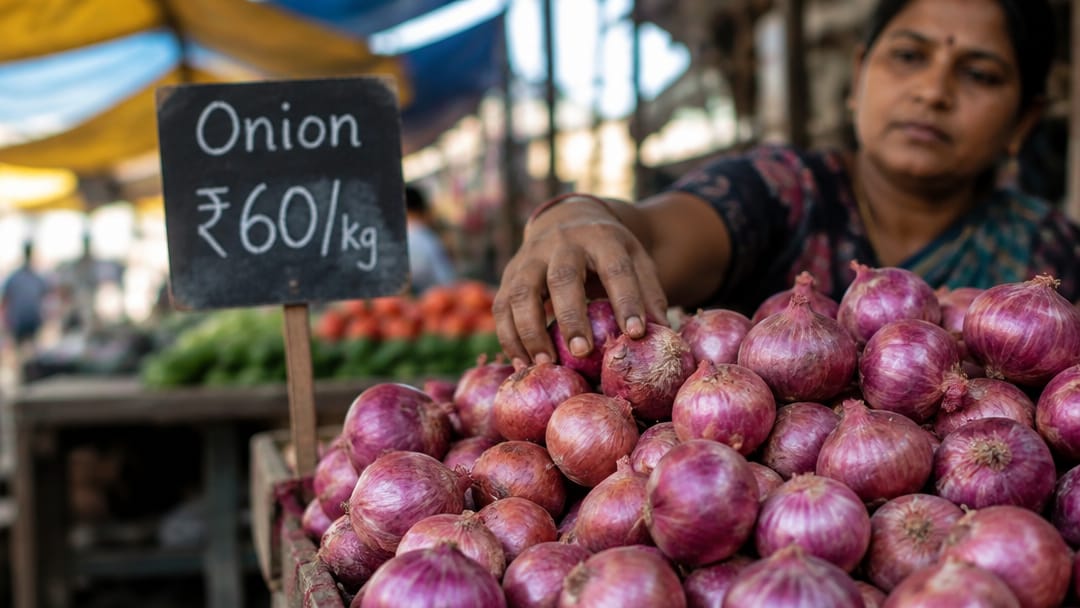
India's October 2023 retail inflation is expected to breach 6%, breaching the RBI's upper tolerance band, driven by a 99.6% year-on-year spike in onion prices. Bank of Baroda flagged El Niño-linked weather risks compounding food inflation pressures. With the MPC's December meeting approaching, sustained food price shocks complicate any pivot toward rate cuts, keeping the RBI in a holding pattern despite broader disinflation in core categories.
Why it matters
India's inflation targeting framework, adopted under the amended RBI Act 1934, mandates the MPC to keep CPI inflation at 4% with a tolerance band of ±2% — meaning the upper limit is 6%. When headline CPI breaches this band, the RBI is legally required to submit an explanation to the Government detailing the reasons and the remedial path.
Food and beverages carry roughly 45.86% weight in India's CPI basket, making vegetable price spikes — especially onions — disproportionately impactful. Onions are a classic example of supply-side inflation, where a monetary policy rate hike has limited effectiveness. Raising the repo rate cannot plant more onions or reverse a monsoon deficit.
This creates a policy dilemma: the MPC must respond to headline inflation breaching the target, but the instrument available (repo rate) addresses demand-pull inflation more effectively than cost-push or supply-shock inflation. The RBI typically 'looks through' transient food shocks, but El Niño risks make the duration of the shock uncertain — which is what the article highlights.
El Niño events historically reduce India's southwest monsoon rainfall, hurting kharif output. If the weather shock persists into rabi sowing, it could trigger second-round effects, turning a temporary food spike into a broader inflationary episode. This uncertainty is precisely what complicates the December 2023 MPC decision — the committee must weigh the risk of premature rate cuts against choking already-slowing growth.
India's first grasslands guide, launched at UNCCD COP17, ends wasteland misclassification
What happened
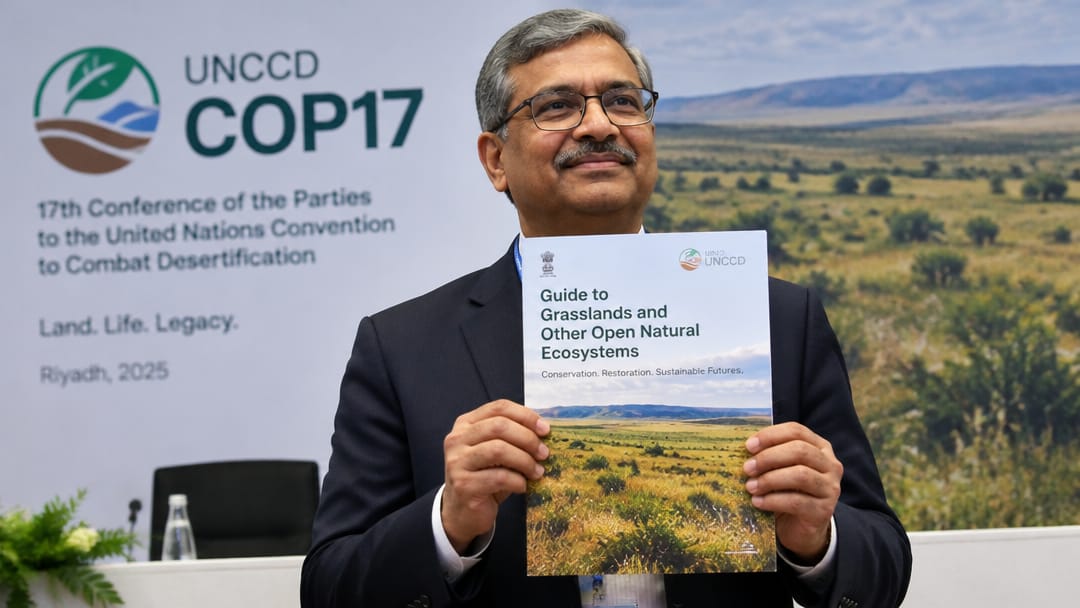
India released its first-ever Guide to Grasslands and Other Open Natural Ecosystems at the 17th Conference of Parties of the UN Convention to Combat Desertification, held in 2025. The guide formally recognises grasslands, savannas, scrublands, and other open natural ecosystems as distinct biomes requiring dedicated conservation — a significant policy shift from treating them as degraded forests or wasteland available for diversion.
Why it matters
India's grasslands and open natural ecosystems (ONEs) have historically suffered a classification problem: government land records labelled them 'wastelands' or 'degraded forests,' making them easy targets for diversion to solar parks, plantations, and infrastructure. This guide, launched at UNCCD COP17, is the first official national document to map, describe, and assert conservation value for these ecosystems.
The UNCCD (United Nations Convention to Combat Desertification) is the third Rio Convention alongside UNFCCC and CBD, adopted in 1994 and entered into force in 1996. India is a signatory. COP17 is a critical moment because the convention's 2022–2030 strategic framework explicitly targets Land Degradation Neutrality (LDN), and India has committed to restoring 26 million hectares of degraded land by 2030 under its NDC.
Grasslands cover roughly 12% of India's geographic area and support species like the Great Indian Bustard (Critically Endangered), Blackbuck, Chinkara, and Indian Wolf — all heavily dependent on open landscapes. Because grasslands store carbon in soil rather than biomass, they are systematically undercounted in carbon accounting, making them invisible in green-finance frameworks.
For NABARD aspirants: rural pastoral communities depend on these commons for livestock grazing. Their degradation directly affects rural livelihoods, making this relevant to NABARD's mandate on rural development and ecosystem services. The guide could unlock climate finance for grassland restoration projects under the Green Climate Fund and NABARD's own NCEF (National Clean Energy Fund) channels.
Trump's planned Quad summit before China talks puts India's role in focus
What happened
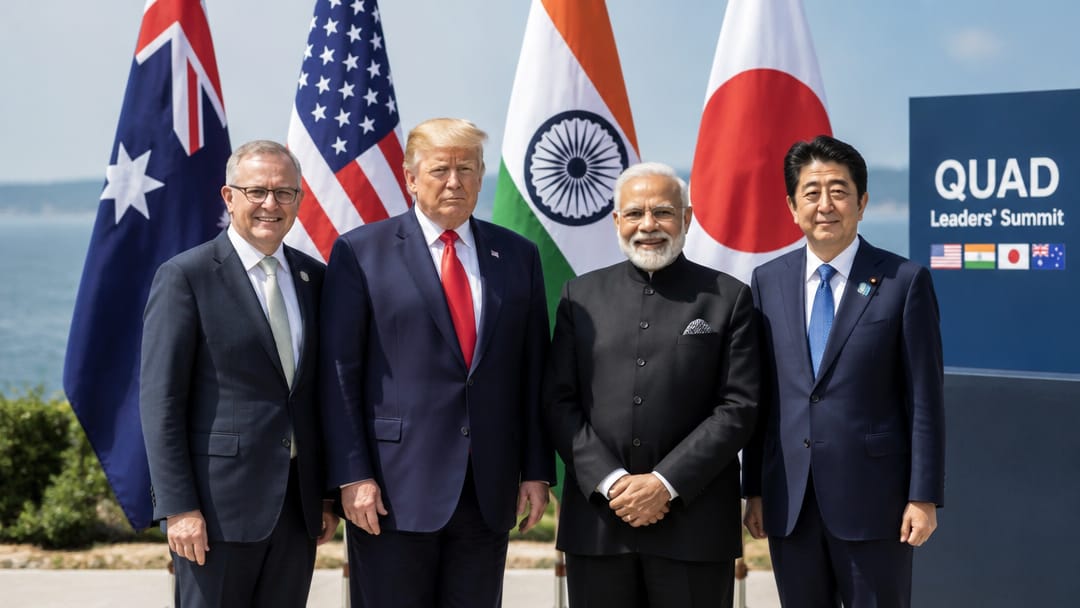
President Trump's upcoming Asia trip is expected to include a Quad leaders' meeting — bringing together the US, India, Japan, and Australia — before his anticipated talks with China. Experts suggest this sequencing could reinforce US-India strategic ties and signal to Beijing that Washington maintains its Indo-Pacific partnerships. The Quad, revived as a leaders-level forum in 2021, has become a central mechanism for coordinating security, technology, and infrastructure cooperation across the Indo-Pacific.
Why it matters
The Quad — formally the Quadrilateral Security Dialogue — groups the United States, India, Japan, and Australia. Originally launched in 2007 by Japanese PM Shinzo Abe, it was revived after the 2017 Doklam standoff and elevated to a leaders' summit format in March 2021 under President Biden. Its stated agenda spans maritime security, vaccine distribution, clean energy, critical technologies, infrastructure, and cybersecurity — deliberately avoiding a formal military alliance structure to allow India's strategic autonomy.
The timing of a Quad meeting before US-China talks carries strategic weight. It signals that Washington treats the Indo-Pacific grouping as a standing diplomatic platform, not merely a reactive China-containment tool — a distinction India consistently emphasises. India's position in the Quad is particularly sensitive: New Delhi participates in the grouping while maintaining independent ties with Russia and avoiding explicit anti-China rhetoric.
For UPSC aspirants, the Quad sits at the intersection of India's foreign policy doctrine (strategic autonomy), multilateral frameworks (non-alliance security cooperation), and the Indo-Pacific construct. Examiners frequently test its founding year, member composition, working groups, and India's stated rationale for participation. The evolution from a naval exercise format (Malabar exercises) to a heads-of-government summit is itself an important progression worth noting.
India-Japan 7th forestry JWG meets in Bengaluru to review bilateral cooperation
What happened
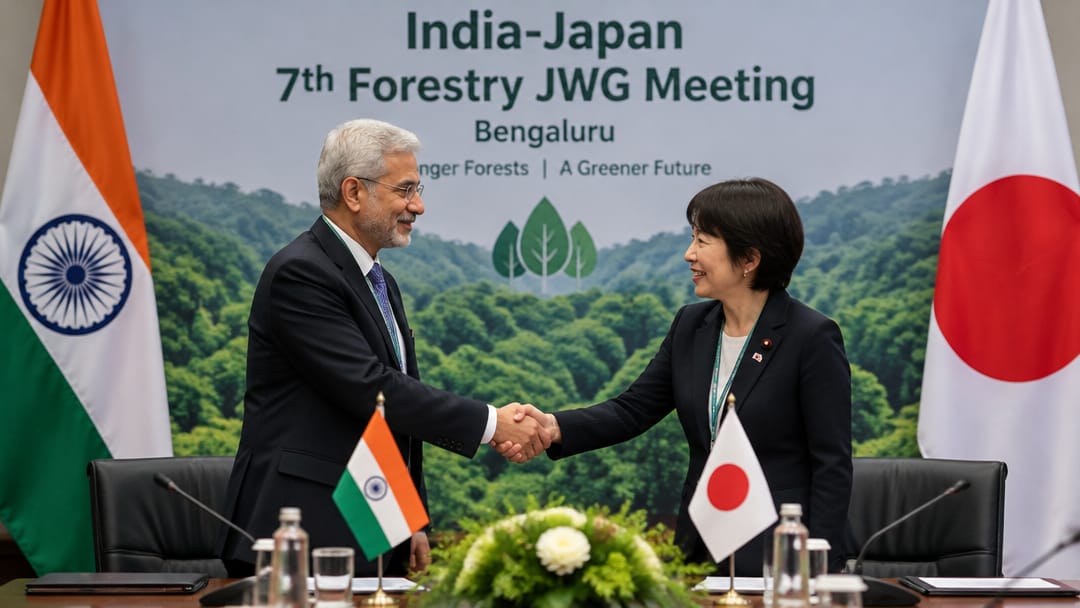
India and Japan held their 7th Joint Working Group meeting on forestry cooperation in Bengaluru, reviewing progress and strengthening collaboration in the sector. The meeting, convened under the bilateral forestry framework between the two countries, examined areas including forest management, afforestation, timber trade, and climate-linked forest conservation. This JWG mechanism forms part of India-Japan Special Strategic and Global Partnership, which covers environment and natural resource cooperation alongside defence, technology, and economic ties.
Why it matters
India and Japan established a bilateral forestry cooperation framework under their broader Special Strategic and Global Partnership, which was elevated to that status in 2014. The Joint Working Group on Forestry is the institutional mechanism through which both countries exchange technical expertise, share best practices in sustainable forest management, and coordinate on issues like agroforestry, bamboo, timber legality, and forest-based carbon sequestration.
Japan is a world leader in forest management — over 67% of its land is forested, and it has developed sophisticated community forestry and disaster-prevention forestry models. India, with roughly 24% of its geographical area under forest and tree cover (as per India State of Forest Report 2023), is actively pursuing forest restoration under its Nationally Determined Contributions (NDCs) which commit to creating an additional carbon sink of 2.5 to 3 billion tonnes of CO₂ equivalent through forest and tree cover by 2030.
The JWG mechanism allows India to draw on Japanese expertise in watershed forestry, urban greening, and climate-resilient plantations. For UPSC aspirants, the connection between bilateral forestry frameworks and India's international climate commitments is key. For NABARD aspirants, the agroforestry, bamboo economy, and forest-based livelihood dimensions are directly relevant to rural credit and green finance policy.
Madras HC directs Tamil Nadu to assess need for more corruption courts
What happened
The Madras High Court has directed the Tamil Nadu government to examine whether additional special courts are needed to try pending corruption cases in the state. The direction reflects concern over the backlog of cases under the Prevention of Corruption Act. Special courts for corruption cases derive their authority from the PC Act and CrPC, and their establishment requires state government action, often prompted by judicial direction or central government recommendation.
Why it matters
Special courts for corruption cases in India are established primarily under Section 3 of the Prevention of Corruption Act, 1988, which empowers the Central or State Government, in consultation with the High Court, to designate Sessions Courts as Special Judges to try offences under the PC Act. The rationale is expeditious trial: corruption cases involving public servants require dedicated judicial infrastructure so that proceedings are not delayed by ordinary trial court backlogs.
The Madras High Court's direction sits within a broader constitutional and procedural framework. Under Article 227, High Courts have superintendence over all courts within their territorial jurisdiction, and they frequently exercise this power to issue administrative directions on court infrastructure and pendency. The direction to the Tamil Nadu government is not a writ of mandamus in the strict sense — it is an administrative-judicial nudge rooted in superintendence jurisdiction.
For CLAT PG, the examiner often tests the distinction between Special Courts under the PC Act, Special Courts under PMLA (which are designated as Special Courts under Section 43 of PMLA 2002), and Fast Track Courts established under central schemes. These are frequently conflated in MCQ distractors. The key distinction: PC Act Special Courts try scheduled offences under the PC Act; PMLA Special Courts (also called designated courts) try money-laundering offences and may also try the scheduled offences.
For UPSC, the institutional angle — that the state government acts in consultation with the High Court, not unilaterally — is the precision point most likely to be tested in a statement-evaluation format.
India co-chairs ADMM-Plus counter-terrorism working group with Malaysia for 2024–2027
What happened
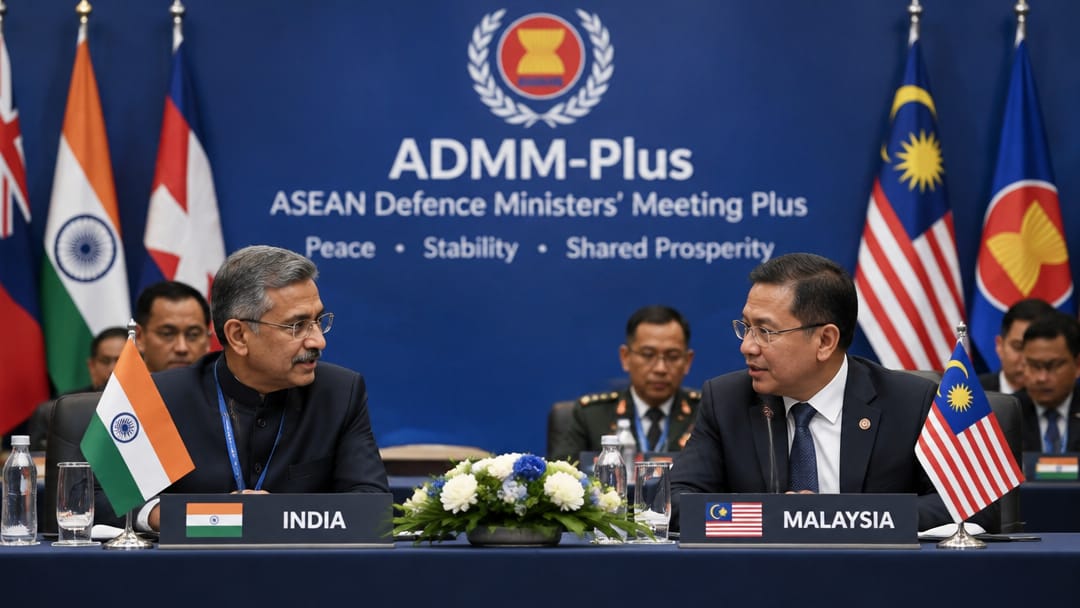
India and Malaysia are jointly co-chairing the Experts' Working Group on counter-terrorism under ADMM-Plus for the 2024–2027 cycle. ADMM-Plus is the defence ministers' forum of ASEAN's ten members plus eight dialogue partners, including India. The co-chairmanship reflects India's deepening defence diplomacy in the Indo-Pacific and its institutional engagement with ASEAN-led security architecture beyond bilateral arrangements.
Why it matters
ADMM-Plus (ASEAN Defence Ministers' Meeting Plus) is the principal multilateral defence cooperation mechanism in the Asia-Pacific. Established in 2010, it brings together the ten ASEAN member states and eight dialogue partners — Australia, China, India, Japan, New Zealand, Republic of Korea, Russia, and the United States — to advance practical security cooperation.
The forum operates through Experts' Working Groups (EWGs) on specific themes: counter-terrorism, humanitarian assistance and disaster relief (HADR), maritime security, military medicine, peacekeeping operations, humanitarian mine action, and cyber security. Each EWG is co-chaired by one ASEAN and one Plus-country, rotating every three years.
India co-chairing the counter-terrorism EWG with Malaysia (an ASEAN member) for 2024–2027 is institutionally significant for two reasons. First, it places India at the operational centre of ASEAN's multilateral counter-terrorism dialogue — not merely as an observer but as a co-driver of the agenda. Second, it reflects India's Act East Policy in action: deepening strategic engagement with Southeast Asia through defence institutions rather than just trade or cultural links.
For exam purposes, ADMM-Plus sits at the intersection of India's multilateral defence diplomacy, ASEAN centrality, and Indo-Pacific strategy — all high-frequency UPSC themes. The distinction between ADMM (ASEAN-only) and ADMM-Plus (ASEAN + 8 partners) is a classic examiner distractor.
Model Code of Conduct and Section 58 of RPA: what the examiner actually tests
What happened
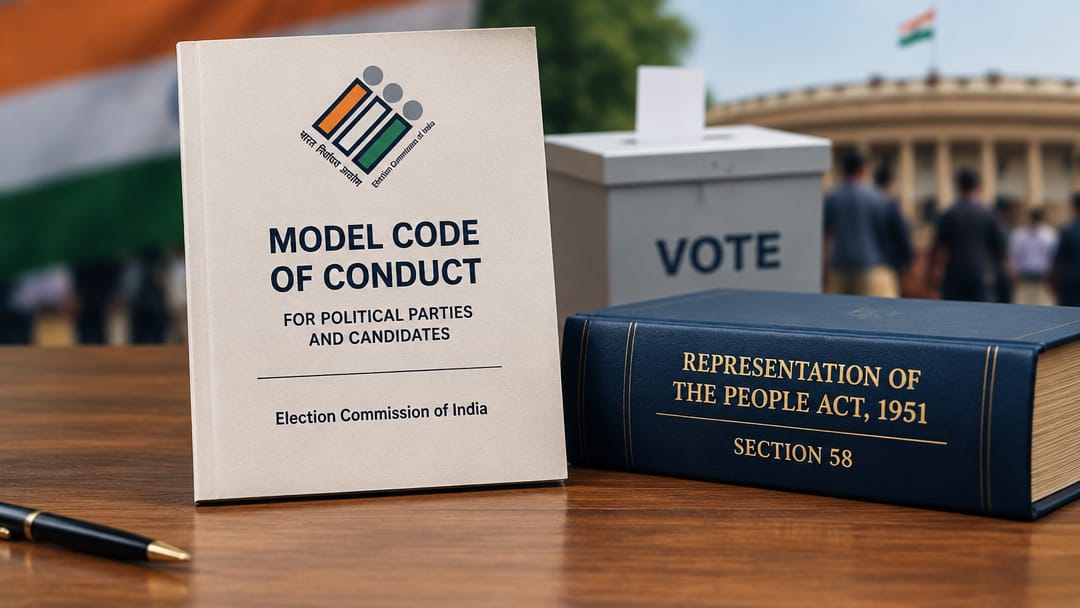
The Model Code of Conduct governs political parties and candidates during elections, enforced by the Election Commission of India without a statutory base. Section 58 of the Representation of the People Act, 1951 deals with countermanding of elections on the death of a candidate. These two provisions — one conventional, one statutory — are high-frequency Prelims topics because the examiner consistently tests constitutional limits on executive power during election periods.
Why it matters
The Model Code of Conduct (MCC) is a set of guidelines issued by the Election Commission of India (ECI) under its plenary powers derived from Article 324 of the Constitution. Critically, the MCC has no statutory backing — it operates purely on convention and moral authority. It comes into force from the date the election schedule is announced and remains in effect until results are declared. It binds political parties, candidates, and the government in power, restricting announcement of new schemes, misuse of official machinery, and partisan use of state resources.
Article 324 gives the ECI superintendence, direction, and control over elections — broad enough to cover the MCC's enforcement. This is why courts have consistently upheld ECI's authority to enforce it despite the absence of a law.
Section 58 of the Representation of the People Act, 1951 provides for countermanding — that is, cancellation — of a poll when a contesting candidate dies between the last date of withdrawal and polling day. This applies to general elections to the Lok Sabha and State Assemblies. It is distinct from adjournment under Section 57 (which covers disruption on polling day itself). The examiner often tests whether candidates can distinguish Section 57 from Section 58, and whether they understand the MCC's constitutional basis as distinct from its statutory status.
Jaishankar at NDTV World Summit: India as rule-shaper, not rule-taker
What happened
At the NDTV World Summit in New Delhi on October 22, External Affairs Minister S. Jaishankar articulated India's foreign policy posture as that of an active rule-shaper in the global order rather than a passive rule-follower. His remarks, framed as a 'New India Narrative,' prompted debate about India's strategic autonomy, multipolarity, and assertive diplomacy. The summit served as a platform to project India's growing confidence in bilateral and multilateral engagements amid shifting geopolitical alignments.
Why it matters
Jaishankar's 'New India Narrative' is rooted in a broader foreign policy doctrine sometimes called 'strategic autonomy' — India's ability to pursue its national interests independently rather than aligning unconditionally with any single power bloc. This builds on India's Non-Aligned Movement (NAM) legacy but departs from it by being more transactional and issue-based.
Key pillars of this doctrine include: (1) multi-alignment — engaging the US, Russia, China, and the Global South simultaneously; (2) Neighbourhood First Policy — prioritising South Asian connectivity; (3) Act East Policy — deepening Indo-Pacific ties; and (4) 'Voice of the Global South' — positioning India as a spokesperson for developing nations, prominent during India's G20 Presidency in 2023.
For UPSC, this connects to two static anchors. First, India's foreign policy evolution — from Nehruvian non-alignment through the Look East Policy (1992) to Act East (2014) and the current multi-vector approach. Second, multilateral institutions where India plays this role: G20, SCO, BRICS, QUAD, and the UN Security Council non-permanent seat.
The debate sparked by Jaishankar's remarks reflects a genuine tension: does strategic autonomy risk strategic isolation? Critics point to India's abstentions at the UNSC on the Russia-Ukraine conflict, while proponents argue it demonstrates exactly the independent posture India seeks. This tension — principle versus pragmatism — is precisely what UPSC examiners test.