01 Read
What happened
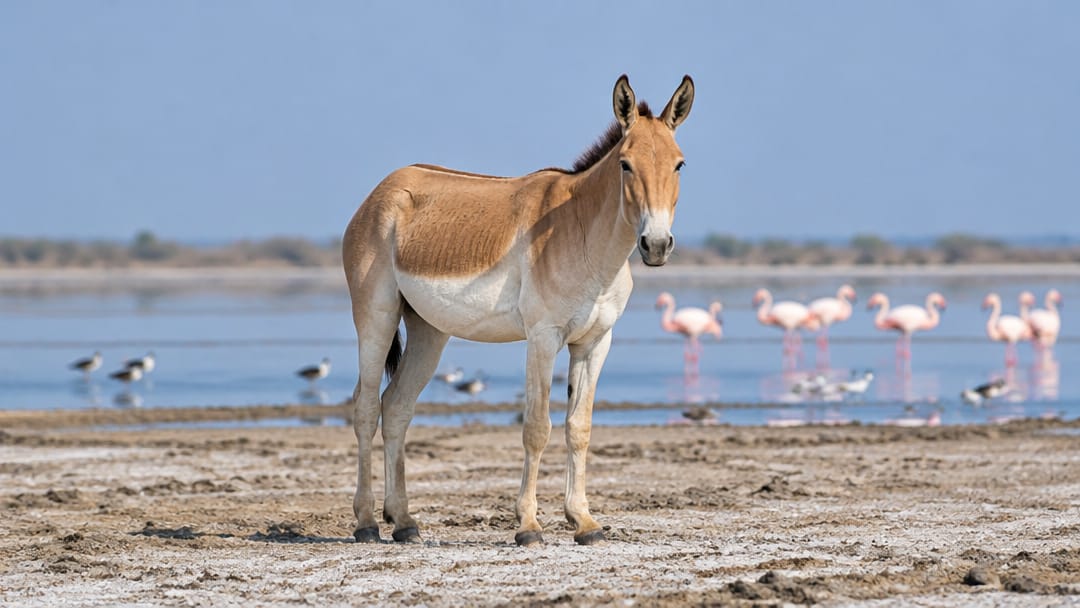
The Gujarat government has launched a conservation project in the Little Rann of Kutch targeting water retention, soil erosion control, and wildlife habitat improvement. The Little Rann is the sole habitat of the Indian Wild Ass, a Schedule I species protected under the Wildlife Protection Act. The initiative aims to restore the ecological balance of this salt marsh ecosystem, which also supports flamingos and other migratory birds critical to the region's biodiversity.
02 Understand
Why it matters
The Little Rann of Kutch (LRK) is a seasonal salt marsh in Gujarat's Surendra nagar and Kutch districts. It is notified as the Indian Wild Ass Sanctuary — the only place in the world where the Indian Wild Ass (Equus hemionus khur), locally called 'Ghudkhur,' survives in the wild. The species is classified as Near Threatened on the IUCN Red List and listed under Schedule I of the Wildlife Protection Act, 1972, giving it the highest legal protection in India.
The LRK ecosystem is fragile: it floods seasonally during monsoon (providing freshwater) and desiccates to a salt flat in summer. Soil erosion and water scarcity outside the monsoon period reduce carrying capacity for herbivores. The Gujarat government's project addresses this through water conservation structures and soil stabilisation — essentially applying watershed management principles to a protected area.
For exam purposes, the key static facts are: (1) LRK is not a Ramsar site, distinguishing it from nearby wetlands; (2) the Indian Wild Ass Sanctuary was established in 1973; (3) the species faces threats from disease (surra), agricultural encroachment, and road accidents. UPSC has repeatedly tested species-habitat linkages and Schedule I classifications. NABARD-relevant angles include how watershed interventions in protected areas can simultaneously support pastoral livelihoods of Agaria salt farmers who depend on LRK.
Remember + Why it matters
The key recall facts and exact examiner angle for NABARD Grade A are in the Crux app.
01
Key figure and date from this topic
02
Specific number or threshold to remember
03
Policy or regulatory implication
Read + Understand free forever · 30-day free trial