01 Read
What happened
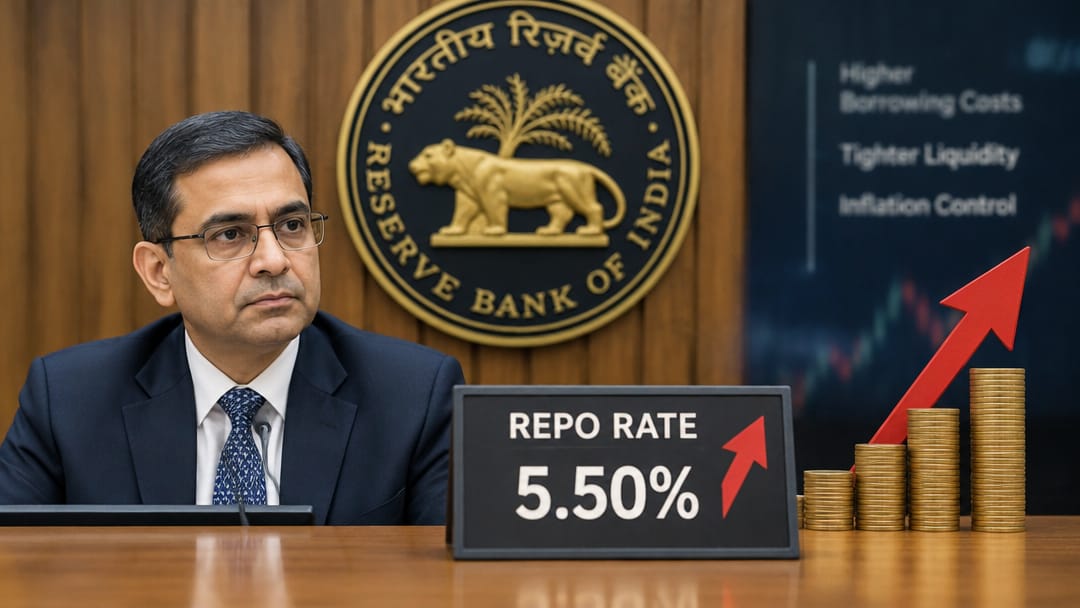
The Reserve Bank of India's Monetary Policy Committee, chaired by Governor Sanjay Malhotra, raised the repo rate by 25 basis points to 5.50% on October 7, 2025. The decision reflects the MPC's continued prioritisation of inflation control amid a challenging global environment marked by tight financial conditions. The rate hike transmits upward pressure on bank lending rates, raising borrowing costs for households and firms, and tightening liquidity across the economy.
02 Understand
Why it matters
The repo rate is the rate at which the RBI lends overnight funds to commercial banks under the Liquidity Adjustment Facility (LAF). When the MPC raises it, banks face higher costs for short-term borrowing from the RBI, which they pass on to customers through higher lending rates — mortgages, auto loans, working capital credit all become costlier.
The transmission mechanism works in steps: repo rate rise → bank cost of funds rises → marginal cost of funds-based lending rate (MCLR) rises → retail and corporate loan rates rise → consumption and investment slow → aggregate demand falls → inflationary pressure eases over 3–6 quarters.
India's inflation targeting framework, in force since 2016, mandates the MPC to keep CPI inflation at 4% with a ±2% band (i.e., 2–6%). When inflation threatens to breach the upper tolerance band or stays persistently above target, the MPC is legally obligated to explain its failure and tighten policy.
The LAF corridor defines the policy rate band: the Standing Deposit Facility (SDF) rate forms the floor, the repo rate is the policy anchor in the middle, and the Marginal Standing Facility (MSF) rate forms the ceiling. A repo rate hike shifts the entire corridor upward, tightening systemic liquidity. For NABARD, higher repo rates feed into NABARD's own refinancing rates to rural cooperative banks and RRBs, raising agricultural credit costs at the farm level.
Remember + Why it matters
The key recall facts and exact examiner angle for RBI Grade B are in the Crux app.
01
Key figure and date from this topic
02
Specific number or threshold to remember
03
Policy or regulatory implication
Read + Understand free forever · 30-day free trial