01 Read
What happened
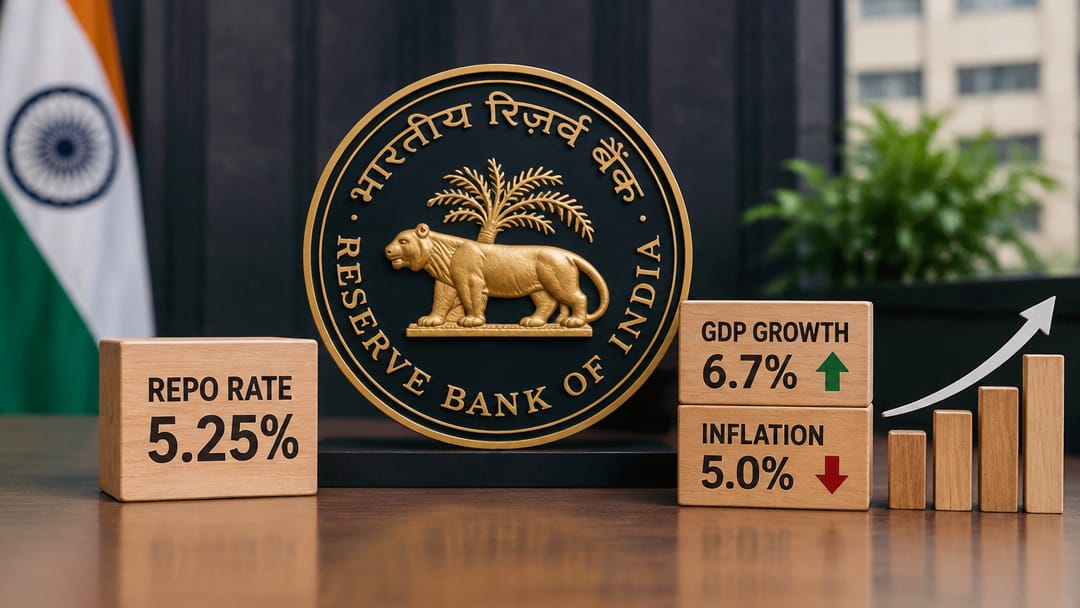
The RBI's MPC, in its August 3–5, 2026 meeting, held the repo rate unchanged at 5.25% for the fourth consecutive review, citing global geopolitical uncertainty and elevated energy prices. FY27 GDP growth forecast was raised to 6.7% from 6.6%, with Q1 revised up to 7%. Headline CPI inflation projection was trimmed to 5.0% from 5.1%, while core inflation forecast was cut sharply by 40 basis points to 4.3%. The neutral policy stance was retained.
02 Understand
Why it matters
The MPC operates within India's flexible inflation-targeting framework, where the RBI targets CPI inflation at 4% (±2%). The repo rate — the rate at which the RBI lends overnight to commercial banks — is the primary instrument. When the MPC holds the rate, it signals neither stimulus nor tightening; a neutral stance means the next move could go either way depending on incoming data.
The transmission mechanism matters for exams: a repo rate cut reduces borrowing costs for banks, which should lower lending rates, stimulate credit growth, boost investment and consumption, and support GDP — but with a lag. When the MPC holds despite softening inflation, it signals that risks (here, geopolitical tension, energy prices, monsoon uncertainty) prevent a premature pivot.
The distinction between headline CPI and core inflation is exam-critical. Headline CPI includes food and fuel, which are volatile and supply-driven. Core inflation strips these out, reflecting demand-side price pressure that monetary policy can actually influence. A 40 bps cut in core inflation forecast (4.7% → 4.3%) tells the MPC that underlying demand pressure is easing — a signal that could support future rate cuts if sustained.
For NABARD aspirants: the repo rate directly affects NABARD's borrowing cost from RBI, which in turn influences refinancing rates for rural and agricultural credit. A hold means no immediate relief on agricultural lending costs.
The LAF corridor: the repo rate (5.25%) is the policy rate; the SDF (Standing Deposit Facility) forms the floor and the MSF (Marginal Standing Facility) forms the ceiling, together defining the liquidity adjustment corridor within which interbank rates operate.
The transmission mechanism matters for exams: a repo rate cut reduces borrowing costs for banks, which should lower lending rates, stimulate credit growth, boost investment and consumption, and support GDP — but with a lag. When the MPC holds despite softening inflation, it signals that risks (here, geopolitical tension, energy prices, monsoon uncertainty) prevent a premature pivot.
The distinction between headline CPI and core inflation is exam-critical. Headline CPI includes food and fuel, which are volatile and supply-driven. Core inflation strips these out, reflecting demand-side price pressure that monetary policy can actually influence. A 40 bps cut in core inflation forecast (4.7% → 4.3%) tells the MPC that underlying demand pressure is easing — a signal that could support future rate cuts if sustained.
For NABARD aspirants: the repo rate directly affects NABARD's borrowing cost from RBI, which in turn influences refinancing rates for rural and agricultural credit. A hold means no immediate relief on agricultural lending costs.
The LAF corridor: the repo rate (5.25%) is the policy rate; the SDF (Standing Deposit Facility) forms the floor and the MSF (Marginal Standing Facility) forms the ceiling, together defining the liquidity adjustment corridor within which interbank rates operate.
Remember + Why it matters
The key recall facts and exact examiner angle for UPSC CSE are in the Crux app.
01
Key figure and date from this topic
02
Specific number or threshold to remember
03
Policy or regulatory implication
Read + Understand free forever · 30-day free trial