01 Read
What happened
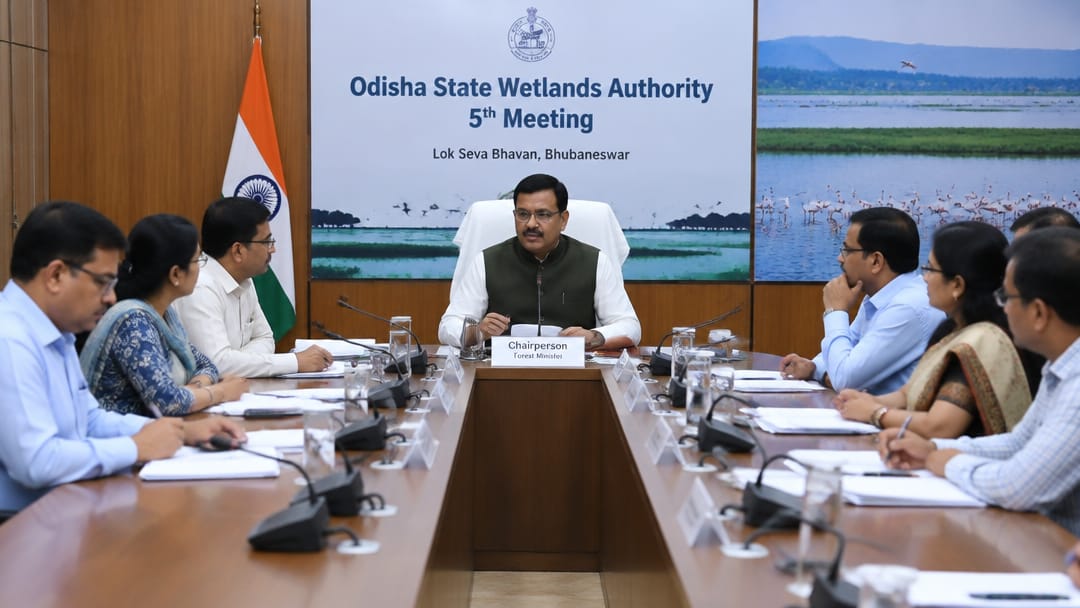
Odisha's State Wetlands Authority convened its fifth meeting at Lok Seva Bhavan, Bhubaneswar, chaired by the Forest Minister. The authority reviewed implementation of the Wetlands (Conservation and Management) Rules, 2017, discussed mapping of wetlands across districts, and considered measures to curb encroachment and pollution. Odisha has significant wetland resources including Chilika Lake, Asia's largest brackish water lagoon and a Ramsar site, making state-level governance under this authority directly relevant to national conservation commitments.
02 Understand
Why it matters
State Wetlands Authorities (SWAs) are statutory bodies constituted under the Wetlands (Conservation and Management) Rules, 2017, which replaced the earlier 2010 Rules. These rules were framed under the Environment (Protection) Act, 1986, with the Ministry of Environment, Forest and Climate Change (MoEFCC) as the nodal central ministry. Every state must constitute an SWA chaired by the Chief Minister or a designated minister, making it the primary regulatory body for wetland governance at the state level.
The 2017 Rules shifted the framework from a negative list of prohibited activities to a 'wise use' approach aligned with the Ramsar Convention's core principle — that wetlands can be sustainably used while conserving their ecological character. Ramsar Convention (Convention on Wetlands of International Importance, signed in Ramsar, Iran, 1971) is the only global treaty dedicated to a single ecosystem type.
India currently has 89 Ramsar sites (as of 2024), the highest in Asia. Odisha's Chilika Lake was India's first Ramsar site (1981), and Bhitarkanika Mangroves is the second from Odisha. The SWA is responsible for identifying, notifying, and preparing management plans for all wetlands within the state — a function directly tested in exams through questions about which authority governs wetland regulation and what the 2017 Rules mandate.
Remember + Why it matters
The key recall facts and exact examiner angle for NABARD Grade A are in the Crux app.
01
Key figure and date from this topic
02
Specific number or threshold to remember
03
Policy or regulatory implication
Read + Understand free forever · 30-day free trial