01 Read
What happened
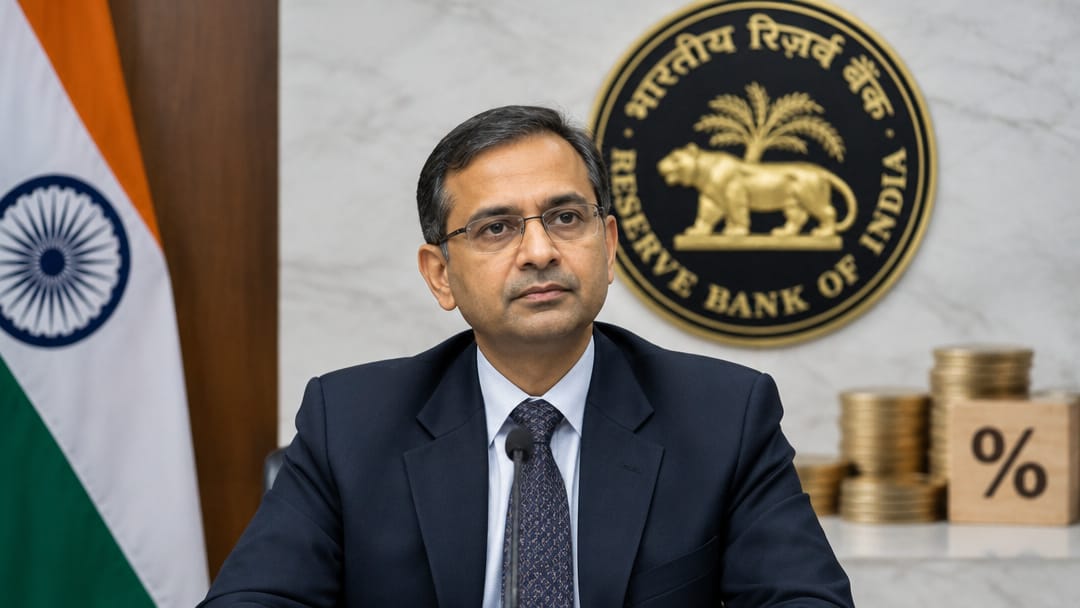
The RBI's Monetary Policy Committee kept the policy repo rate unchanged at 5.25 per cent and retained its neutral stance. The Standing Deposit Facility rate remains at 5 per cent, and the Marginal Standing Facility and bank rate stay at 5.5 per cent. Governor Sanjay Malhotra cited US tariff measures, crude oil volatility, and West Asia tensions as key risks. Inflation remains within the tolerance band, and domestic growth is supported by favourable monsoon and capital inflows.
02 Understand
Why it matters
This MPC decision is a textbook illustration of the RBI's inflation-targeting framework in action. Under the flexible inflation targeting (FIT) framework adopted in 2016, the MPC is mandated to keep CPI inflation at 4 per cent, with a tolerance band of ±2 per cent (i.e., 2–6 per cent). When inflation is within this band but showing upward movement, and growth remains resilient, the MPC has no compelling trigger to either cut or hike — hence a hold with a neutral stance.
The LAF corridor is central to understanding how these rates interact. The repo rate (5.25%) is the rate at which banks borrow overnight from RBI against collateral. The SDF rate (5 per cent) forms the floor — banks park surplus liquidity with RBI at this rate. The MSF rate (5.5%) forms the ceiling — banks borrow emergency overnight funds at this rate. Together, these create a 50-basis-point corridor that guides short-term money market rates.
The neutral stance signals that the MPC is not pre-committed to either cutting or hiking. It retains flexibility depending on how inflation and growth evolve. This contrasts with an 'accommodative' stance (biased toward cuts) or a 'withdrawal of accommodation' stance (biased toward hikes).
For transmission: when the repo rate holds steady, bank lending rates and deposit rates are unlikely to move significantly. Credit growth remains dependent on demand conditions rather than rate incentives. For agricultural credit — relevant to NABARD aspirants — NABARD's refinancing rates are linked to prevailing policy rates, so a hold means rural lending costs remain stable.
Remember + Why it matters
The key recall facts and exact examiner angle for UPSC CSE are in the Crux app.
01
Key figure and date from this topic
02
Specific number or threshold to remember
03
Policy or regulatory implication
Read + Understand free forever · 30-day free trial