01 Read
What happened
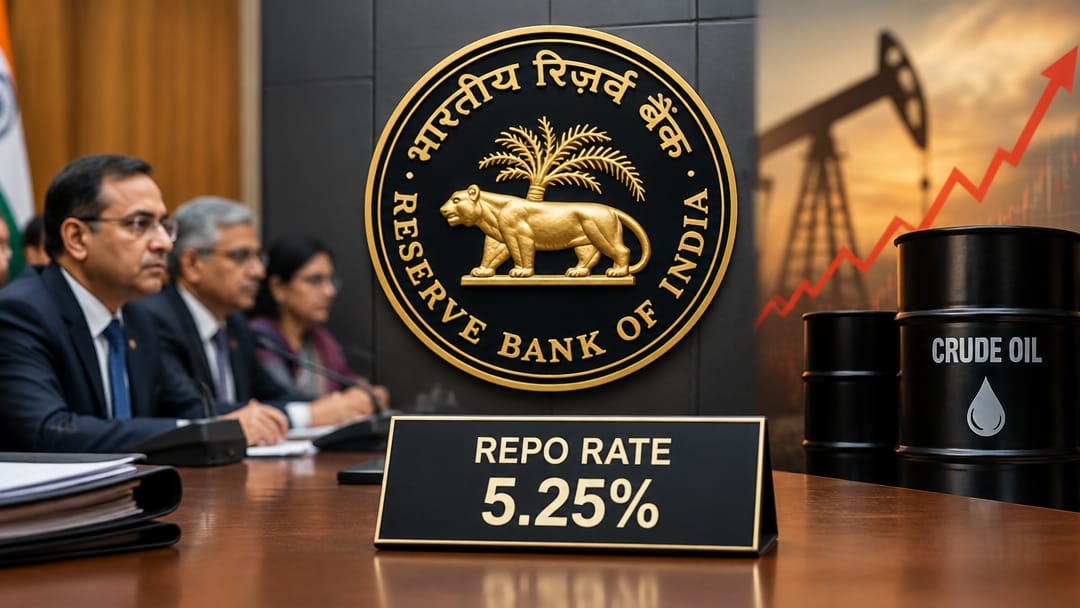
The RBI's Monetary Policy Committee began its June 2026 three-day meeting under Governor Sanjay Malhotra, with markets widely expecting the repo rate to hold at 5.25%. The key tension is rising crude oil prices, which threaten to push inflation higher and complicate the MPC's accommodative stance. Having already cut rates earlier in 2025-26, the committee faces pressure to pause and assess transmission before any further easing of monetary conditions.
02 Understand
Why it matters
The MPC operates India's flexible inflation targeting framework, mandated to keep CPI inflation at 4% with a ±2% band. The repo rate — the rate at which RBI lends overnight funds to commercial banks — is the primary policy instrument. When MPC cuts repo, borrowing costs fall, credit expands, and demand rises; when it holds or hikes, it signals caution about inflation.
The LAF (Liquidity Adjustment Facility) corridor frames daily liquidity: the repo rate is the ceiling for borrowing from RBI, and the Standing Deposit Facility (SDF) rate is the floor for parking funds with RBI. The policy rate sits at the midpoint, giving the corridor its shape.
Crude oil prices matter because India imports roughly 85% of its oil. A sustained rise feeds directly into transport costs, manufacturing input costs, and food supply chains — creating cost-push inflation that the MPC cannot easily offset with rate cuts without risking a price spiral. This is the classic supply-side bind: cutting rates to support growth risks stoking inflation that is already being pushed up by external commodity prices.
The June 2026 pause scenario reflects a 'wait and watch' posture: prior cuts have been made, and the MPC now waits to see whether credit growth and investment respond before deciding the next move. This transmission lag — typically 2–3 quarters — is central to understanding why the MPC does not adjust rates every meeting.
The LAF (Liquidity Adjustment Facility) corridor frames daily liquidity: the repo rate is the ceiling for borrowing from RBI, and the Standing Deposit Facility (SDF) rate is the floor for parking funds with RBI. The policy rate sits at the midpoint, giving the corridor its shape.
Crude oil prices matter because India imports roughly 85% of its oil. A sustained rise feeds directly into transport costs, manufacturing input costs, and food supply chains — creating cost-push inflation that the MPC cannot easily offset with rate cuts without risking a price spiral. This is the classic supply-side bind: cutting rates to support growth risks stoking inflation that is already being pushed up by external commodity prices.
The June 2026 pause scenario reflects a 'wait and watch' posture: prior cuts have been made, and the MPC now waits to see whether credit growth and investment respond before deciding the next move. This transmission lag — typically 2–3 quarters — is central to understanding why the MPC does not adjust rates every meeting.
Remember + Why it matters
The key recall facts and exact examiner angle for UPSC CSE are in the Crux app.
01
Key figure and date from this topic
02
Specific number or threshold to remember
03
Policy or regulatory implication
Read + Understand free forever · 30-day free trial