India now has 58 tiger reserves across 18 states, NTCA confirms
What happened
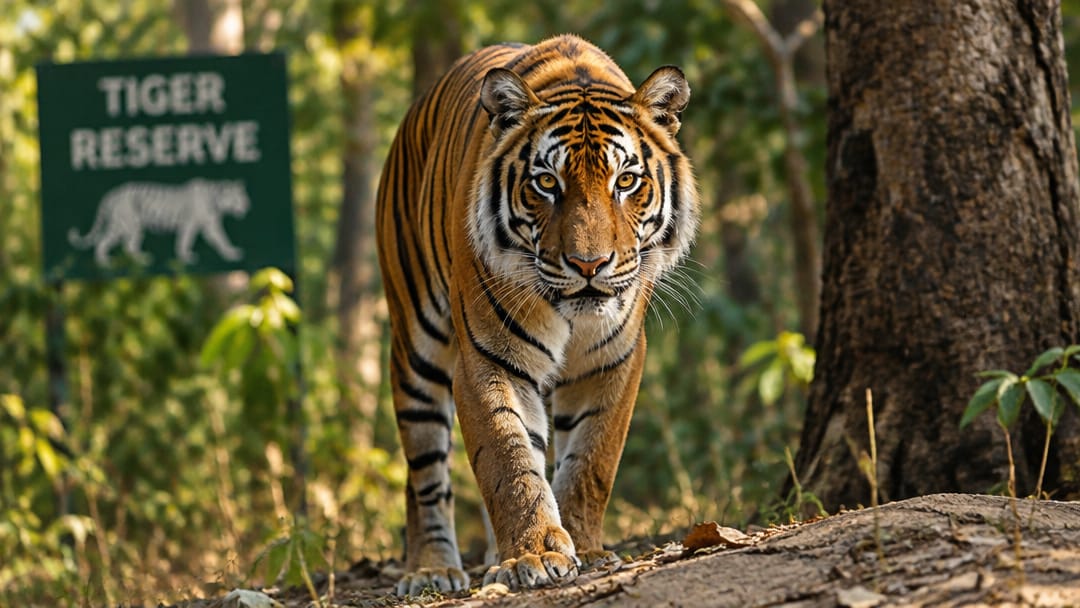
India's National Tiger Conservation Authority oversees 58 tiger reserves spread across 18 states, making it the world's largest tiger conservation network. Established under Project Tiger (1973) and given statutory backing by the Wildlife Protection Amendment Act 2006, these reserves operate under a core-buffer zoning system. Madhya Pradesh hosts the most reserves, while Corbett in Uttarakhand was the first. India holds roughly 75 percent of the world's wild tiger population according to the 2022 tiger census.
Why it matters
Tiger reserves in India are not simply protected forests — they are a layered legal and ecological architecture. The Wildlife Protection Amendment Act of 2006 gave statutory recognition to the National Tiger Conservation Authority (NTCA) and mandated the core-buffer zone model. The core zone is inviolate (no human activity), while the buffer zone allows regulated use by local communities.
Project Tiger was launched in 1973 under Prime Minister Indira Gandhi with just 9 reserves. The number grew steadily: 27 reserves by 2007, and now 58 as of the latest NTCA count. This expansion is exam-critical because UPSC regularly blanks out the current count or the number of states covered.
The 2022 All-India Tiger Estimation (Status of Tigers in India report) placed the wild tiger population at 3,682 — a 200% increase since 1973. India accounts for approximately 75% of the global wild tiger population, a fact that appears in both UPSC and NABARD questions.
Key institutional triangle: NTCA (nodal authority under MoEFCC), Wildlife Institute of India (conducts census using camera traps and pug marks), and State Forest Departments (field implementation). The nodal ministry is the Ministry of Environment, Forest and Climate Change (MoEFCC).
For NABARD aspirants, tiger reserves connect to eco-tourism revenue, buffer-zone community livelihoods, and green finance for wildlife corridor maintenance — all tested through passage-based application questions.
India's financial inclusion stack: from zero-balance accounts to unified credit
What happened
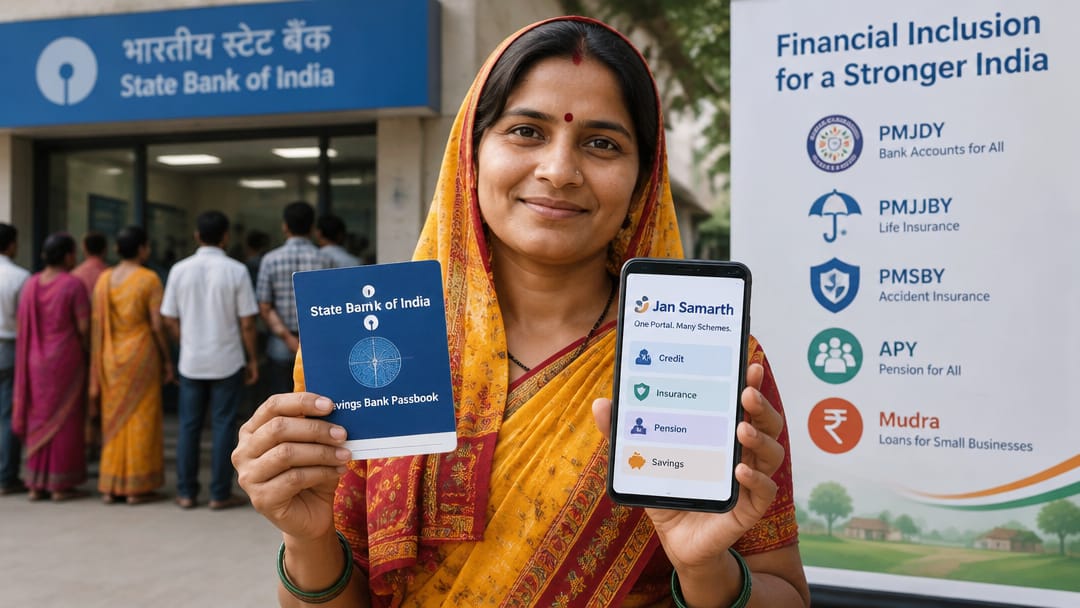
India's financial inclusion drive, anchored by Pradhan Mantri Jan Dhan Yojana (PMJDY), has opened over 53 crore bank accounts, with more than 55% held by women. The Jan Samarth portal unifies 13 credit-linked government schemes on a single digital platform. Together with PMJJBY, PMSBY, APY, and Mudra, these initiatives form a layered ecosystem covering savings, insurance, credit, and pensions for previously unbanked populations across rural and urban India.
Why it matters
Financial inclusion means ensuring every citizen has access to affordable formal financial services — savings, credit, insurance, and remittances — regardless of geography or income. India's approach is architected in layers.
The foundation is PMJDY (launched August 28, 2014), which mandates zero-balance accounts with a RuPay debit card, a ₹10,000 overdraft facility, and a ₹2 lakh accidental insurance cover. With 53+ crore accounts and deposits exceeding ₹2.3 lakh crore, it is the world's largest financial inclusion programme.
Above the savings layer sits an insurance layer: PMJJBY (life cover ₹2 lakh at ₹436/year) and PMSBY (accidental death/disability ₹2 lakh at ₹20/year). The pension layer is covered by Atal Pension Yojana (APY), targeting unorganised sector workers with guaranteed pensions of ₹1,000–₹5,000/month on retirement at 60.
The credit layer is served by Pradhan Mantri Mudra Yojana (PMMY), which lends to micro-enterprises under three sub-categories — Shishu (up to ₹50,000), Kishore (₹50,001–₹5 lakh), and Tarun (₹5–₹10 lakh) — without collateral. A fourth tier, Tarun Plus (up to ₹20 lakh), was added for graduates.
Jan Samarth is the digital convergence layer, a government portal that connects 13 credit-linked schemes — from education loans to Mudra — through a single application interface, eliminating the need for a borrower to visit multiple ministries or portals.
For RBI and NABARD exams, the critical angle is the role of Business Correspondents (BCs), Priority Sector Lending (PSL) targets, and how PMJDY accounts serve as conduits for Direct Benefit Transfers (DBT), reducing leakage in welfare delivery.
Odisha's State Wetlands Authority holds 5th meeting to review conservation gaps
What happened
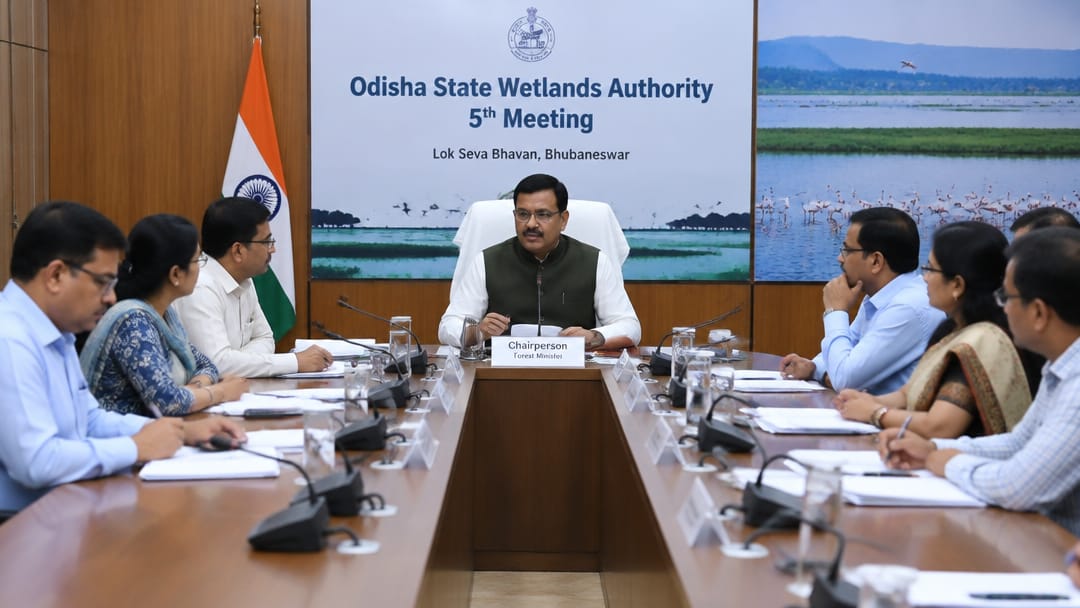
Odisha's State Wetlands Authority convened its fifth meeting at Lok Seva Bhavan, Bhubaneswar, chaired by the Forest Minister. The authority reviewed implementation of the Wetlands (Conservation and Management) Rules, 2017, discussed mapping of wetlands across districts, and considered measures to curb encroachment and pollution. Odisha has significant wetland resources including Chilika Lake, Asia's largest brackish water lagoon and a Ramsar site, making state-level governance under this authority directly relevant to national conservation commitments.
Why it matters
State Wetlands Authorities (SWAs) are statutory bodies constituted under the Wetlands (Conservation and Management) Rules, 2017, which replaced the earlier 2010 Rules. These rules were framed under the Environment (Protection) Act, 1986, with the Ministry of Environment, Forest and Climate Change (MoEFCC) as the nodal central ministry. Every state must constitute an SWA chaired by the Chief Minister or a designated minister, making it the primary regulatory body for wetland governance at the state level.
The 2017 Rules shifted the framework from a negative list of prohibited activities to a 'wise use' approach aligned with the Ramsar Convention's core principle — that wetlands can be sustainably used while conserving their ecological character. Ramsar Convention (Convention on Wetlands of International Importance, signed in Ramsar, Iran, 1971) is the only global treaty dedicated to a single ecosystem type.
India currently has 89 Ramsar sites (as of 2024), the highest in Asia. Odisha's Chilika Lake was India's first Ramsar site (1981), and Bhitarkanika Mangroves is the second from Odisha. The SWA is responsible for identifying, notifying, and preparing management plans for all wetlands within the state — a function directly tested in exams through questions about which authority governs wetland regulation and what the 2017 Rules mandate.
India backs Poland's bid for permanent G20 membership
What happened
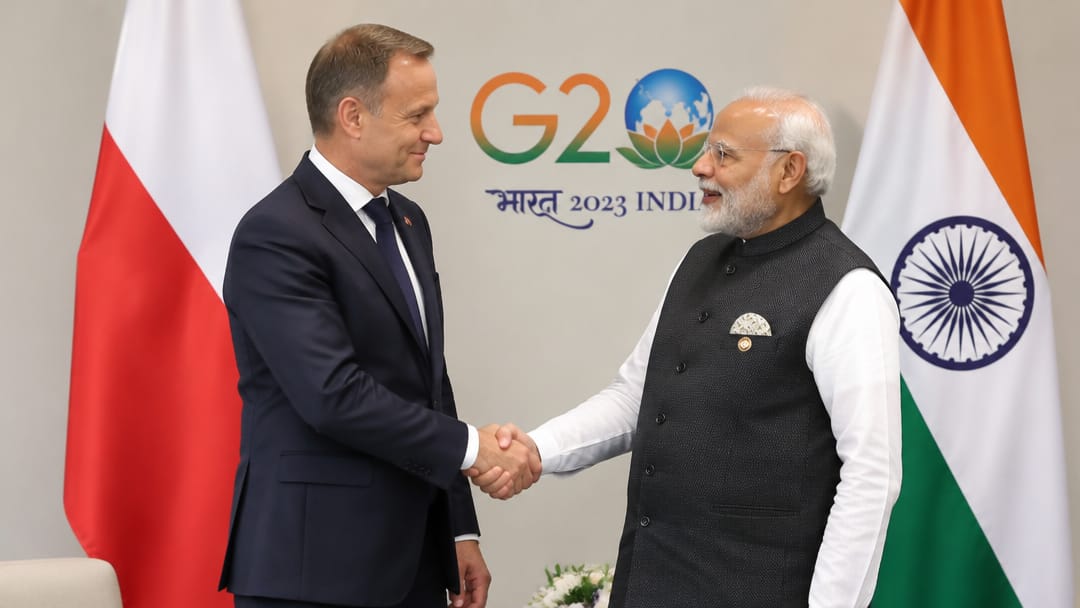
Prime Minister Modi has assured Poland of India's support for its bid to become a permanent G20 member. Polish Foreign Minister confirmed the development, adding that Poland hopes to formalise membership during the US presidency of the G20. Currently, the G20 has 19 member countries plus the European Union and the African Union. Poland, a major European economy and NATO member, is not among the existing permanent members of the grouping.
Why it matters
The G20 (Group of Twenty) is an intergovernmental forum comprising the world's major economies, representing about 85% of global GDP, 75% of international trade, and two-thirds of the world's population. Founded in 1999 as a forum for Finance Ministers and Central Bank Governors, it was elevated to a Leaders' Summit level in 2008 during the global financial crisis. Its permanent members include Argentina, Australia, Brazil, Canada, China, France, Germany, India, Indonesia, Italy, Japan, Mexico, Russia, Saudi Arabia, South Africa, South Korea, Turkey, UK, USA, plus the EU. The African Union was added as a permanent member during India's G20 Presidency in 2023 — a landmark diplomatic achievement India secured.
Poland's bid is significant: it is the EU's sixth-largest economy and a frontline NATO state. However, G20 membership expansion requires consensus among existing members, and there is no formal mechanism for adding permanent members codified in a treaty — the G20 operates without a formal charter. India's support for Poland aligns with its broader strategy of building bilateral ties in Europe. For aspirants, this event connects to G20 structure, India's G20 Presidency legacy (New Delhi Declaration, 2023), and the significance of the African Union's inclusion — all of which have been directly tested.
US envoy flags G20 deliverables and hopes Rubio revisits India
What happened
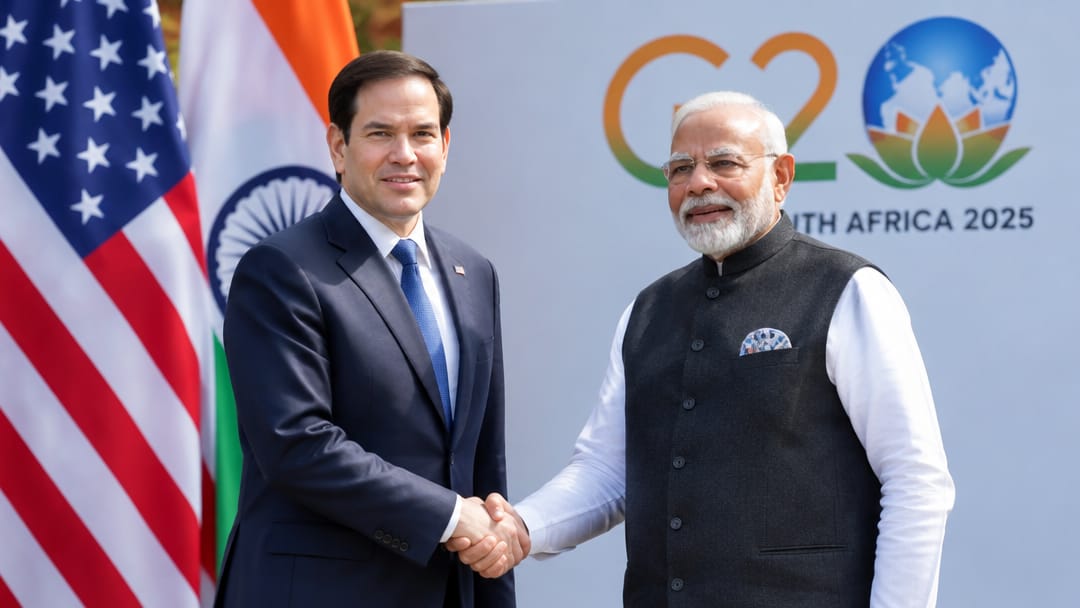
US Ambassador to India Sergio Gor stated that Washington aims to present significant bilateral deliverables ahead of the G20 Summit in December, hosted by South Africa. Gor expressed hope that Secretary of State Marco Rubio would revisit India next year to build on diplomatic momentum. The remarks signal active US-India engagement on trade, technology, and strategic cooperation as both sides prepare for key multilateral interactions under the G20 framework.
Why it matters
The G20 (Group of Twenty) is a premier intergovernmental forum comprising 19 countries plus the European Union and, since 2023, the African Union. It represents approximately 85% of global GDP, 75% of international trade, and two-thirds of the world's population. India held the G20 Presidency in 2023, hosting the New Delhi Summit in September 2023, where significant outcomes included the African Union's admission as a permanent member.
The 2025 G20 Presidency is held by South Africa, making it the first African country to hold this role. The December Summit will be hosted in Johannesburg. The US-India bilateral relationship under the G20 framework is underpinned by structures like the Initiative on Critical and Emerging Technology (iCET), the Quad grouping, and IPEF (Indo-Pacific Economic Framework). Ambassador Sergio Gor's mention of 'deliverables' refers to concrete policy outcomes — trade agreements, technology transfer commitments, or investment pledges — that the two sides aim to announce formally.
For exam purposes, the key static knowledge here is the G20's structure, current presidency (South Africa, 2025), India's 2023 presidency achievements, and the institutional frameworks governing US-India bilateral ties. Examiners routinely test G20 host countries, presidency order, and summit outcomes rather than diplomatic commentary itself.