SEBI bars EKI Energy and its MD for two months over financial misrepresentation
What happened
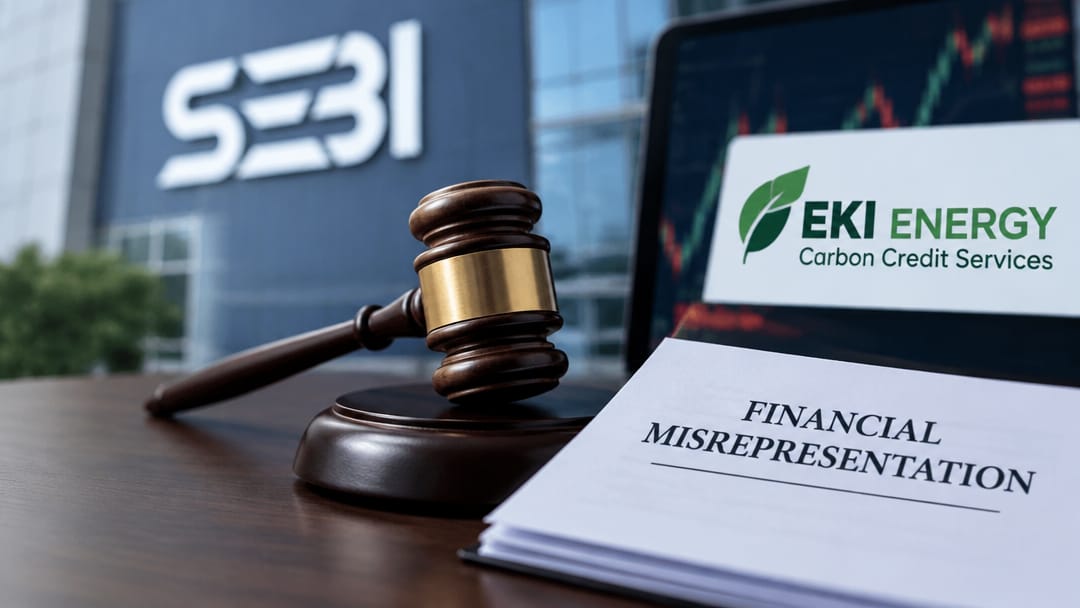
SEBI has barred EKI Energy Services Ltd and its Managing Director Manish Kumar Dabkara from the securities market for two months and 12 months respectively, citing financial misrepresentation. The regulator also imposed a monetary penalty on both entities. EKI Energy, a carbon credit services company, was found to have misrepresented its financial statements, misleading investors. The action invokes SEBI's powers under the SEBI Act and LODR Regulations to protect market integrity and investor interests.
Why it matters
This order tests two intersecting pillars of securities law: SEBI's enforcement powers and the liability of key managerial personnel for disclosure violations.
SEBI's power to bar entities from the securities market flows from Section 11 and Section 11B of the SEBI Act, 1992, which empower the Board to issue directions in the interest of investors and the securities market. A 'debarment' or 'restraint order' is distinct from a mere penalty — it prevents the entity from buying, selling, or dealing in securities during the ban period.
The LODR (Listing Obligations and Disclosure Requirements) Regulations, 2015 mandate that listed companies accurately disclose financial statements. Misrepresentation of financials violates Regulation 4(2)(f) (fair disclosure) and Regulation 33 (financial results). SEBI can act against both the company and its officers in default — here, the MD was held personally liable, which is a critical principle the examiner tests.
The differential penalty — 2 months for the company, 12 months for the MD — reflects SEBI's practice of imposing stricter personal accountability on key managerial personnel who sign off on disclosures. This mirrors the 'officer in default' concept under the Companies Act.
For SEBI Grade A aspirants, the operative legal hooks are Section 11B (directions), Section 15HA (penalty for fraudulent/unfair trade practices), and the LODR framework. The principle that a regulator can impose differentiated sanctions on an entity and its officer simultaneously is a favourite examiner angle.
SEBI chairman Pandey flags market resilience and investor protection as top priorities
What happened
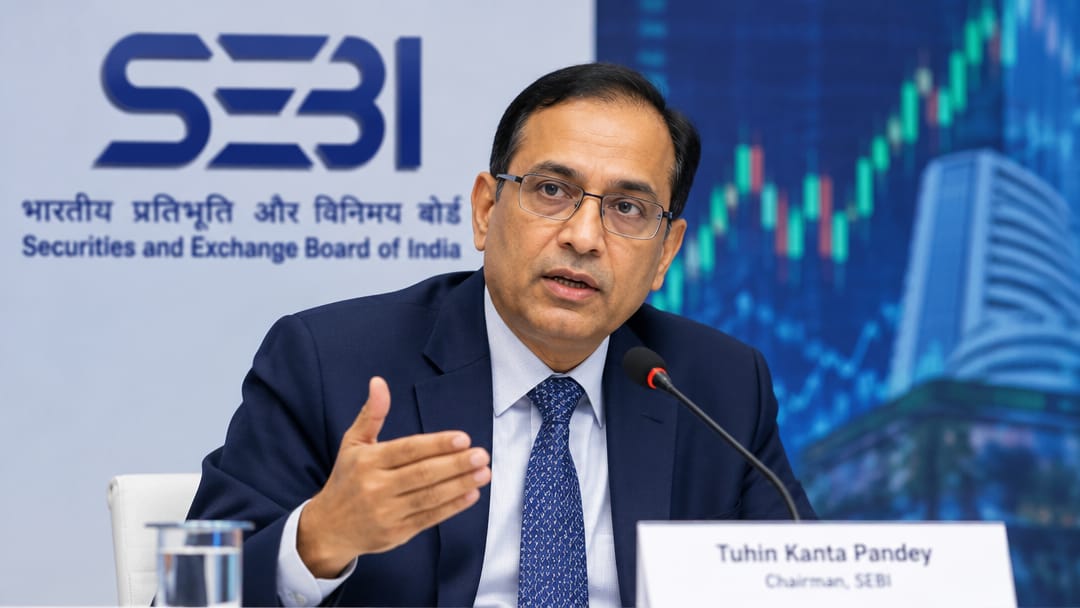
SEBI chairman Tuhin Kanta Pandey stated that the regulator is continuously working to strengthen India's capital markets by enhancing resilience and deepening investor protection frameworks. Speaking at a public forum, Pandey emphasised SEBI's dual mandate of market development and safeguarding investor interests. His remarks signal ongoing regulatory focus on systemic stability, transparent market infrastructure, and accessible grievance redressal mechanisms for retail investors participating in India's rapidly growing securities markets.
Why it matters
SEBI's dual mandate — market development and investor protection — sits at the heart of its statutory charter under the SEBI Act, 1992. The chairman's remarks reflect this tension: a regulator must simultaneously encourage capital formation and shield retail investors from mis-selling, fraud, and systemic risk.
Market resilience refers to the ability of capital markets to absorb shocks — whether from global volatility, liquidity crunches, or operational failures at intermediaries — without systemic breakdown. SEBI pursues resilience through circuit breakers on exchanges, margin requirements, stress-testing of clearing corporations, and oversight of systemically important market infrastructure institutions (MIIs).
Investor protection mechanisms under SEBI include: the SCORES (SEBI Complaint Redress System) portal for grievance filing; the Investor Protection and Education Fund (IPEF); mandatory KYC norms; the prohibition of fraudulent and unfair trade practices under SEBI (PFUTP) Regulations, 2003; and the SEBI (Prohibition of Insider Trading) Regulations, 2015.
For SEBI Grade A aspirants, this topic connects static knowledge of SEBI's powers, functions, and investor protection tools with current regulatory priorities. Examiners test whether candidates know the exact legislative provision, the grievance mechanism, or the threshold that operationalises investor protection — not just the broad principle. Pandey's public emphasis on these themes signals that upcoming policy circulars and consultation papers are likely to cluster around these areas.
India backs Poland's bid for permanent G20 membership
What happened
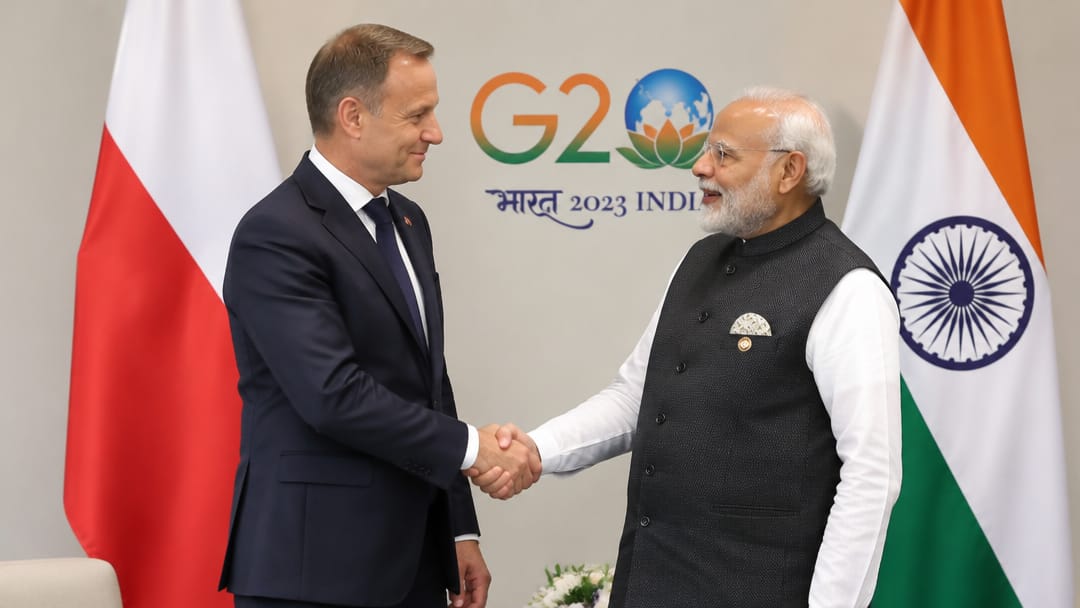
Prime Minister Modi has assured Poland of India's support for its bid to become a permanent G20 member. Polish Foreign Minister confirmed the development, adding that Poland hopes to formalise membership during the US presidency of the G20. Currently, the G20 has 19 member countries plus the European Union and the African Union. Poland, a major European economy and NATO member, is not among the existing permanent members of the grouping.
Why it matters
The G20 (Group of Twenty) is an intergovernmental forum comprising the world's major economies, representing about 85% of global GDP, 75% of international trade, and two-thirds of the world's population. Founded in 1999 as a forum for Finance Ministers and Central Bank Governors, it was elevated to a Leaders' Summit level in 2008 during the global financial crisis. Its permanent members include Argentina, Australia, Brazil, Canada, China, France, Germany, India, Indonesia, Italy, Japan, Mexico, Russia, Saudi Arabia, South Africa, South Korea, Turkey, UK, USA, plus the EU. The African Union was added as a permanent member during India's G20 Presidency in 2023 — a landmark diplomatic achievement India secured.
Poland's bid is significant: it is the EU's sixth-largest economy and a frontline NATO state. However, G20 membership expansion requires consensus among existing members, and there is no formal mechanism for adding permanent members codified in a treaty — the G20 operates without a formal charter. India's support for Poland aligns with its broader strategy of building bilateral ties in Europe. For aspirants, this event connects to G20 structure, India's G20 Presidency legacy (New Delhi Declaration, 2023), and the significance of the African Union's inclusion — all of which have been directly tested.
SEBI plans multi-institution network to train independent directors
What happened
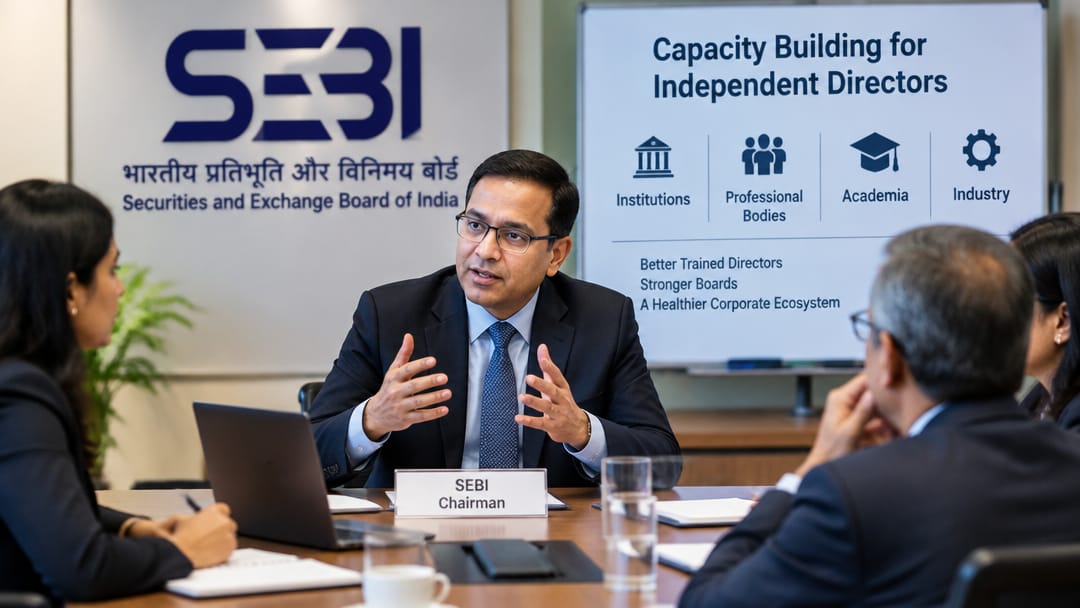
SEBI Chairman Tuhin Kanta Pandey announced that the regulator is exploring a capacity-building network for independent directors, drawing on institutions, professional bodies, academia, and industry. The initiative aims to address skill gaps among independent directors of listed companies, who are central to board-level oversight. SEBI sees structured training as essential to making independent directors genuinely effective rather than nominally compliant with the Companies Act and SEBI's Listing Obligations and Disclosure Requirements Regulations.
Why it matters
Independent directors (IDs) are the cornerstone of corporate governance in listed companies. Under the Companies Act, 2013 (Section 149), every listed company must have at least one-third of its board as independent directors. SEBI's LODR Regulations 2015 add further requirements: the top 1,000 listed entities by market capitalisation must have at least one woman independent director, and the chairperson of the audit committee must be an independent director.
Despite these structural mandates, a persistent criticism is that IDs often lack domain expertise or the confidence to challenge management, reducing them to rubber stamps. SEBI's proposed capacity-building network directly addresses this 'compliance vs. effectiveness' gap.
The regulatory framework already requires IDs to complete an online proficiency self-assessment test conducted by the Indian Institute of Corporate Affairs (IICA) under the Companies (Appointment and Qualification of Directors) Rules, 2014. IDs must appear for this test within one year of inclusion in the databank. SEBI's proposed network would go further — creating an ecosystem of continuous, multi-stakeholder learning rather than a one-time test.
For exam purposes, the key distinction is between the statutory minimum (IICA databank + self-assessment) and the proposed SEBI initiative (multi-institution capacity-building network). The examiner will test whether aspirants know which body administers the existing ID databank, the tenure limits for IDs (two consecutive terms of five years each), and the cooling-off period (three years) before re-appointment.
US envoy flags G20 deliverables and hopes Rubio revisits India
What happened
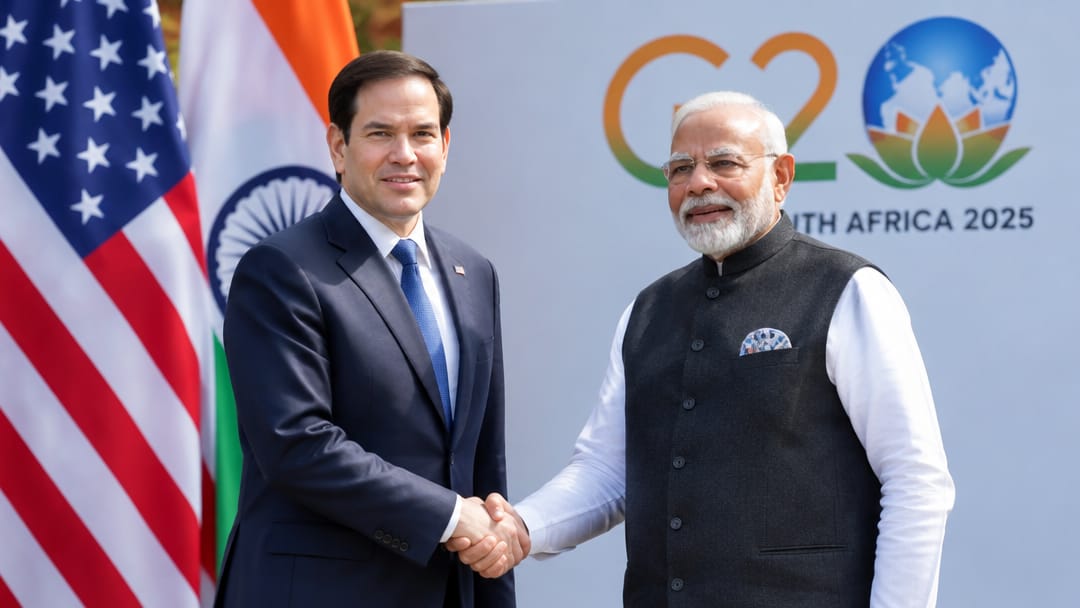
US Ambassador to India Sergio Gor stated that Washington aims to present significant bilateral deliverables ahead of the G20 Summit in December, hosted by South Africa. Gor expressed hope that Secretary of State Marco Rubio would revisit India next year to build on diplomatic momentum. The remarks signal active US-India engagement on trade, technology, and strategic cooperation as both sides prepare for key multilateral interactions under the G20 framework.
Why it matters
The G20 (Group of Twenty) is a premier intergovernmental forum comprising 19 countries plus the European Union and, since 2023, the African Union. It represents approximately 85% of global GDP, 75% of international trade, and two-thirds of the world's population. India held the G20 Presidency in 2023, hosting the New Delhi Summit in September 2023, where significant outcomes included the African Union's admission as a permanent member.
The 2025 G20 Presidency is held by South Africa, making it the first African country to hold this role. The December Summit will be hosted in Johannesburg. The US-India bilateral relationship under the G20 framework is underpinned by structures like the Initiative on Critical and Emerging Technology (iCET), the Quad grouping, and IPEF (Indo-Pacific Economic Framework). Ambassador Sergio Gor's mention of 'deliverables' refers to concrete policy outcomes — trade agreements, technology transfer commitments, or investment pledges — that the two sides aim to announce formally.
For exam purposes, the key static knowledge here is the G20's structure, current presidency (South Africa, 2025), India's 2023 presidency achievements, and the institutional frameworks governing US-India bilateral ties. Examiners routinely test G20 host countries, presidency order, and summit outcomes rather than diplomatic commentary itself.