Agriculture budget up five-fold in 13 years: ₹27,663 cr to ₹1,40,529 cr
What happened
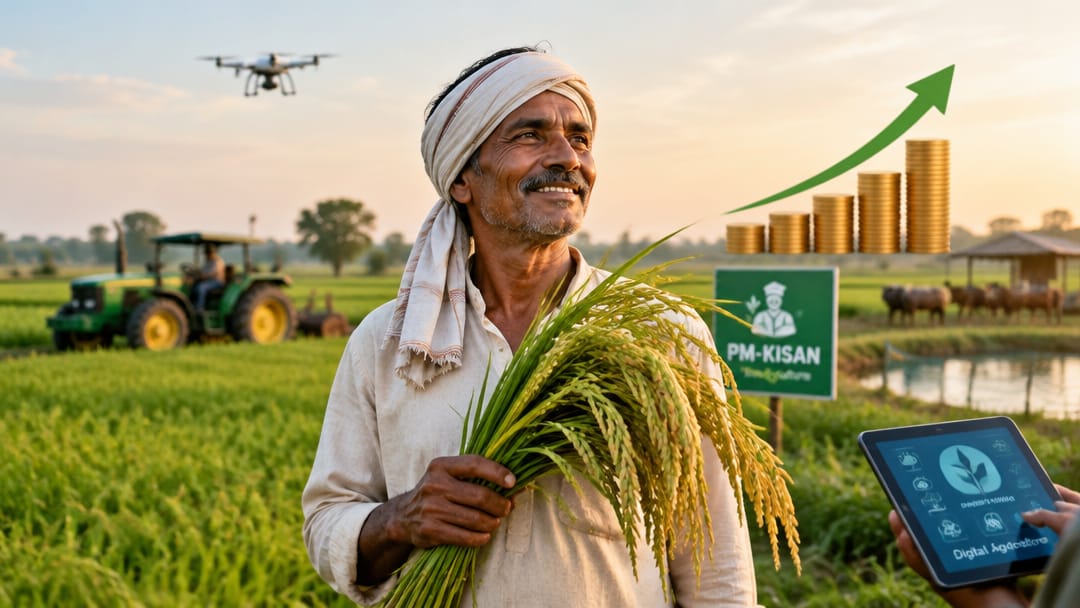
India's Department of Agriculture and Farmers Welfare budget rose from ₹27,663 crore in 2013-14 to ₹1,40,528.78 crore in 2026-27, a five-fold increase over thirteen years. This expansion reflects successive government pushes toward input subsidies, direct income support through PM-KISAN, digital agriculture, natural farming, and allied sector development including fisheries and animal husbandry, aiming to double farmer incomes and modernise the rural agrarian economy.
Why it matters
India's agricultural budget trajectory encapsulates a fundamental shift in how the state engages with farming: from input-side subsidies and procurement support to direct income transfers, digital infrastructure, and market integration.
The five-fold budget increase signals several structural changes examiners test:
1. PM-KISAN (2019): ₹6,000/year direct income transfer to landholding farmers — the largest direct benefit transfer in agriculture. Funded 100% by the Centre. Over 11 crore beneficiaries.
2. PM Fasal Bima Yojana: Crop insurance with capped farmer premiums (2% Kharif, 1.5% Rabi, 5% commercial/horticultural crops). The balance premium is shared by Centre and States.
3. e-NAM: Electronic National Agriculture Market — integrates APMC mandis digitally across states, enabling price discovery beyond local markets.
4. PM-KUSUM: Solar-powered irrigation pumps for farmers, reducing diesel dependency and providing supplementary income through surplus solar power sale.
5. Natural Farming / PKVY (Paramparagat Krishi Vikas Yojana): Promotes organic and natural farming clusters.
6. Digital Agriculture Mission: AI, remote sensing, and farmer ID (Agri Stack) infrastructure.
For RBI aspirants, the key angle is agricultural credit flow, Kisan Credit Card (KCC), and Priority Sector Lending norms (18% of ANBC to agriculture). For NABARD aspirants, the Rural Infrastructure Development Fund (RIDF) and refinance operations connect directly to this budget expansion. For UPSC aspirants, the governance architecture — Centre-State cost sharing, DBT mechanisms, and food security linkages — is what examiners probe.
🔒
Key figure and date from this topic
Specific number or threshold to remember
Policy or regulatory implication