Portfolio Management Services: SEBI's ₹50 lakh minimum and what it means for investors
What happened
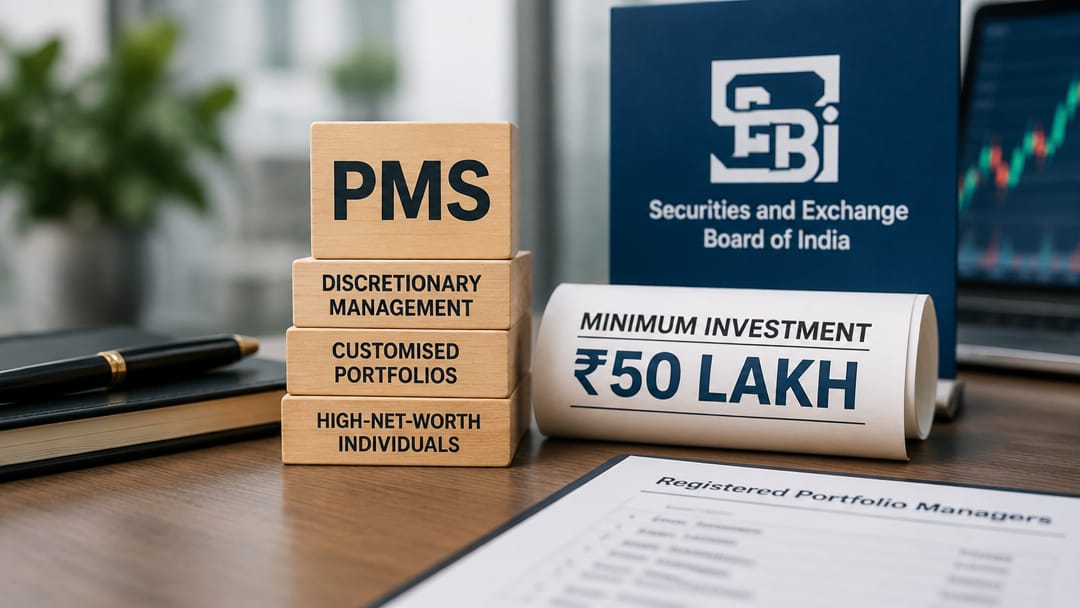
Portfolio Management Services (PMS) are SEBI-regulated investment services where a registered portfolio manager manages securities on behalf of clients. SEBI mandates a minimum investment of ₹50 lakh per client. Portfolio managers must register with SEBI under the SEBI (Portfolio Managers) Regulations, 2020, holding a certificate of registration. The regulator maintains a public list of all registered portfolio managers, ensuring transparency and investor protection in this space reserved for high-net-worth individuals seeking customised, discretionary or non-discretionary investment management.
Why it matters
Portfolio Management Services (PMS) sit between mutual funds and direct market participation. Unlike mutual funds — which pool retail money into a common corpus — PMS offers individualised portfolios directly held in the client's own demat account. This distinction is crucial: the investor retains beneficial ownership of each security.
SEBI regulates PMS under the SEBI (Portfolio Managers) Regulations, 2020, which replaced the earlier 1993 regulations. Key structural features include:
**Registration:** Any entity offering PMS must obtain a certificate of registration from SEBI. Registration number format: INP followed by digits (e.g., INP000007687).
**Minimum Investment:** SEBI raised the minimum investment threshold from ₹25 lakh to ₹50 lakh in 2020, restricting PMS to high-net-worth clients and ensuring only sophisticated investors access these products.
**Types of PMS:**
- Discretionary: Portfolio manager takes investment decisions independently.
- Non-Discretionary: Manager executes only client-directed decisions.
- Advisory: Manager only advises; client executes trades.
**Net Worth Requirement:** Portfolio managers must maintain a minimum net worth of ₹5 crore.
**Disclosure:** Managers must provide clients a Disclosure Document detailing fees, risks, and performance, updated annually.
**Fee Structure:** Performance-based fees are permitted; profit-sharing above a pre-agreed hurdle rate is allowed under the 2020 regulations.
SEBI publishes the full list of registered portfolio managers on its website, serving as an investor-protection tool — investors can verify registration before committing funds.
SEBI regulates PMS under the SEBI (Portfolio Managers) Regulations, 2020, which replaced the earlier 1993 regulations. Key structural features include:
**Registration:** Any entity offering PMS must obtain a certificate of registration from SEBI. Registration number format: INP followed by digits (e.g., INP000007687).
**Minimum Investment:** SEBI raised the minimum investment threshold from ₹25 lakh to ₹50 lakh in 2020, restricting PMS to high-net-worth clients and ensuring only sophisticated investors access these products.
**Types of PMS:**
- Discretionary: Portfolio manager takes investment decisions independently.
- Non-Discretionary: Manager executes only client-directed decisions.
- Advisory: Manager only advises; client executes trades.
**Net Worth Requirement:** Portfolio managers must maintain a minimum net worth of ₹5 crore.
**Disclosure:** Managers must provide clients a Disclosure Document detailing fees, risks, and performance, updated annually.
**Fee Structure:** Performance-based fees are permitted; profit-sharing above a pre-agreed hurdle rate is allowed under the 2020 regulations.
SEBI publishes the full list of registered portfolio managers on its website, serving as an investor-protection tool — investors can verify registration before committing funds.
🔒
Key figure and date from this topic
Specific number or threshold to remember
Policy or regulatory implication