SC rules the 24-hour clock starts when liberty is curtailed, not when arrest is formalised
What happened
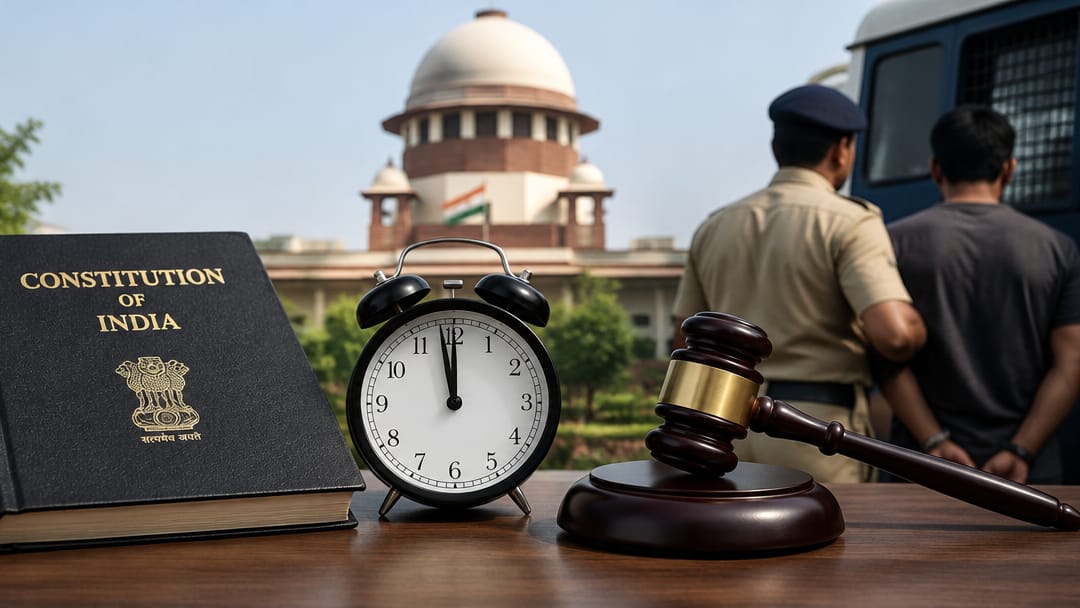
The Supreme Court has held that the 24-hour deadline under Article 22(2) of the Constitution begins the moment a person's liberty is actually curtailed, not when an investigating agency formally records an arrest. The Court rejected the concept of 'informal detention', ruling that police cannot hold a person incommunicado or restrict movement without triggering constitutional safeguards. Agencies must produce such a person before a magistrate within 24 hours of actual curtailment of liberty.
Why it matters
Article 22 of the Constitution provides procedural safeguards against arbitrary arrest and detention. Article 22(1) guarantees the right to be informed of grounds of arrest and to consult a legal practitioner. Article 22(2) mandates production before the nearest magistrate within 24 hours of arrest, excluding travel time.
The core legal issue this ruling resolves is the definitional question: when does the 24-hour clock begin? Investigating agencies had, in practice, used 'informal detention' — keeping a person in custody without formally recording the arrest — to circumvent this timeline. The Court firmly rejected this evasion, holding that the constitutional clock starts at the moment of actual curtailment of liberty, regardless of whether the agency has formally labelled it as an arrest.
This ruling builds on D.K. Basu v. State of West Bengal (1997), which laid down binding guidelines for arrest, including the requirement to inform a friend or relative and to prepare an arrest memo. It also resonates with Arnesh Kumar v. State of Bihar (2014), where the Court cautioned against casual arrests, particularly in cognisable offences carrying less than seven years' imprisonment.
The constitutional architecture here is clear: Article 21 (right to life and personal liberty) and Article 22 operate together. Any deprivation of liberty must follow the procedure established by law, and that procedure includes the 24-hour magistrate production rule. By anchoring the timeline to actual, factual curtailment of liberty rather than formal arrest paperwork, the Court closes a significant loophole that had been exploited in practice.
Anticipatory breach under Section 39: suing before the performance date
What happened
The Indian Contract Act, 1872 governs breach of contract in India through Sections 37, 39, 73, 74, and 75. Breach occurs when a party fails to perform, repudiates the contract before the due date (anticipatory breach), or makes performance impossible. The innocent party may sue for damages, rescind the contract, or seek specific performance. Section 73 covers compensatory damages, while Section 74 provides for liquidated damages and penalty clauses, capping recovery at the stipulated sum.
Why it matters
Breach of contract under the Indian Contract Act, 1872 operates across two temporal categories: actual breach (failure to perform when performance is due) and anticipatory breach (repudiation before the performance date). The doctrine of anticipatory breach, rooted in Section 39, allows the aggrieved party to treat the contract as rescinded immediately without waiting for the performance date, or to affirm the contract and wait — but if the latter, any supervening frustration extinguishes the right to sue.
Damages are governed by Sections 73–75. Section 73 codifies the rule in Hadley v. Baxendale: only damages that naturally flow from the breach, or were within the reasonable contemplation of the parties at the time of contracting, are recoverable. Section 74 deals with stipulated damages — where a sum is named in the contract as payable on breach, the court awards reasonable compensation not exceeding that sum, regardless of whether actual damage is proved. This is the Indian departure from the common law distinction between liquidated damages and penalties — Indian courts do not enforce a pure penalty but cap recovery at the stipulated figure.
Section 75 entitles a person who rightfully rescinds a contract to compensation for the non-performance. The examiner frequently tests the distinction between Sections 73 and 74, the effect of affirming after anticipatory breach, and what 'reasonable compensation' means under Section 74.
Women hold just 8.1% of SC working strength despite rising to three judges
What happened
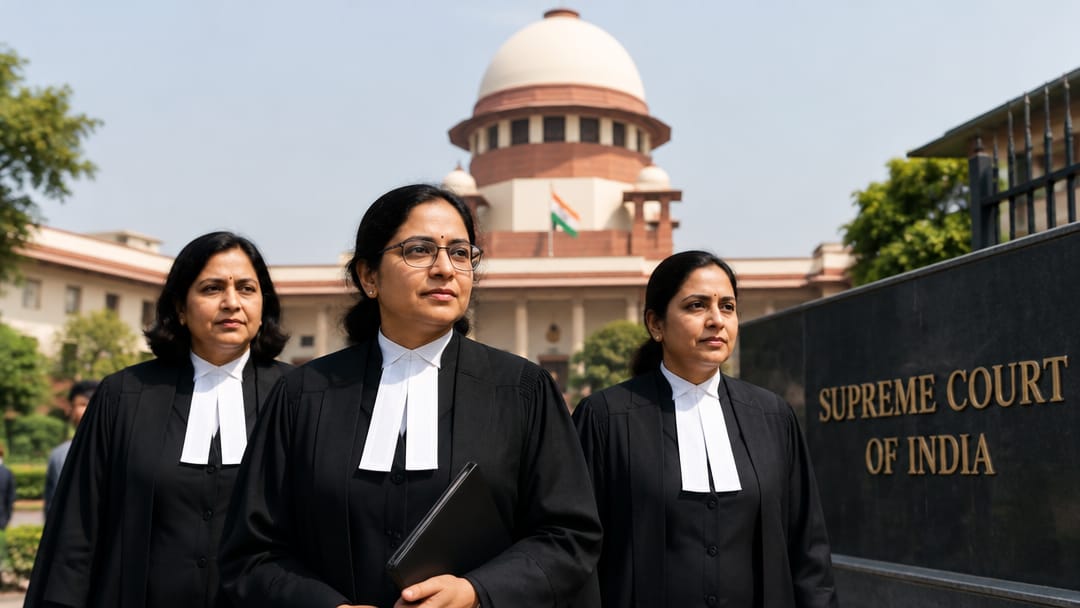
The Supreme Court now has three women judges, up from two, yet women constitute only 8.1 percent of its working strength. Critics argue the Collegium system, which self-selects judges from among senior advocates and sitting judges, structurally disadvantages women by relying on informal networks dominated by men. No woman has ever served as Chief Justice of India, and representation at High Court level remains similarly low, raising questions about whether judicial self-appointment reproduces existing gender hierarchies.
Why it matters
The Collegium system governs judicial appointments to the Supreme Court and High Courts through a body of the five senior-most Supreme Court judges, led by the Chief Justice. It emerged from the Three Judges Cases — S.P. Gupta (1981), Supreme Court Advocates-on-Record Association (1993), and the Presidential Reference (1998) — which progressively shifted appointment power from the executive to the judiciary in the name of judicial independence.
The system has no statutory basis; it operates through constitutional convention and Supreme Court interpretation of Articles 124 and 217. Crucially, it has no mandatory diversity criteria, no transparent shortlisting process, and no obligation to consider gender representation.
This matters for CLAT PG because the examiner tests understanding of how structural design — not just explicit discrimination — can produce gender-unequal outcomes, linking directly to indirect discrimination doctrine and the reasonable accommodation principle. The 8.1 percent figure is not merely a statistic; it is evidence that an institution can formally prohibit discrimination while its selection architecture systematically filters out women.
For UPSC, the static angle is the constitutional framework: Articles 124 and 217 govern Supreme Court and High Court appointments respectively; the Three Judges Cases are the precedent backbone; and the NJAC judgment (2015) is the most recent constitutional moment where the Supreme Court struck down Parliament's attempt to replace the Collegium. The tension between judicial independence and democratic accountability — including gender diversity — is the live policy debate the examiner anchors questions to.
States own water, but Parliament controls inter-state rivers
What happened
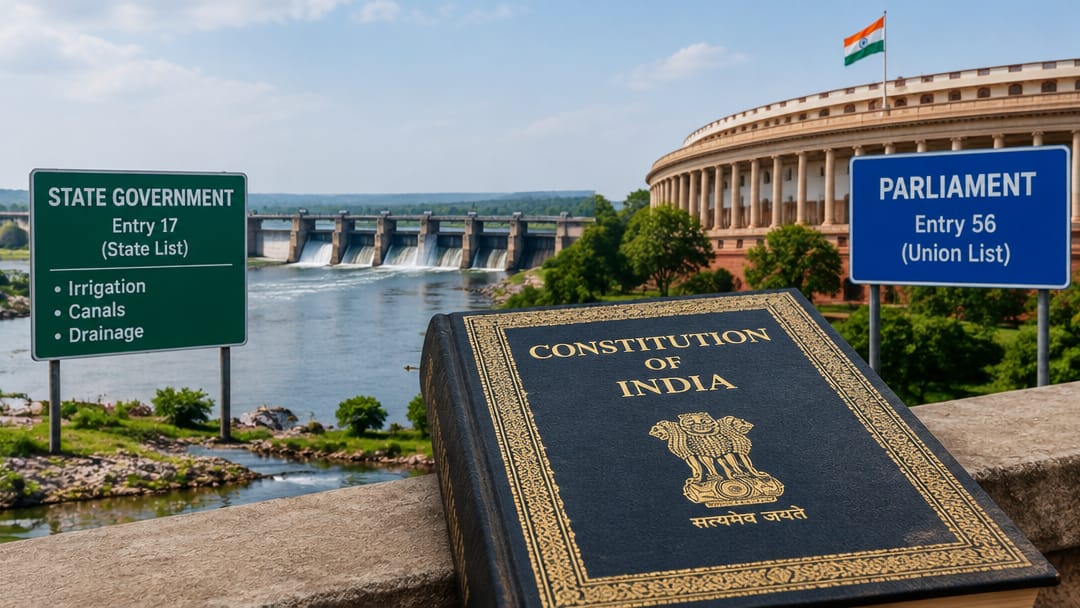
India's Constitution splits water governance between states and Parliament. Entry 17 of the State List gives states primary authority over water — including irrigation, canals, and drainage. But Entry 56 of the Union List empowers Parliament to regulate inter-state rivers and river valleys, overriding state authority where declared expedient in the public interest. This federal tension underpins major water disputes like the Cauvery and Krishna conflicts, making the constitutional allocation of water powers a recurring exam and litigation flashpoint.
Why it matters
Water in India is constitutionally allocated across two lists in the Seventh Schedule. Entry 17 of List II (State List) covers water supply, irrigation, canals, drainage, embankments, water storage, and hydroelectric power — placing these squarely under state legislative competence. This reflects the founding logic that water is a local resource best managed by states closest to it.
However, Entry 56 of List I (Union List) carves out a significant exception: Parliament may legislate on the regulation and development of inter-state rivers and river valleys to the extent declared by law to be expedient in the public interest. This is not automatic Union power — Parliament must affirmatively declare the expediency. When it does, Union law prevails over inconsistent state law under Article 254.
Article 262 adds a further constitutional layer: Parliament may by law provide for adjudication of disputes relating to waters of inter-state rivers, and may also bar the jurisdiction of the Supreme Court and other courts in such disputes. Exercising this, Parliament enacted the Inter-State River Water Disputes Act, 1956 (amended 2002), under which tribunals like the Cauvery Water Disputes Tribunal and Krishna Water Disputes Tribunal were constituted.
Groundwater is not explicitly mentioned in any List, creating a gap. Courts have treated it as falling under Entry 17 of the State List as a component of land and water resources within state territory.
The overall constitutional design is state-primary but Union-supervisory for rivers that cross state boundaries — a structure producing perennial inter-state litigation.
India has laws guaranteeing clean air, but enforcement remains the gap
What happened
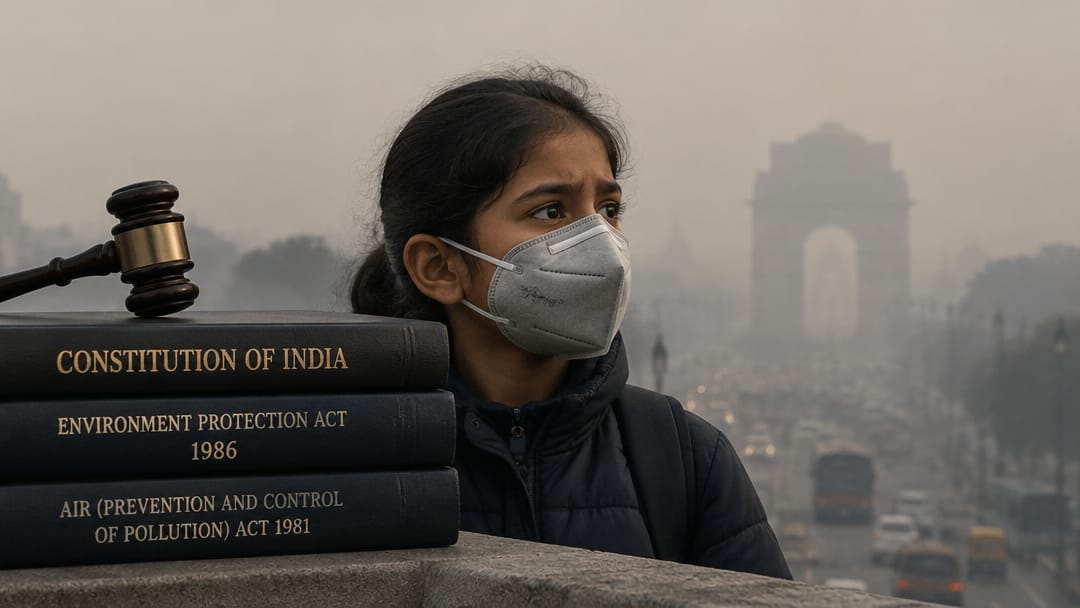
Despite constitutional protections under Article 21 and environmental statutes like the Air (Prevention and Control of Pollution) Act 1981, Delhi's air quality continues to deteriorate each winter. Courts have read the right to clean air into the right to life, but judicial pronouncements have not translated into sustained compliance. The gap between legal entitlement and lived reality raises a pointed question for constitutional law: when a fundamental right exists on paper but fails in practice, what remedies actually work?
Why it matters
The right to clean air in India is not explicitly written in the Constitution but has been judicially constructed through Article 21, which guarantees the right to life and personal liberty. The Supreme Court in Subhash Kumar v. State of Bihar (1991) first held that the right to life includes the right to enjoyment of pollution-free water and air. This was reinforced in M.C. Mehta v. Union of India, a series of landmark cases that made environmental enforcement through PIL a defining feature of Indian constitutional practice.
The doctrinal architecture rests on three pillars. First, Article 21 is the source right — any state action or omission that degrades air quality to life-threatening levels constitutes a violation. Second, Articles 48A (Directive Principle requiring the state to protect the environment) and 51A(g) (Fundamental Duty of citizens to protect the natural environment) provide interpretive support, though they are not independently enforceable. Third, the Air (Prevention and Control of Pollution) Act 1981 and the Environment (Protection) Act 1986 create statutory mechanisms, including the Central Pollution Control Board (CPCB) and State Pollution Control Boards.
The critical constitutional test the Court applies is whether state inaction is arbitrary under Article 14 or whether it directly imperils life under Article 21. The Court has in several M.C. Mehta cases issued continuing mandamus — a supervisory jurisdiction where it retains the case and monitors compliance — to bridge the enforcement gap. The GRAP (Graded Response Action Plan) system operative in Delhi is a direct product of Supreme Court directions, not parliamentary legislation, illustrating how judicial orders now function as quasi-regulatory instruments in the environmental space.
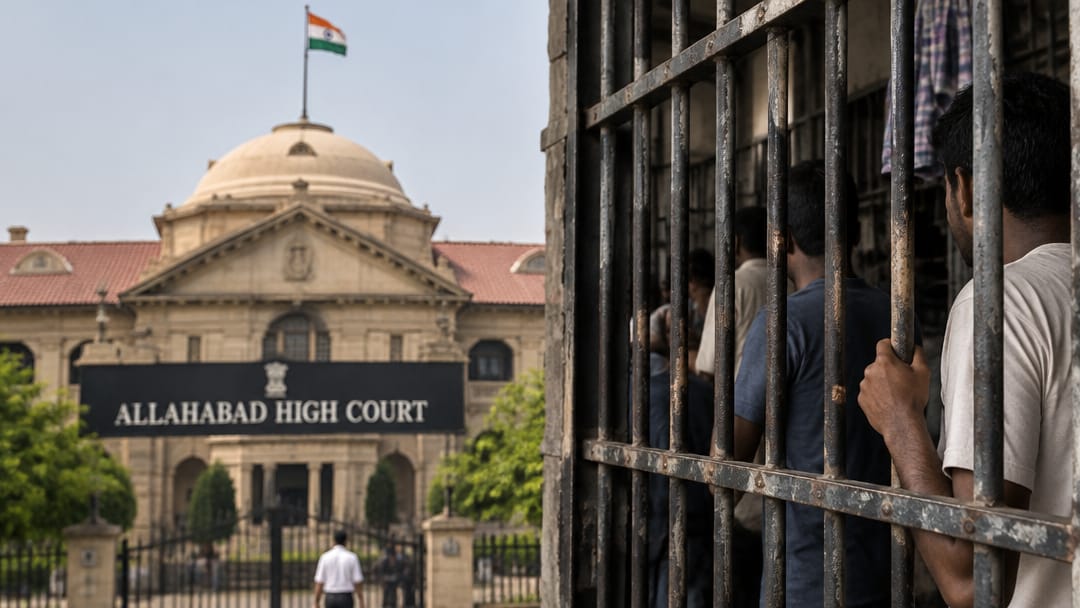
Allahabad HC orders statewide prison overcrowding report, demands concrete remedies
What happened
The Allahabad High Court has directed UP authorities to submit a detailed statewide report on prison overcrowding and propose concrete remedial measures. The court's intervention follows persistent concerns about undertrial prisoners languishing in jails beyond their bail entitlement and custodial rights violations. The order reflects judicial monitoring of prison conditions under Articles 21 and 39A of the Constitution, linking prison reform to the fundamental right to life, liberty, and access to legal aid for undertrial detainees.
Why it matters
Prison overcrowding in India is a structural crisis rooted in the undertrial problem. According to NCRB Prison Statistics, over 75% of India's prison population consists of undertrial prisoners — people who have not been convicted but cannot secure bail, often due to poverty or ignorance of legal rights.
The Allahabad HC's intervention sits at the intersection of several critical legal principles:
**Article 21 — Right to Life and Personal Liberty:** The Supreme Court in *Hussainara Khatoon v. State of Bihar* (1979) held that an undertrial's prolonged detention without trial violates Article 21. The right to a speedy trial is a fundamental right.
**Section 436A CrPC (Section 479 BNSS):** An undertrial who has served half the maximum sentence for the offence is entitled to bail on a personal bond. This provision directly addresses overcrowding but is chronically underutilised.
**Article 39A:** Mandates free legal aid, directly relevant to undertrials who cannot afford bail applications.
**Re-Inhuman Conditions in 1382 Prisons (2016):** The Supreme Court suo motu addressed prison reform, directing states to implement Section 436A systematically.
High courts exercise supervisory jurisdiction over prisons under Article 226 and Section 388 CrPC (State Government's power over prisons). Judicial monitoring through periodic compliance reports is an established tool to enforce undertrial rights. The examiner typically tests which provision entitles an undertrial to bail, which case first recognised speedy trial as a fundamental right, and which constitutional article mandates legal aid.