Six years as undertrial, then acquitted: SC orders UP to pay ₹6 lakh compensation
What happened
The Supreme Court ordered the Uttar Pradesh government to pay ₹6 lakh compensation to a man who spent six years in prison as an undertrial before being acquitted. The Court criticised UP Police for shoddy investigation, remarking that the force needs education in proper investigation methods. The ruling reinforces the constitutional right to speedy trial and the State's liability for wrongful incarceration under Article 21 of the Indian Constitution.
Why it matters
This judgment sits at the intersection of three important legal principles that CLAT PG and UPSC CSE both test repeatedly.
First, the right to speedy trial. Though not explicitly enumerated in Part III, the Supreme Court in Hussainara Khatoon v. State of Bihar (1979) read it into Article 21 as an essential component of the right to life and personal liberty. An undertrial who spends years in custody without conviction is a victim of this right's violation.
Second, State liability for custodial wrongs. When the State's machinery — police or prosecution — causes wrongful detention, the State cannot escape liability by pointing to the eventual acquittal as vindication. The Court's power to award compensation under Article 32 (and Article 226 at High Court level) for violation of fundamental rights was firmly established in Rudal Shah v. State of Bihar (1983), the landmark case where the SC awarded monetary compensation for illegal detention for the first time.
Third, the investigative quality obligation. The Court's remark that UP Police 'need education in investigation' signals judicial impatience with faulty chargesheet-filing that leads to prolonged undertrial detention. Under the CrPC (now BNSS 2023), Section 173 governs the police report/chargesheet. A defective investigation that results in wrongful imprisonment engages both the officer's accountability and the State's vicarious liability.
For CLAT PG, the passage-MCQ format will likely present the Rudal Shah or Hussainara Khatoon principle and ask you to apply it to a new fact pattern involving an acquitted undertrial seeking compensation.
SC voids Karnataka land acquisition tainted by fraud, orders restoration to owners
What happened
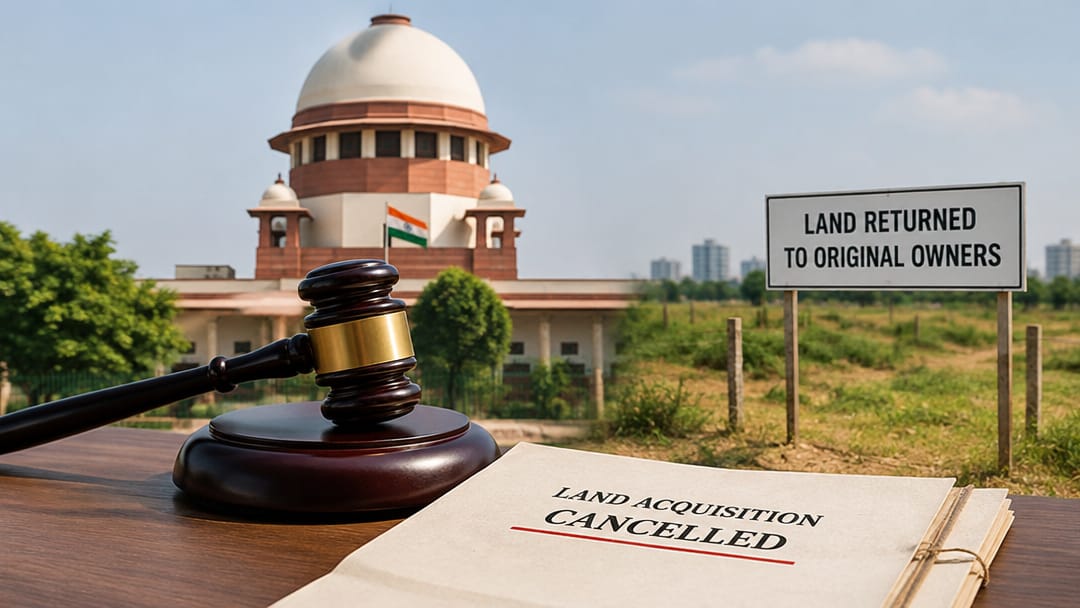
The Supreme Court on October 26 set aside land acquisition proceedings in Karnataka initiated for a cooperative housing society scheme, finding the process was vitiated by fraud and bribery. The Court ordered restoration of the privately owned land to its original owners. The ruling reaffirms that acquisition proceedings infected by fraud cannot be sustained under law, and that property rights under Article 300A require the State to follow a lawful, untainted process before depriving any person of their land.
Why it matters
This ruling sits at the intersection of Article 300A (right to property as a constitutional right) and the general principle that fraud vitiates all proceedings — fraus omnia corrumpit. After the 44th Constitutional Amendment (1978) deleted the right to property from Part III (fundamental rights) and re-located it to Article 300A as a statutory constitutional right, the question of what procedural and substantive safeguards still protect property owners became critical.
Article 300A states that no person shall be deprived of their property save by authority of law. The Supreme Court has progressively read this to mean not merely any law, but a law that is fair, just, and reasonable — and applied through an untainted process. In Vidya Devi v. State of H.P. (2020) and K.T. Plantation v. State of Karnataka (2011), the Court confirmed that even post-44th Amendment, the State cannot acquire property arbitrarily or capriciously.
The fraud-vitiates-acquisition principle adds another layer: when acquisition proceedings are initiated or advanced through bribery or misrepresentation, they are void ab initio. The State cannot clothe an unlawful act with the authority of law. Courts have consistently held that public purpose — the cornerstone of valid acquisition — is negated when the process is corrupted from within.
For CLAT PG aspirants, the key doctrinal move here is the Court treating Article 300A not as a bare procedural filter but as a substantive protection, and linking it to the equitable doctrine that fraud destroys legal acts entirely. This makes the case a strong passage candidate.
SC rules CoC cannot walk back an approved insolvency plan once creditors have voted
What happened
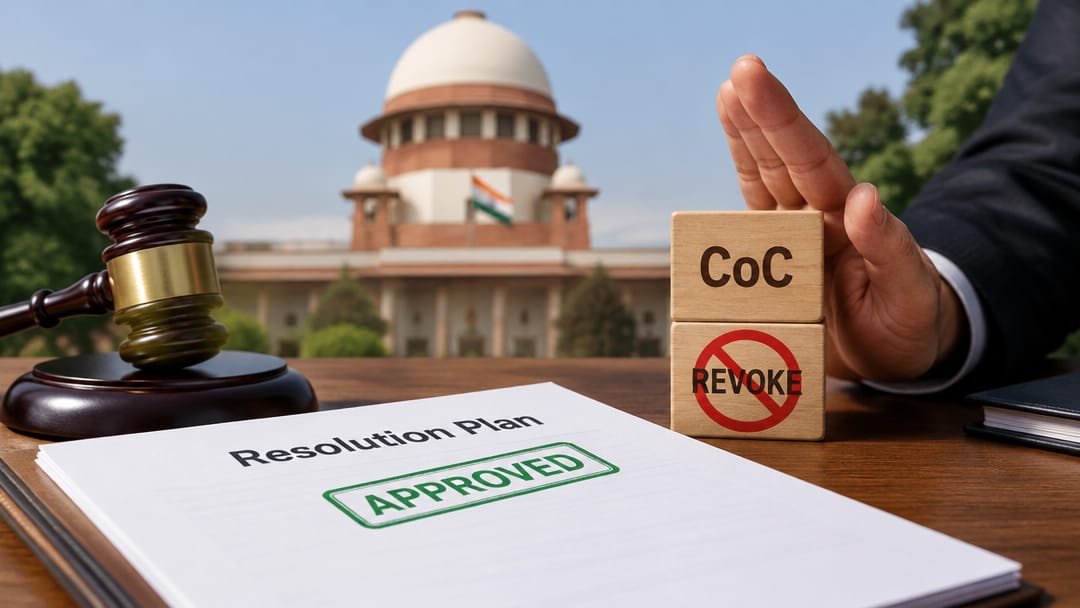
The Supreme Court on October 26 ruled that a Committee of Creditors cannot withdraw its approval of a resolution plan after voting in favour of it, even if the corporate debtor's financial position has improved since the vote. The Court held that CoC approval, once given, binds the process and cannot be reversed on commercial grounds. The ruling reinforces the finality of the insolvency resolution process under the Insolvency and Bankruptcy Code, 2016.
Why it matters
Under the Insolvency and Bankruptcy Code (IBC), 2016, once a Committee of Creditors approves a resolution plan by the required majority (66% voting share), the plan moves toward NCLT approval and eventual implementation. The CoC functions as the commercial decision-maker within the Corporate Insolvency Resolution Process (CIRP), but its authority is procedurally bounded — it cannot revisit a concluded vote simply because circumstances have changed.
This judgment addresses a situation where creditors, having approved a resolution plan, later sought to withdraw that approval citing improved financial health of the debtor. The Supreme Court rejected this, holding that the IBC does not contemplate a withdrawal mechanism at the post-approval stage on such grounds. The resolution plan, once approved by CoC, is meant to be submitted to NCLT under Section 30(6), and the CoC cannot stall or reverse this by claiming better recovery prospects now exist.
The significance for exam purposes is layered: (1) it tests understanding of the CoC's role and its limits under the IBC; (2) it clarifies that commercial wisdom of CoC, while wide in scope, is not unlimited in time — it crystallises at the point of voting; (3) it reinforces the IBC's core objective of time-bound resolution. For CLAT PG aspirants, this connects to questions on CoC powers, CIRP timelines, and the finality of resolution plans, all of which have been tested through statutory identification and case-law classification templates.
SC: co-operative banks are public authorities, must share internal documents under RTI
What happened
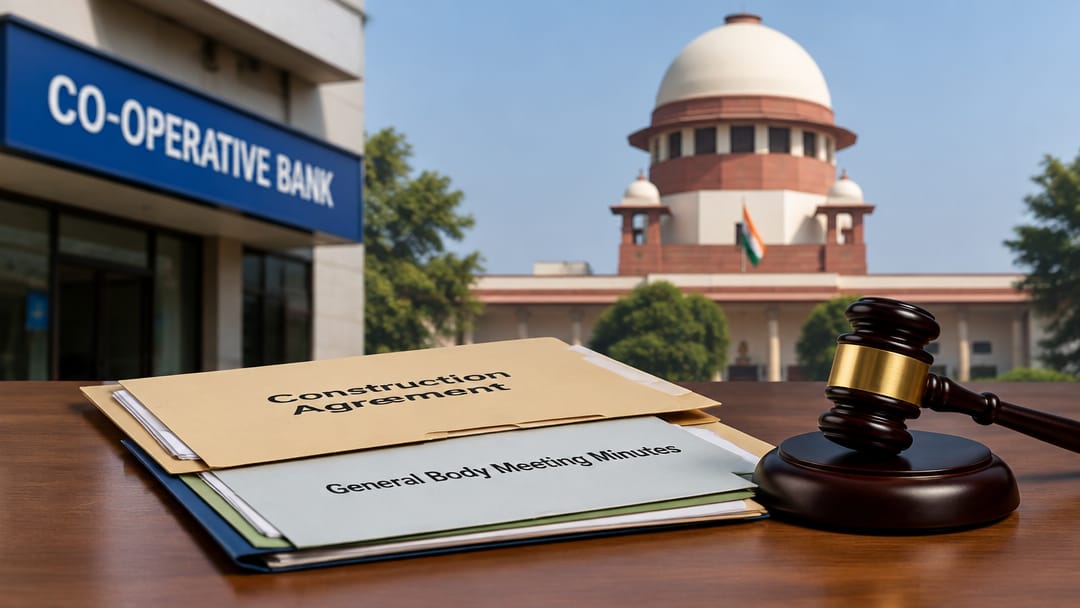
The Supreme Court dismissed appeals by a co-operative bank, upholding a member's right to obtain the bank's construction agreement and General Body Meeting minutes under the RTI Act. The court affirmed that co-operative banks, being substantially financed by or under the control of government, qualify as 'public authorities' under Section 2(h) of the RTI Act, obligating them to disclose internal documents to members who seek them.
Why it matters
This ruling clarifies a persistently contested question: do co-operative banks fall within the RTI Act's definition of 'public authority'? Section 2(h) of the RTI Act, 2005 defines a public authority as any body owned, controlled, or substantially financed by the appropriate government, or any non-government organisation substantially financed directly or indirectly by funds provided by the government. Co-operative banks occupy a hybrid space — they are formed under state co-operative societies legislation, are regulated by the Reserve Bank of India, and often receive government funds or guarantees, yet they claim the autonomy of private membership institutions.
The Supreme Court's reasoning here applies a functional test: what matters is not the formal label (private versus public) but the degree of government control or financing. This is consistent with the broader trajectory of RTI jurisprudence, which has progressively expanded the circle of accountable institutions — from government departments to statutory bodies, PSUs, and now co-operative entities.
For an aspirant, the critical principle is the two-part test under Section 2(h): (i) substantial financing by government, or (ii) government ownership or control. Meeting either limb suffices. A construction agreement between the bank and a contractor, and minutes of General Body Meetings, both relate to the bank's exercise of powers affecting its members, making disclosure consistent with RTI's core transparency objective.
The ruling also reinforces that internal governance documents of public authorities — not merely policy files — are disclosable, subject to exemptions under Sections 8 and 9 of the RTI Act.
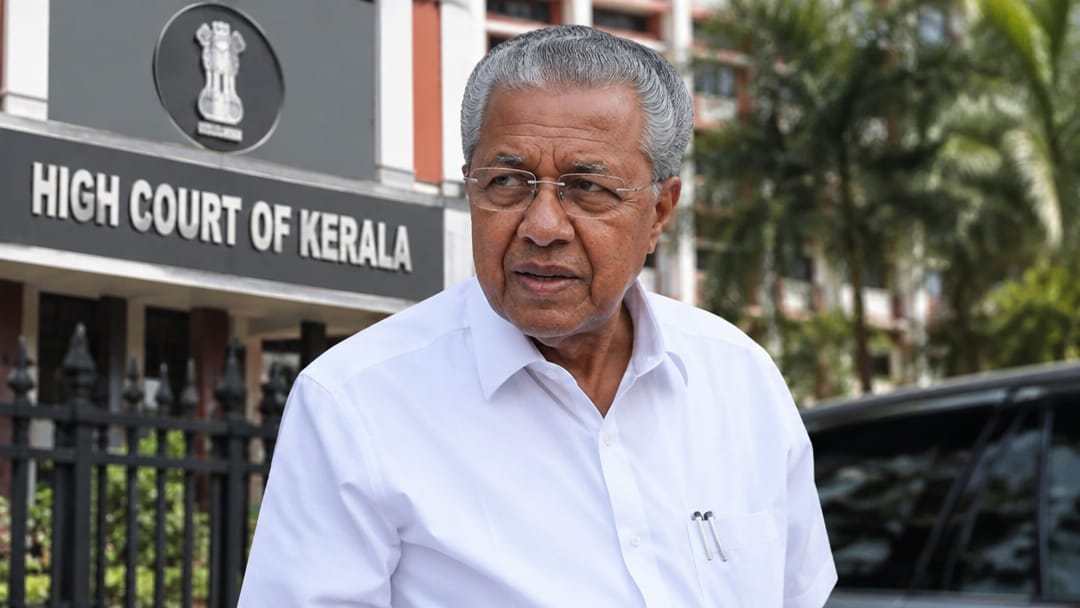
Kerala HC stays FIR against ex-CM Pinarayi Vijayan in CMRL-Exalogic case
What happened
The Kerala High Court on October 26 stayed the FIR registered against former Chief Minister Pinarayi Vijayan, his daughter Veena T., and others in connection with the CMRL-Exalogic controversy. The case involves alleged irregularities linked to a software contract awarded by Cochin Metro Rail Limited. The stay halts the police investigation pending further hearing. The court's intervention raises core questions about the High Court's power to quash or stay FIRs under its inherent jurisdiction.
Why it matters
This case turns on a High Court's power to stay or quash an FIR under Section 482 CrPC (now Section 528 BNSS), which preserves the inherent jurisdiction of the High Court to prevent abuse of process or secure ends of justice. This power is extraordinary and sparingly used — the court does not ordinarily interfere with a police investigation at the FIR stage.
The Supreme Court in State of Haryana v. Bhajan Lal (1992) laid down an exhaustive set of categories where HC can quash an FIR: when the allegations do not constitute an offence, when the case is manifestly absurd or improbable, or when the FIR is filed with a mala fide intent. The Kerala HC's stay suggests prima facie satisfaction that the case may fall within one of these categories.
For exam purposes, the critical distinction is between staying an investigation (interim relief) versus quashing the FIR entirely (final relief). A stay is protective — it preserves status quo while the matter is heard. Quashing is final and requires a higher threshold of prima facie case for abuse of process.
The case also engages Section 439 CrPC on bail conditions and the constitutional guarantee of personal liberty under Article 21, since continued investigation can itself be coercive. When a prominent political figure and a family member are co-accused, courts must guard against using the criminal process as a tool of political harassment — a concern the SC has noted in several recent bail and FIR-quashing rulings.