Six years as undertrial, then acquitted: SC orders UP to pay ₹6 lakh compensation
What happened
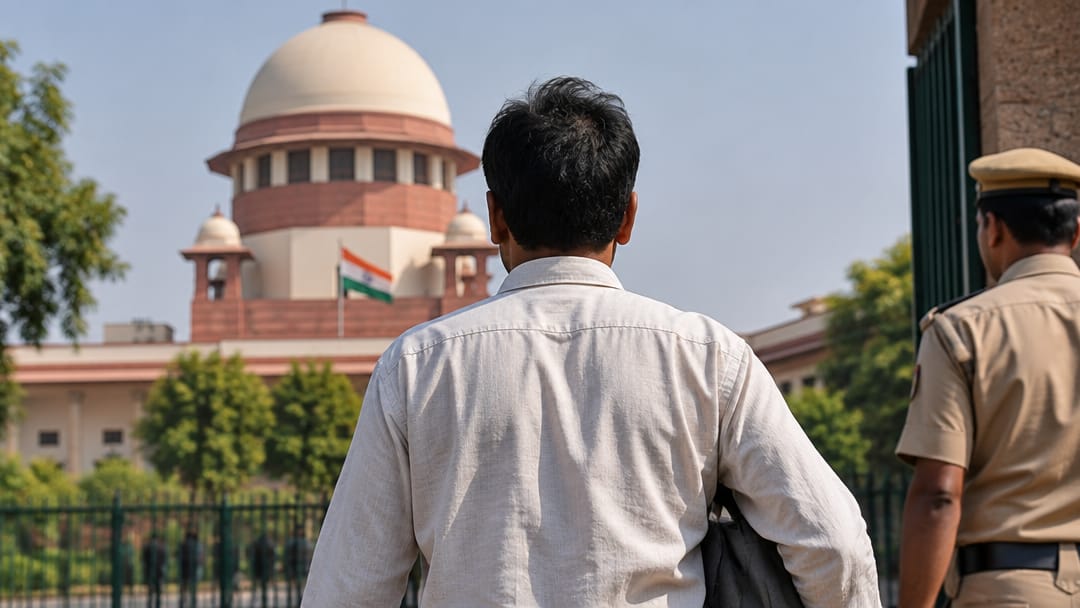
The Supreme Court ordered the Uttar Pradesh government to pay ₹6 lakh compensation to a man who spent six years in prison as an undertrial before being acquitted. The Court criticised UP Police for shoddy investigation, remarking that the force needs education in proper investigation methods. The ruling reinforces the constitutional right to speedy trial and the State's liability for wrongful incarceration under Article 21 of the Indian Constitution.
Why it matters
This judgment sits at the intersection of three important legal principles that CLAT PG and UPSC CSE both test repeatedly.
First, the right to speedy trial. Though not explicitly enumerated in Part III, the Supreme Court in Hussainara Khatoon v. State of Bihar (1979) read it into Article 21 as an essential component of the right to life and personal liberty. An undertrial who spends years in custody without conviction is a victim of this right's violation.
Second, State liability for custodial wrongs. When the State's machinery — police or prosecution — causes wrongful detention, the State cannot escape liability by pointing to the eventual acquittal as vindication. The Court's power to award compensation under Article 32 (and Article 226 at High Court level) for violation of fundamental rights was firmly established in Rudal Shah v. State of Bihar (1983), the landmark case where the SC awarded monetary compensation for illegal detention for the first time.
Third, the investigative quality obligation. The Court's remark that UP Police 'need education in investigation' signals judicial impatience with faulty chargesheet-filing that leads to prolonged undertrial detention. Under the CrPC (now BNSS 2023), Section 173 governs the police report/chargesheet. A defective investigation that results in wrongful imprisonment engages both the officer's accountability and the State's vicarious liability.
For CLAT PG, the passage-MCQ format will likely present the Rudal Shah or Hussainara Khatoon principle and ask you to apply it to a new fact pattern involving an acquitted undertrial seeking compensation.
SC voids Karnataka land acquisition tainted by fraud, orders restoration to owners
What happened
The Supreme Court on October 26 set aside land acquisition proceedings in Karnataka initiated for a cooperative housing society scheme, finding the process was vitiated by fraud and bribery. The Court ordered restoration of the privately owned land to its original owners. The ruling reaffirms that acquisition proceedings infected by fraud cannot be sustained under law, and that property rights under Article 300A require the State to follow a lawful, untainted process before depriving any person of their land.
Why it matters
This ruling sits at the intersection of Article 300A (right to property as a constitutional right) and the general principle that fraud vitiates all proceedings — fraus omnia corrumpit. After the 44th Constitutional Amendment (1978) deleted the right to property from Part III (fundamental rights) and re-located it to Article 300A as a statutory constitutional right, the question of what procedural and substantive safeguards still protect property owners became critical.
Article 300A states that no person shall be deprived of their property save by authority of law. The Supreme Court has progressively read this to mean not merely any law, but a law that is fair, just, and reasonable — and applied through an untainted process. In Vidya Devi v. State of H.P. (2020) and K.T. Plantation v. State of Karnataka (2011), the Court confirmed that even post-44th Amendment, the State cannot acquire property arbitrarily or capriciously.
The fraud-vitiates-acquisition principle adds another layer: when acquisition proceedings are initiated or advanced through bribery or misrepresentation, they are void ab initio. The State cannot clothe an unlawful act with the authority of law. Courts have consistently held that public purpose — the cornerstone of valid acquisition — is negated when the process is corrupted from within.
For CLAT PG aspirants, the key doctrinal move here is the Court treating Article 300A not as a bare procedural filter but as a substantive protection, and linking it to the equitable doctrine that fraud destroys legal acts entirely. This makes the case a strong passage candidate.
Green Skills Passport: certifying sustainability competencies for the green jobs economy
What happened
The Green Skills Passport, promoted by EY, is a global initiative designed to certify individuals in sustainability-related competencies needed for green jobs. It maps skills against emerging roles in the low-carbon economy, helping workers and employers identify gaps and pathways. India's green transition — driven by its net-zero by 2070 commitment and National Skill Development Mission — makes such frameworks increasingly relevant to workforce planning across agriculture, renewable energy, and rural development sectors.
Why it matters
Green jobs are defined by the International Labour Organization (ILO) as work that contributes to preserving or restoring environmental quality, reduces energy and raw material consumption, limits greenhouse gas emissions, minimises waste and pollution, and protects or restores ecosystems. The Green Skills Passport concept operationalises this definition by creating a verifiable credential framework — mapping what competencies a worker needs, at what level, to fill roles in sectors like renewable energy, sustainable agriculture, green construction, and circular economy.
For India, this connects directly to several policy layers. The National Skill Development Mission (NSDM), administered by the Ministry of Skill Development and Entrepreneurship through the National Skill Development Corporation (NSDC), is India's primary vehicle for workforce skilling. NABARD's rural credit and livelihood programmes increasingly fund green agricultural transitions — organic farming, watershed management, climate-resilient crops — all of which require certified green skills. The PM Kaushal Vikas Yojana (PMKVY) is the flagship scheme under NSDM, and its iterations have begun incorporating green skill modules.
The ILO estimates over 24 million new green jobs could be created globally by 2030 under ambitious climate policies. India's target of 500 GW of renewable energy by 2030 alone implies millions of technicians, installers, and engineers requiring certified competencies. A passport-style credential system helps bridge the recognition gap between informal green-skills training and formal employment — directly relevant to financial inclusion and rural livelihood schemes that NABARD finances.
Kerala HC stays FIR against ex-CM Pinarayi Vijayan in CMRL-Exalogic case
What happened
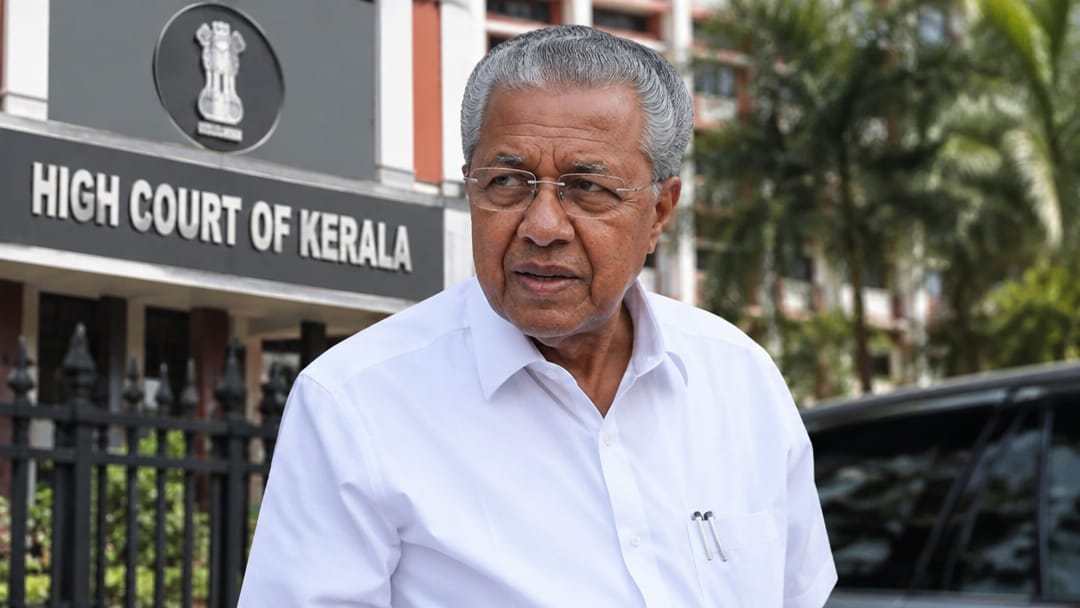
The Kerala High Court on October 26 stayed the FIR registered against former Chief Minister Pinarayi Vijayan, his daughter Veena T., and others in connection with the CMRL-Exalogic controversy. The case involves alleged irregularities linked to a software contract awarded by Cochin Metro Rail Limited. The stay halts the police investigation pending further hearing. The court's intervention raises core questions about the High Court's power to quash or stay FIRs under its inherent jurisdiction.
Why it matters
This case turns on a High Court's power to stay or quash an FIR under Section 482 CrPC (now Section 528 BNSS), which preserves the inherent jurisdiction of the High Court to prevent abuse of process or secure ends of justice. This power is extraordinary and sparingly used — the court does not ordinarily interfere with a police investigation at the FIR stage.
The Supreme Court in State of Haryana v. Bhajan Lal (1992) laid down an exhaustive set of categories where HC can quash an FIR: when the allegations do not constitute an offence, when the case is manifestly absurd or improbable, or when the FIR is filed with a mala fide intent. The Kerala HC's stay suggests prima facie satisfaction that the case may fall within one of these categories.
For exam purposes, the critical distinction is between staying an investigation (interim relief) versus quashing the FIR entirely (final relief). A stay is protective — it preserves status quo while the matter is heard. Quashing is final and requires a higher threshold of prima facie case for abuse of process.
The case also engages Section 439 CrPC on bail conditions and the constitutional guarantee of personal liberty under Article 21, since continued investigation can itself be coercive. When a prominent political figure and a family member are co-accused, courts must guard against using the criminal process as a tool of political harassment — a concern the SC has noted in several recent bail and FIR-quashing rulings.
Riksbank warns digital euro and stablecoins could displace the krona in payments
What happened
Sweden's central bank, the Riksbank, has revived the e-krona debate, warning that the European Central Bank's planned digital euro and the rise of private stablecoins could erode the Swedish krona's role in domestic and cross-border payments. The Riksbank argues that without a central bank digital currency of its own, Sweden risks losing monetary sovereignty as privately issued and foreign digital currencies increasingly intermediate everyday transactions.
Why it matters
A Central Bank Digital Currency (CBDC) is a digital form of sovereign money issued directly by a central bank — essentially a digital equivalent of cash, carrying no credit risk because it is a direct liability of the issuing authority.
Sweden is an unusually instructive case because it is among the world's most cashless societies, making it a real-world stress test for what happens when physical currency fades. The Riksbank launched its e-krona pilot in 2020, but no final decision to issue has been made.
The current concern has two triggers: 1. The ECB's digital euro project — if adopted, EU citizens (and, by extension, residents of non-euro countries closely integrated with the eurozone like Sweden) could transact in a foreign CBDC, reducing demand for the domestic currency. 2. Stablecoins (private digital tokens pegged to fiat currencies) — their growing use in payments could fragment the monetary transmission mechanism, weakening a central bank's ability to implement interest-rate policy.
For India, the RBI launched its own CBDC — the Digital Rupee (e₹) — in two tracks: the wholesale pilot (e₹-W) in November 2022 and the retail pilot (e₹-R) in December 2022. The RBI's stated rationale mirrors the Riksbank's concern: preserving monetary sovereignty, reducing settlement risk, and providing a programmable, interoperable alternative to private stablecoins.
Exam relevance: CBDC architecture (account-based vs token-based), two-tier distribution model, and the distinction between wholesale and retail CBDC are all active testing zones for RBI Grade B and UPSC GS-III.
ASUSE 2027–28 to run April–March, matching India's financial year for the first time
What happened
The Annual Survey of Unincorporated Sector Enterprises (ASUSE) 2027–28 is proposed to be conducted from April 2027 to March 2028, aligning its survey period with the financial year. This is a structural shift from earlier ASUSE cycles, which did not follow the April–March calendar. The survey covers unincorporated non-agricultural enterprises and is a key source of data on India's informal economy, employment, and value addition outside the formal corporate sector.
Why it matters
ASUSE — Annual Survey of Unincorporated Sector Enterprises — is conducted by the Ministry of Statistics and Programme Implementation (MoSPI) to capture data on non-agricultural unincorporated enterprises in India. These are enterprises that are not registered under the Companies Act or similar statutes, forming the backbone of India's informal economy. They include small traders, artisans, street vendors, and micro-manufacturers.
The survey measures key indicators: number of enterprises, workers employed, gross value added (GVA), capital formation, and emoluments. Because this sector is largely outside formal financial reporting, ASUSE is one of the few systematic instruments that makes it statistically visible — critical for GDP estimation, labour market analysis, and policy targeting.
The proposed alignment of ASUSE 2027–28 with the financial year (April–March) is methodologically significant. When survey periods straddle two financial years, data reconciliation with national accounts becomes complex. A financial-year-aligned survey period makes it easier to integrate ASUSE findings with GDP estimates, Union Budget outlays, and sectoral plans — all of which follow the April–March cycle.
For NABARD aspirants, this matters because unincorporated enterprises in rural areas — including agricultural input traders, rural artisans, and SHG-linked micro-enterprises — are captured in ASUSE data. For UPSC aspirants, the survey connects to governance themes: economic census, informal sector formalisation, and the statistical infrastructure underlying welfare scheme targeting.