RBI holds repo rate at 5.25%, cites global trade uncertainty and inflation risk
What happened
The RBI's Monetary Policy Committee kept the policy repo rate unchanged at 5.25 per cent and retained its neutral stance. The Standing Deposit Facility rate remains at 5 per cent, and the Marginal Standing Facility and bank rate stay at 5.5 per cent. Governor Sanjay Malhotra cited US tariff measures, crude oil volatility, and West Asia tensions as key risks. Inflation remains within the tolerance band, and domestic growth is supported by favourable monsoon and capital inflows.
Why it matters
This MPC decision is a textbook illustration of the RBI's inflation-targeting framework in action. Under the flexible inflation targeting (FIT) framework adopted in 2016, the MPC is mandated to keep CPI inflation at 4 per cent, with a tolerance band of ±2 per cent (i.e., 2–6 per cent). When inflation is within this band but showing upward movement, and growth remains resilient, the MPC has no compelling trigger to either cut or hike — hence a hold with a neutral stance.
The LAF corridor is central to understanding how these rates interact. The repo rate (5.25%) is the rate at which banks borrow overnight from RBI against collateral. The SDF rate (5 per cent) forms the floor — banks park surplus liquidity with RBI at this rate. The MSF rate (5.5%) forms the ceiling — banks borrow emergency overnight funds at this rate. Together, these create a 50-basis-point corridor that guides short-term money market rates.
The neutral stance signals that the MPC is not pre-committed to either cutting or hiking. It retains flexibility depending on how inflation and growth evolve. This contrasts with an 'accommodative' stance (biased toward cuts) or a 'withdrawal of accommodation' stance (biased toward hikes).
For transmission: when the repo rate holds steady, bank lending rates and deposit rates are unlikely to move significantly. Credit growth remains dependent on demand conditions rather than rate incentives. For agricultural credit — relevant to NABARD aspirants — NABARD's refinancing rates are linked to prevailing policy rates, so a hold means rural lending costs remain stable.
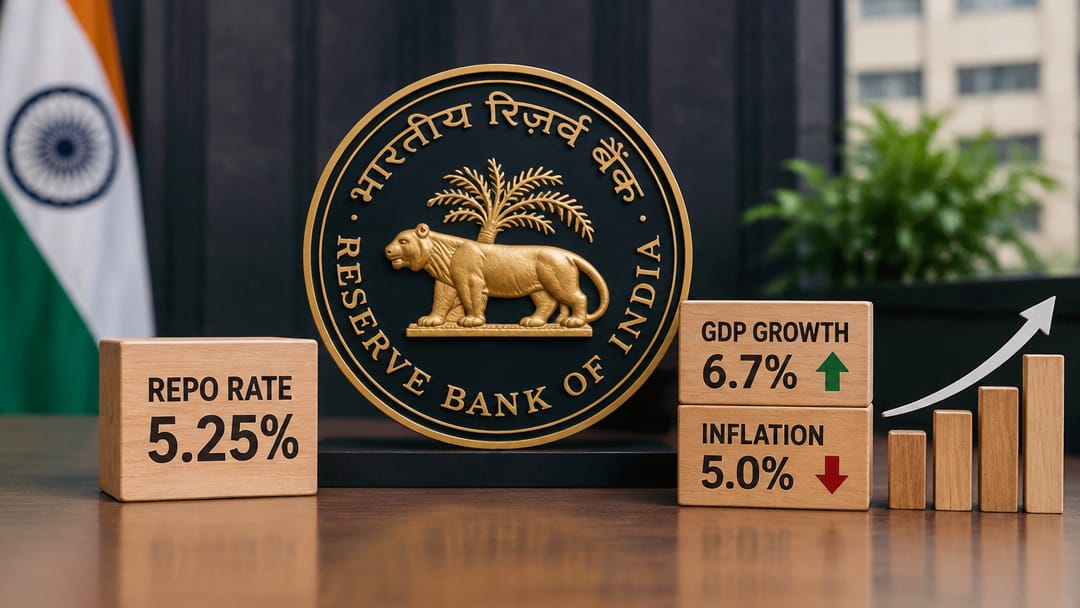
RBI holds repo rate at 5.25% for fourth straight meeting, lifts GDP forecast to 6.7%
What happened
The RBI's MPC, in its August 3–5, 2026 meeting, held the repo rate unchanged at 5.25% for the fourth consecutive review, citing global geopolitical uncertainty and elevated energy prices. FY27 GDP growth forecast was raised to 6.7% from 6.6%, with Q1 revised up to 7%. Headline CPI inflation projection was trimmed to 5.0% from 5.1%, while core inflation forecast was cut sharply by 40 basis points to 4.3%. The neutral policy stance was retained.
Why it matters
The MPC operates within India's flexible inflation-targeting framework, where the RBI targets CPI inflation at 4% (±2%). The repo rate — the rate at which the RBI lends overnight to commercial banks — is the primary instrument. When the MPC holds the rate, it signals neither stimulus nor tightening; a neutral stance means the next move could go either way depending on incoming data.
The transmission mechanism matters for exams: a repo rate cut reduces borrowing costs for banks, which should lower lending rates, stimulate credit growth, boost investment and consumption, and support GDP — but with a lag. When the MPC holds despite softening inflation, it signals that risks (here, geopolitical tension, energy prices, monsoon uncertainty) prevent a premature pivot.
The distinction between headline CPI and core inflation is exam-critical. Headline CPI includes food and fuel, which are volatile and supply-driven. Core inflation strips these out, reflecting demand-side price pressure that monetary policy can actually influence. A 40 bps cut in core inflation forecast (4.7% → 4.3%) tells the MPC that underlying demand pressure is easing — a signal that could support future rate cuts if sustained.
For NABARD aspirants: the repo rate directly affects NABARD's borrowing cost from RBI, which in turn influences refinancing rates for rural and agricultural credit. A hold means no immediate relief on agricultural lending costs.
The LAF corridor: the repo rate (5.25%) is the policy rate; the SDF (Standing Deposit Facility) forms the floor and the MSF (Marginal Standing Facility) forms the ceiling, together defining the liquidity adjustment corridor within which interbank rates operate.
SC's 2025 constitutional rulings: Art 14, 19, 21, and 300A tested across new fact patterns
What happened
The Supreme Court of India delivered several landmark constitutional law judgments in the second half of 2025, shaping the interpretation of Articles 14, 19, 21, and 300A. The rulings refined the tests for reasonable classification, deprivation of liberty, procedural fairness, and compulsory acquisition of property without compensation. These judgments are part of an ongoing series cataloguing constitutional evolution and are directly relevant for aspirants preparing for CLAT PG and UPSC CSE.
Why it matters
India's constitutional rights jurisprudence evolves primarily through Supreme Court judgments. The four articles most frequently litigated — Art 14 (equality), Art 19 (freedoms), Art 21 (life and liberty), and Art 300A (property) — each carry a distinct doctrinal architecture that the Court refines with each ruling.
Art 14 prohibits arbitrary state action. The Court applies the 'reasonable classification' test: a classification must have an intelligible differentia and a rational nexus with the object of the law. Post-Maneka Gandhi (1978), the Court also reads Art 14 as requiring procedural fairness wherever the state acts.
Art 19 protects six freedoms (speech, assembly, movement, etc.) subject to 'reasonable restrictions' under clauses (2)–(6). The Court applies a proportionality standard: the restriction must be proportionate to the legitimate aim pursued.
Art 21 has expanded from a narrow 'procedure established by law' guarantee to a substantive right after Maneka Gandhi, encompassing the right to health, environment, livelihood, dignity, and speedy trial. The test now demands that any procedure depriving life or liberty be fair, just, and reasonable.
Art 300A, inserted by the 44th Amendment (1978), protects against deprivation of property except by 'authority of law.' The Supreme Court has progressively held that this requires not just legal authority but a fair and reasonable process, including notice, hearing, and compensation where applicable.
The 2025 rulings reportedly advance each of these doctrines — making them prime material for passage-based questions where the examiner will test whether you can apply the principle stated in the passage to a novel fact situation.
India targets a 5× jump in space economy — from $8.4 bn to $44 bn
What happened
India aims to grow its space economy from USD 8.4 billion to USD 44 billion, driven by rising demand for LEO satellites in internet connectivity and Earth observation, and expanding private sector participation. Increased launch capacity and policy reforms enabling private players are central to this push. Officials cite growing commercial launch services and satellite manufacturing as key pillars, positioning India to capture a larger share of the global space economy currently estimated at over USD 600 billion.
Why it matters
India's space economy target of USD 44 billion represents a structural shift from a state-dominated programme to a commercially competitive ecosystem. Historically, ISRO handled all aspects of India's space activities. The 2023 Indian Space Policy and the establishment of IN-SPACe (Indian National Space Promotion and Authorisation Centre) as a single-window regulator fundamentally changed this architecture — private entities can now independently build, launch, and operate satellites and launch vehicles.
LEO satellites are central to this growth story. Unlike geostationary satellites at 35,786 km altitude, LEO satellites orbit at 160–2,000 km, offering lower latency (critical for broadband internet) and easier Earth observation. Companies like OneWeb, Starlink, and India's own Pixxel and Skyroot Aerospace are competing in this space.
INSPACe authorises non-governmental entities (NGEs); NSIL (NewSpace India Limited) is ISRO's commercial arm that handles technology transfer and launches. Together, these institutions form the three-pillar framework: ISRO (R&D and national missions), IN-SPACe (regulation and promotion), and NSIL (commercialisation).
India currently holds about 2–3% of the global space market. The USD 44 billion target implies capturing roughly 8–9% of projected global space economy by 2033. ISRO's proven low-cost launch record — exemplified by Chandrayaan and Mars Orbiter Mission — is India's competitive advantage in attracting global commercial launch contracts.
Gujarat launches habitat project in Little Rann of Kutch, home of the wild ass
What happened
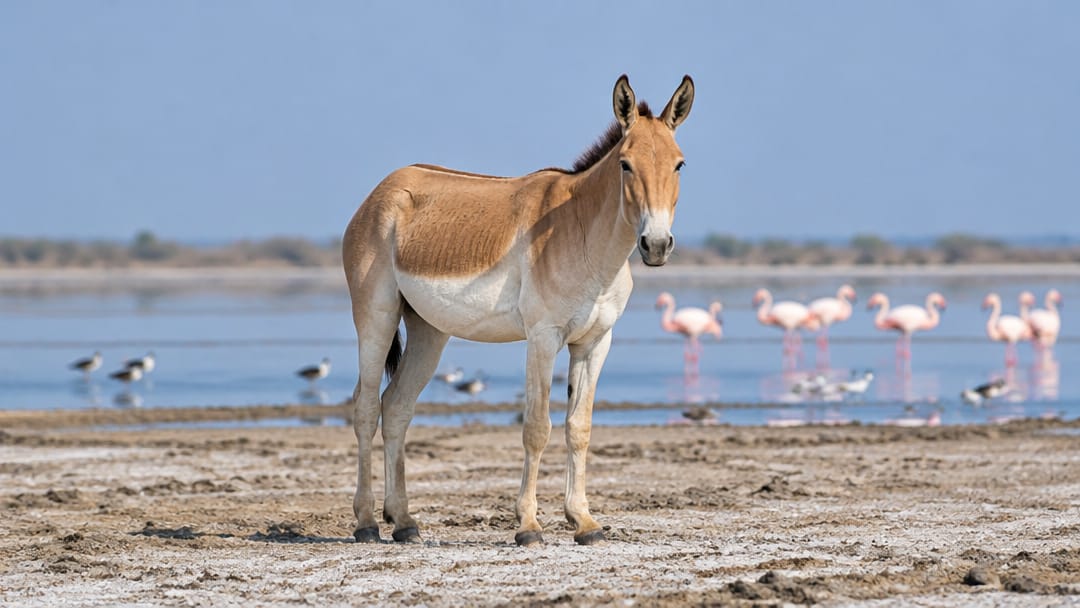
The Gujarat government has launched a conservation project in the Little Rann of Kutch targeting water retention, soil erosion control, and wildlife habitat improvement. The Little Rann is the sole habitat of the Indian Wild Ass, a Schedule I species protected under the Wildlife Protection Act. The initiative aims to restore the ecological balance of this salt marsh ecosystem, which also supports flamingos and other migratory birds critical to the region's biodiversity.
Why it matters
The Little Rann of Kutch (LRK) is a seasonal salt marsh in Gujarat's Surendra nagar and Kutch districts. It is notified as the Indian Wild Ass Sanctuary — the only place in the world where the Indian Wild Ass (Equus hemionus khur), locally called 'Ghudkhur,' survives in the wild. The species is classified as Near Threatened on the IUCN Red List and listed under Schedule I of the Wildlife Protection Act, 1972, giving it the highest legal protection in India.
The LRK ecosystem is fragile: it floods seasonally during monsoon (providing freshwater) and desiccates to a salt flat in summer. Soil erosion and water scarcity outside the monsoon period reduce carrying capacity for herbivores. The Gujarat government's project addresses this through water conservation structures and soil stabilisation — essentially applying watershed management principles to a protected area.
For exam purposes, the key static facts are: (1) LRK is not a Ramsar site, distinguishing it from nearby wetlands; (2) the Indian Wild Ass Sanctuary was established in 1973; (3) the species faces threats from disease (surra), agricultural encroachment, and road accidents. UPSC has repeatedly tested species-habitat linkages and Schedule I classifications. NABARD-relevant angles include how watershed interventions in protected areas can simultaneously support pastoral livelihoods of Agaria salt farmers who depend on LRK.
India calls for science-based guardrails on synthetic biology at CBD COP17
What happened
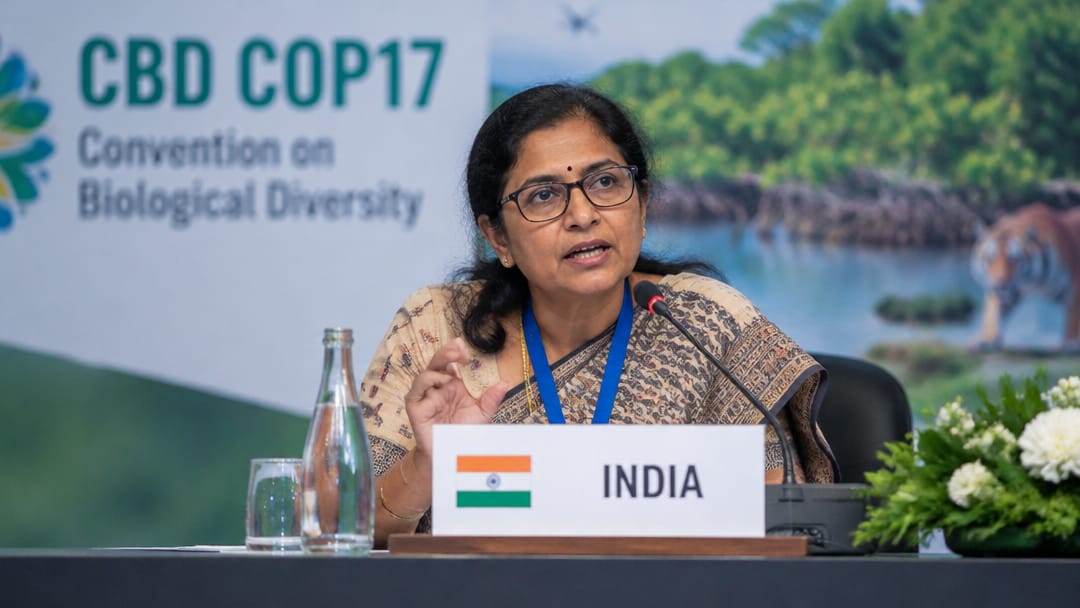
At the Convention on Biological Diversity's COP17, India urged that any use of synthetic biology in conservation must be governed by rigorous, science-based safeguards to prevent unintended ecological harm. India also highlighted its flagship programmes on big cats, mangroves, wetlands, and soil health, framing biodiversity protection as inseparable from ecosystem services. The position reflects India's broader stance: embrace biotechnological innovation cautiously, with precautionary principles anchoring any regulatory framework under the CBD.
Why it matters
Synthetic biology involves redesigning or engineering living organisms — sometimes creating entirely novel genetic sequences — for purposes ranging from medicine to conservation. At the CBD, its application in biodiversity contexts (e.g., gene drives to eliminate invasive species, engineered organisms to restore ecosystems) is deeply controversial. The core tension is between biotechnological potential and biosafety risk: a gene drive released into a wild population, for instance, cannot be recalled.
India's position at COP17 aligns with the CBD's precautionary approach enshrined in the Cartagena Protocol on Biosafety (2000), which governs the transboundary movement of living modified organisms. India is a party to both the CBD and the Cartagena Protocol, with the Ministry of Environment, Forest and Climate Change (MoEFCC) as the nodal ministry.
COP17 of the CBD is significant because it follows the landmark Kunming-Montreal Global Biodiversity Framework (GBF), adopted at COP15 in December 2022, which set 23 targets including the '30x30' goal — protecting 30% of land and oceans by 2030. Synthetic biology's role in meeting these targets remains unresolved.
For UPSC, the examiner will test: which convention governs synthetic biology in biodiversity contexts, what the Cartagena Protocol covers, India's nodal ministry, and how the GBF's targets interface with emerging biotechnologies. India's conservation showcases — Project Tiger, Mangrove Initiative for Shoreline Habitats and Tangible Incomes (MISHTI), and the National Wetland Conservation Programme — are all exam-relevant static facts linked to this news.
India's tiger count at 3,682 and 89 Ramsar sites: key numbers for IFS officers
What happened
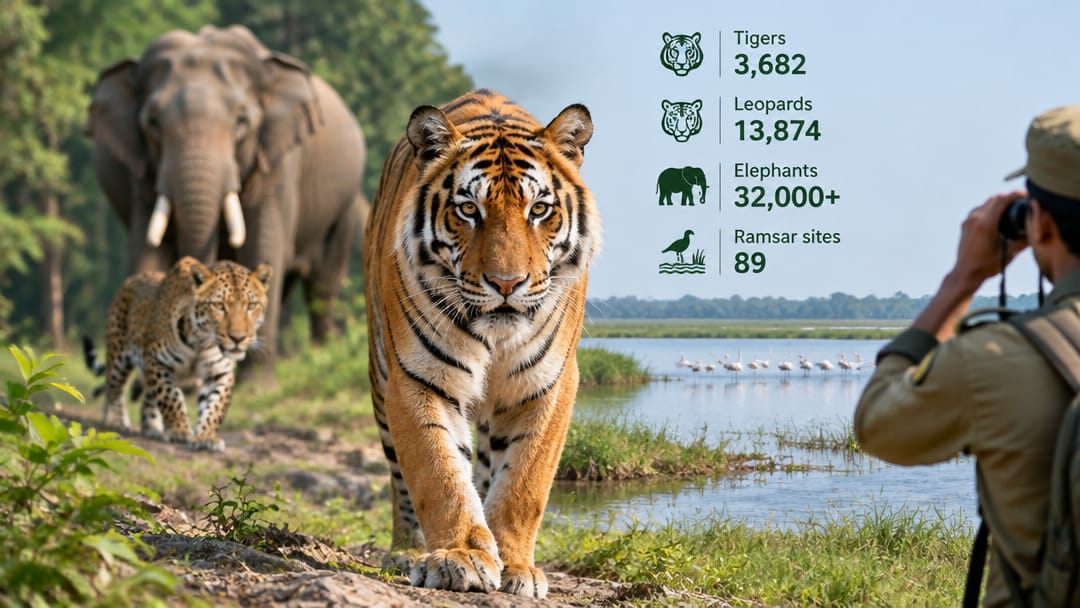
Union Environment Minister Bhupender Yadav met Indian Forest Service probationers and highlighted India's conservation milestones: tiger population at 3,682, leopard count at 13,874, elephant population at 32,000-plus, and Ramsar wetland sites reaching 89. He credited Project Tiger and Project Elephant for the recoveries and urged IFS officers to address emerging challenges including human-wildlife conflict, climate adaptation, and community-based forest governance as frontline ecological administrators.
Why it matters
This interaction is a policy signalling moment, but the exam tests the static numbers and frameworks behind it. Here is what you must anchor:
**Tiger conservation:** Project Tiger was launched in 1973 under the Wildlife Protection Act, 1972. The National Tiger Conservation Authority (NTCA) under the MoEFCC is the nodal body. India's latest tiger census (2022) placed the count at 3,682 — up from 2,967 in 2018. India holds approximately 75% of the world's wild tiger population.
**Elephant conservation:** Project Elephant was launched in 1992. India has the world's largest Asian elephant population. The elephant count of 32,000-plus covers 32 Elephant Reserves across 14 states.
**Ramsar Sites:** The Ramsar Convention on Wetlands (1971, Iran) designates wetlands of international importance. India's 89 Ramsar sites are the most in Asia. The key threshold numbers to remember: India had 26 sites until 2014, crossed 75 in 2022, and reached 89 by 2024.
**Leopard count:** The 2022 leopard census estimated 13,874 individuals — the first scientifically rigorous national estimate.
**IFS officers** are recruited through UPSC Civil Services and trained at the Indira Gandhi National Forest Academy (IGNFA), Dehradun. The exam will test the statutory framework (Wildlife Protection Act, Forest Conservation Act) and the nodal bodies, not the ministerial speech itself.
Liechtenstein's Hereditary Prince visits India as EFTA TEPA marks its first year
What happened
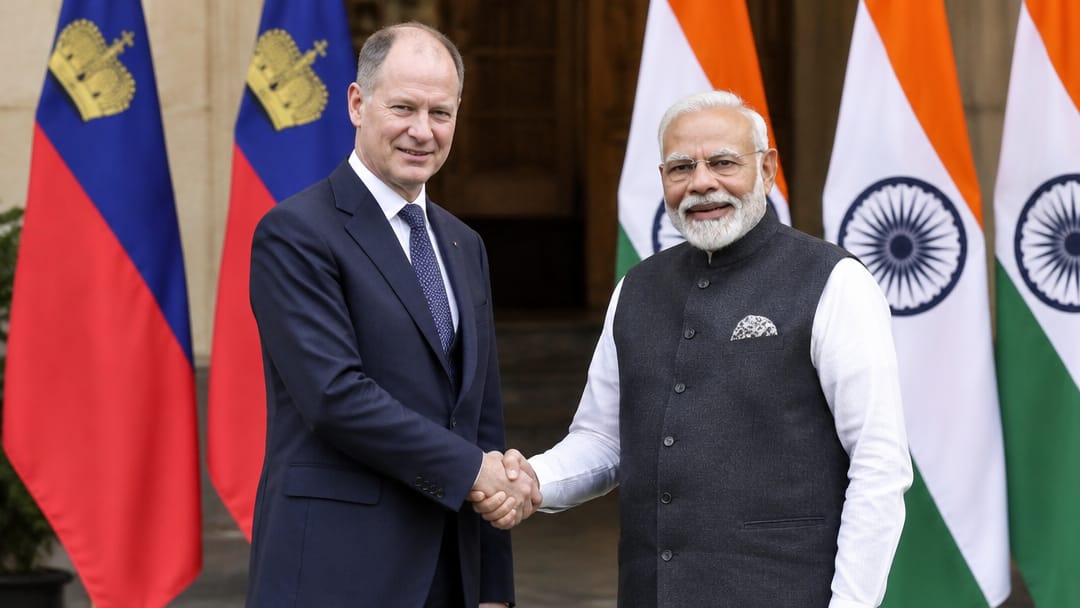
Hereditary Prince Alois of Liechtenstein visited India shortly after the first anniversary of the India-EFTA Trade and Economic Partnership Agreement (TEPA). The visit focused on expanding bilateral trade, technology cooperation, and investment. Liechtenstein is one of four EFTA members alongside Switzerland, Norway, and Iceland. The TEPA, operationalised in 2024, includes a landmark $100 billion investment commitment to India over 15 years, with Liechtenstein's precision engineering and financial services sectors among the key areas of engagement.
Why it matters
The India-EFTA TEPA is a landmark trade agreement between India and the four-member European Free Trade Association — Switzerland, Norway, Iceland, and Liechtenstein. Unlike a conventional Free Trade Agreement (FTA), TEPA includes a binding investment pledge: EFTA nations collectively committed to facilitate $100 billion in investments into India over 15 years, covering sectors like manufacturing, technology, and financial services. This is historically significant because India had not concluded a major trade deal with any developed-country bloc for over a decade before TEPA.
Liechtenstein, though tiny (population ~39,000), is economically potent — it is one of the wealthiest nations per capita and hosts major precision manufacturing and financial holding companies. Its membership in EFTA (not the EU) makes it a distinct bilateral partner for India.
The Hereditary Prince's visit signals Liechtenstein's intent to deepen the bilateral relationship beyond what TEPA mandates at the bloc level. For India, engagement with individual EFTA members matters because investment commitments under TEPA are disaggregated by country.
For exam purposes, the TEPA is testable across multiple angles: its signing date (March 2024), the $100 billion investment figure, the distinction between EFTA and EU membership, and the fact that TEPA is not a conventional goods-only FTA but includes services and intellectual property chapters. UPSC has consistently tested India's bilateral and multilateral trade frameworks, while RBI Grade B tests institutional membership and investment mechanisms.
CSIR gives Brazil's INPI access to TKDL to block biopiracy patents
What happened
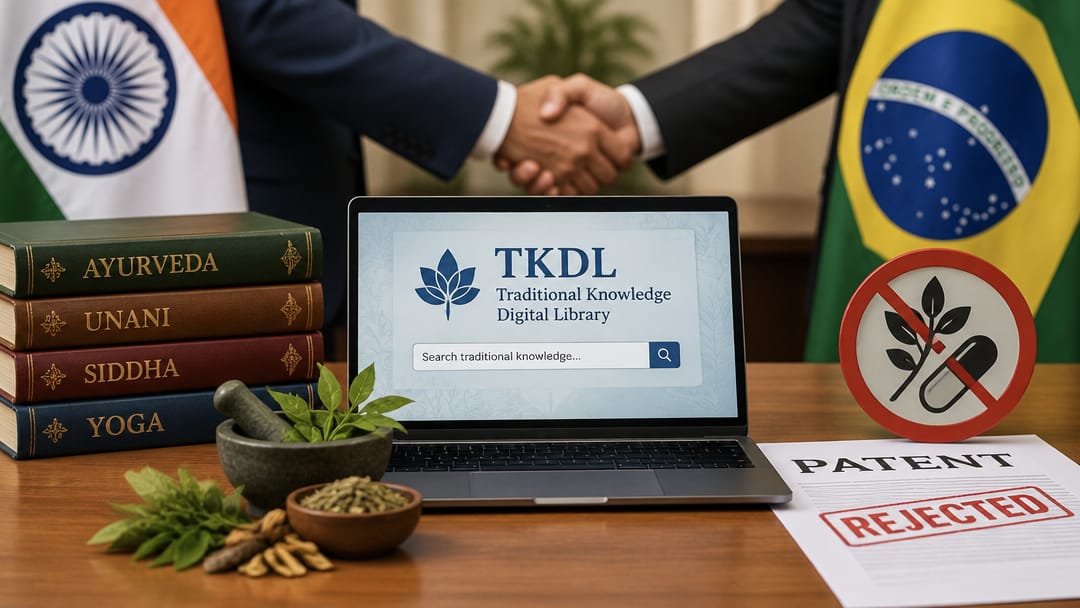
India's CSIR and Brazil's National Institute of Industrial Property (INPI) signed a TKDL Access Agreement, granting Brazil access to India's Traditional Knowledge Digital Library. The agreement, welcomed by leaders of both nations, allows Brazilian patent examiners to search TKDL's database of traditional medicinal knowledge before granting patents. This prevents biopiracy — the illegal patenting of India's documented Ayurvedic, Unani, Siddha, and Yoga practices by foreign entities claiming them as novel inventions.
Why it matters
The Traditional Knowledge Digital Library (TKDL) is a pioneering Indian database created in 2001 by CSIR and the Ministry of AYUSH. It documents over 0.29 million medicinal formulations drawn from classical Indian texts — Ayurveda, Unani, Siddha, and Yoga — in five international languages (English, French, German, Spanish, Japanese) and in formats compatible with international patent classification systems.
The core problem TKDL solves is biopiracy: foreign patent offices, unaware of prior art documented only in Sanskrit or Hindi classical texts, would grant patents on traditional remedies. Famous cases include the turmeric patent (granted by the US in 1995, revoked after CSIR challenged it) and the neem patent challenge before the European Patent Office.
TKDL Access Agreements are signed with patent offices of other countries, giving their examiners access to search this database during patent examination. Before this Brazil agreement, TKDL had signed agreements with the European Patent Office, the US Patent and Trademark Office, the UK Intellectual Property Office, Germany, Canada, Australia, Japan, and others.
The India-Brazil agreement is significant because Brazil is a megadiverse country with its own biodiversity concerns, and cooperation signals South-South solidarity on intellectual property and traditional knowledge protection. It also fits within the broader framework of the Convention on Biological Diversity (CBD) and the Nagoya Protocol on access and benefit-sharing, both of which India and Brazil have ratified. CSIR is the nodal agency managing TKDL on India's behalf.