SEBI and RBI join hands to simplify the foreign portfolio investor framework
What happened
SEBI, working with RBI, plans to release a consultation paper to overhaul the Foreign Portfolio Investor framework, aligning it with global norms. SEBI chairperson Tuhin Kanta Pandey announced the move aims to reduce compliance burdens and streamline entry for foreign investors. The regulator intends to simplify KYC requirements, rationalise investment limits, and harmonise rules across both equity and debt markets to make India more attractive to international capital.
Why it matters
The FPI framework governs how foreign institutional money enters Indian capital markets. Currently, FPIs must register with SEBI and comply with both SEBI regulations and RBI's Foreign Exchange Management Act rules simultaneously, creating a dual-compliance burden. The proposed revamp addresses this overlap.
Key structural elements of the existing FPI regime: FPIs are categorised into three groups based on risk profile. Category I includes government entities and central banks; Category II covers regulated funds and broad-based funds; Category III is a residual category with the highest compliance requirements. The 2019 SEBI (FPI) Regulations replaced the earlier FII/QFI/sub-account structure.
The proposed changes seek to: (1) align KYC documentation with FATF standards; (2) rationalise the aggregate FPI investment limits in individual companies (currently, FPI aggregate holding triggering the 'on-demand' repatriation scrutiny is 10% of paid-up equity); (3) simplify the 'material change' reporting timelines; and (4) harmonise rules so the same investor does not face contradictory RBI and SEBI requirements on the same instrument.
For exam purposes, understand that FPI regulation sits at the intersection of capital market regulation (SEBI) and forex regulation (RBI/FEMA). Any consultation paper is a precursor to a formal circular — the examiner loves testing which regulator issued which rule and what threshold changed.
SEBI curbs fresh investments in Gold ETF fund-of-funds, calls the ban temporary
What happened
SEBI Chairman Tuhin Kanta Pandey stated that restrictions on fresh investments in Gold ETF fund-of-funds schemes are temporary, not permanent policy. The curbs were imposed because underlying Gold ETFs hit prescribed investment limits under mutual fund regulations. SEBI is working with the government and RBI to resolve the constraint, which stems from overall portfolio limits on gold-linked instruments. The pause affects retail investors who access gold indirectly through fund-of-funds routes rather than buying Gold ETF units directly on exchanges.
Why it matters
A Gold ETF Fund-of-Funds (FoF) is a mutual fund that invests its corpus entirely into units of Gold ETFs rather than buying physical gold or equity directly. This structure allows investors without demat accounts to gain gold exposure through a regular mutual fund SIP or lump-sum route.
The regulatory constraint here arises from SEBI's investment limits on how much a mutual fund scheme can hold in a single underlying ETF or asset class. When Gold ETF schemes collectively approach or breach these concentration thresholds, SEBI mandates a halt on fresh inflows into the FoF that feeds into them. This is a prudential safeguard against over-concentration risk.
The broader context is that gold demand has surged sharply in 2024–25, driven by global uncertainty and rupee depreciation, pushing Gold ETF AUMs to record levels. The FoF channel, being the preferred route for SIP investors, bore the brunt of the restriction.
SEBI's assurance that the curb is temporary signals that a regulatory fix — possibly a revision of concentration limits, a new RBI dispensation for gold holdings, or an increase in permissible portfolio limits — is under consideration. The episode illustrates how product-level restrictions in capital markets can be triggered not by fraud or misconduct, but purely by structural portfolio ceiling limits hitting their bounds.
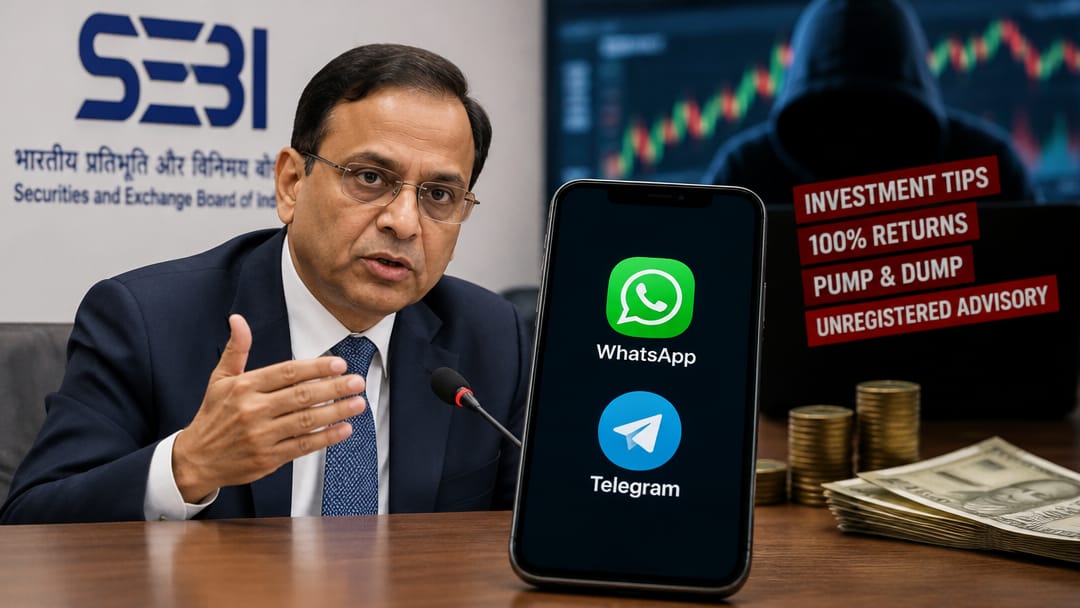
SEBI chair calls for crackdown on WhatsApp and Telegram investment fraud groups
What happened
SEBI Chairperson Tuhin Kanta Pandey has signalled a strict enforcement stance against fraudulent investment advisory groups operating on WhatsApp and Telegram. These platforms are routinely used to run unregistered tip-sharing schemes, pump-and-dump operations, and fake advisory services targeting retail investors. SEBI's concern centres on entities providing investment advice without registration under the Investment Advisers Regulations, 2013, and Securities Law, bypassing regulatory oversight and causing significant financial harm to retail participants.
Why it matters
SEBI regulates investment advisers under the SEBI (Investment Advisers) Regulations, 2013, which require anyone providing personalised investment advice for a fee to register with SEBI. Operating without such registration is a violation of the Securities and Exchange Board of India Act, 1992, specifically Section 12, which mandates registration for market intermediaries.
Social media platforms like WhatsApp and Telegram have become vectors for two distinct frauds: first, 'finfluencer' schemes where unregistered individuals charge subscriptions for stock tips; second, 'pump-and-dump' operations where operators accumulate a stock, hype it in closed groups, and exit once retail buyers inflate the price.
SEBI has progressively tightened this space. In August 2023, SEBI issued a consultation paper on regulating finfluencers. In 2024, SEBI amended the Investment Advisers Regulations to restrict unregistered persons from using associations with SEBI-registered entities as implicit endorsements. SEBI can take action under Section 11(4) of the SEBI Act — imposing penalties, issuing cease-and-desist orders, and referring cases to SFIO or law enforcement.
The distinction between 'research analysts' (regulated under RA Regulations, 2014) and 'investment advisers' (regulated under IA Regulations, 2013) is a recurring exam trap: research analysts publish impersonal reports; investment advisers give personalised advice. Both require SEBI registration. Unregistered activity on social media platforms violates both frameworks simultaneously.
Agriculture budget up 5x in 13 years: ₹27,663 cr to ₹1,40,529 cr
What happened
India's Union Budget allocation for the Department of Agriculture and Farmers Welfare has risen from ₹27,663 crore in 2013-14 to ₹1,40,528.78 crore in 2026-27, a nearly five-fold increase over thirteen years. This expansion reflects a sustained policy push across crop insurance, input subsidies, digital agriculture, MSP procurement, and credit flow to farmers, marking one of the sharpest sectoral budget escalations in Indian public finance.
Why it matters
The five-fold rise in agriculture budget allocation is not merely a fiscal headline — it is the scaffolding beneath a series of landmark schemes that competitive exams test in granular detail.
The Department of Agriculture and Farmers Welfare (under the Ministry of Agriculture and Farmers Welfare) is the nodal agency for most central crop-sector schemes. The budget jump from ₹27,663 crore (2013-14) to ₹1,40,528.78 crore (2026-27) maps almost exactly onto the launch timeline of flagship programmes: PM-KISAN (2019, ₹6,000/year direct income support to ~11 crore farmers), PM Fasal Bima Yojana (2016, premium-subsidised crop insurance), PM-KUSUM (solar pumps for irrigation), and the Agriculture Infrastructure Fund (₹1 lakh crore, 2020).
For NABARD aspirants, the critical link is rural credit: NABARD sets the agricultural credit target in consultation with RBI. For 2023-24, the agricultural credit target was set at ₹20 lakh crore; it was revised upward to ₹22 lakh crore for 2024-25. The budget expansion also funds interest subvention on short-term crop loans (currently 3% subvention keeping effective rate at 4% for timely repayers).
For UPSC aspirants, the policy architecture matters: MSP is recommended by CACP (Commission for Agricultural Costs and Prices), PM-KISAN is funded 100% by the Centre, and the digital layer — AgriStack, Kisan Drone policy — represents the next frontier of agricultural governance.
The examiner's typical move is to blank out a scheme parameter — the year of launch, the financial outlay, the implementing ministry, or the beneficiary count — and test whether the aspirant has memorised the static fact beneath the news peg.
Article 142 used to quash criminal cases en masse: a rule-of-law challenge
What happened
A constitutional law critique argues that the Supreme Court's use of Article 142 — its plenary power to do 'complete justice' — to grant blanket quashing of criminal proceedings, particularly in riot and communal violence cases, substitutes individual adjudication with informal collective settlements. The piece contends this conflates substantive rights protection with procedural convenience, effectively decriminalising serious offences through judicial amnesty rather than legislative pardon, undermining the distinction between civil compounding and public-law prosecution.
Why it matters
Article 142 of the Constitution grants the Supreme Court power to pass any order necessary to do 'complete justice' in pending matters. Originally conceived as a curative, gap-filling tool — used in landmark cases like Union Carbide (Bhopal gas tragedy settlement) and in contempt enforcement — it has no textual limit except that it cannot override substantive law. The Supreme Court in Supreme Court Bar Association v. Union of India (1998) clarified that Article 142 cannot be used to supplant or ignore substantive legal provisions, only to supplement procedural gaps.
The current constitutional debate focuses on a pattern where the Court invokes Article 142 to quash First Information Reports (FIRs) or criminal trials in bulk — especially post-communal riot cases — when the parties (usually the accused and the local community or victim's family) reach a 'compromise.' Critics argue this converts the criminal justice system, which protects public interest, into a panchayat-style private settlement mechanism.
The core doctrinal distinction being violated, critics argue, is between: (1) compoundable offences under Section 320 CrPC (now BNSS), where private settlement is legislatively permitted; and (2) non-compoundable offences like murder, rape, and riot, where the State is the prosecutor and individual compromise cannot extinguish public liability. Using Article 142 to quash non-compoundable offences sidesteps this statutory architecture.
This also intersects with Article 21 (victim's right to fair investigation and justice), Article 14 (equal treatment of similarly situated accused), and the separation of powers — since the power to grant amnesty in criminal law traditionally belongs to the executive under Articles 72 and 161, not the judiciary.
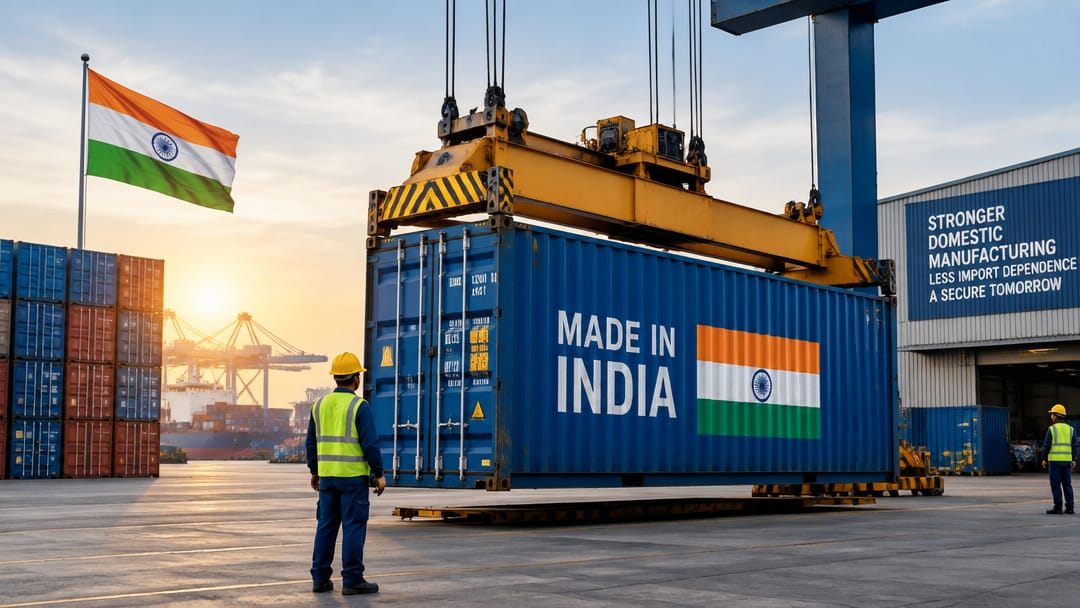
Cabinet approves scheme to build India's domestic container manufacturing base
What happened
The Union Cabinet approved the Scheme for Container Manufacturing, announced in Union Budget 2026–27, to develop domestic production capacity for shipping containers. India currently imports most of its containers, creating supply chain vulnerabilities and trade logistics costs. The scheme offers interest subvention as its primary financial instrument to incentivise manufacturers. The move aims to reduce dependence on Chinese-manufactured containers and strengthen India's export logistics infrastructure by building an indigenous container industry.
Why it matters
India faces a structural problem in global trade logistics: it imports the vast majority of its shipping containers, with China dominating global container manufacturing at roughly 90% of world output. The COVID-19 pandemic exposed this vulnerability acutely, when container shortages drove freight rates to record highs and disrupted Indian exports.
The Scheme for Container Manufacturing addresses this through interest subvention — a mechanism where the government subsidises the interest component of loans taken by manufacturers, reducing their borrowing cost and making capital-intensive container production financially viable. This is a demand-side push on the supply side: by lowering the cost of setting up manufacturing units, the government nudges private investment into a sector that would otherwise remain uncompetitive against cheap Chinese imports.
For exam purposes, understand the policy logic: interest subvention schemes sit at the intersection of industrial policy, trade logistics, and financial inclusion of MSMEs into manufacturing value chains. The scheme connects to the broader 'Atmanirbhar Bharat' and 'Make in India' frameworks.
For RBI aspirants, the interest subvention mechanism is directly relevant — RBI administers similar subvention schemes in agriculture (Kisan Credit Card) and housing. The delivery mechanism — channelled through banks, with the government reimbursing the interest differential — is a core concept in priority sector and directed lending.
For UPSC aspirants, the scheme sits within India's trade competitiveness, port-led development, and Sagarmala Programme context. Containers are the unit of modern global trade; domestic manufacturing capacity is a strategic infrastructure question, not merely an industrial one.
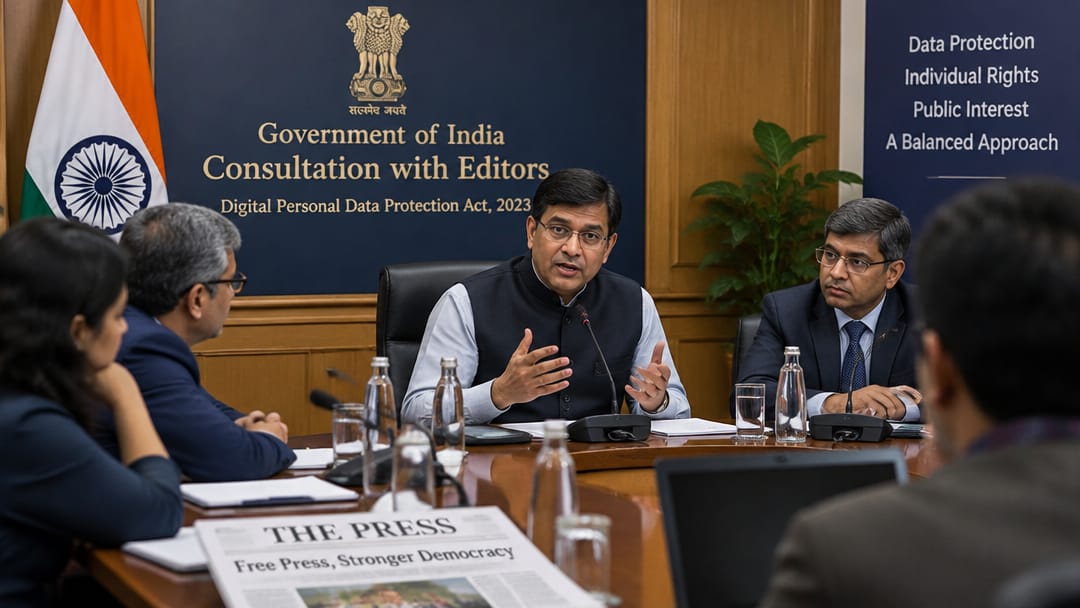
Centre consults press editors on digital data privacy law, says journalistic freedom safe
What happened
The Central Government invited newspaper editors for consultations on the Digital Personal Data Protection Act, 2023, assuring them it has no intention of restricting journalistic freedom guaranteed under the Constitution. Officials indicated openness to addressing concerns that the law's data-processing obligations and exemptions may conflict with press reporting practices. The move signals that the government is still calibrating how the Act balances individual data rights against the public interest in a free and investigative press.
Why it matters
The Digital Personal Data Protection Act, 2023 (DPDPA) is India's first comprehensive data-privacy statute, replacing the earlier framework under the Information Technology Act, 2000. It operationalises the constitutional right to privacy recognised in Justice K.S. Puttaswamy v. Union of India (2017, nine-judge bench), which held privacy to be a fundamental right under Article 21.
The tension the government is now addressing arises because the DPDPA requires 'Data Fiduciaries' — entities that collect and process personal data — to satisfy strict consent and purpose-limitation rules. News organisations routinely process personal data without explicit consent during investigative reporting. Section 17 of the Act carves out exemptions for certain legitimate state and public-interest activities, but the precise scope of a press exemption has not been finalised in the Rules, which are still being drafted.
Constitutionally, freedom of the press flows from Article 19(1)(a) as part of freedom of speech and expression. It is not absolute; Article 19(2) permits reasonable restrictions in the interests of, among other things, public order and decency. The DPDPA's consent requirements, if applied rigidly to journalism, could function as an indirect restriction on Art 19(1)(a) — a classic 'chilling effect' argument. Courts test such indirect restrictions under the proportionality standard articulated in Modern Dental College v. State of MP (2016) and Anuradha Bhasin v. Union of India (2020): the measure must be (i) backed by law, (ii) pursue a legitimate aim, (iii) be necessary, and (iv) be proportionate.
For CLAT PG aspirants, this event is the live legislative application of Puttaswamy and the Art 19(1)(a) press-freedom doctrine simultaneously.
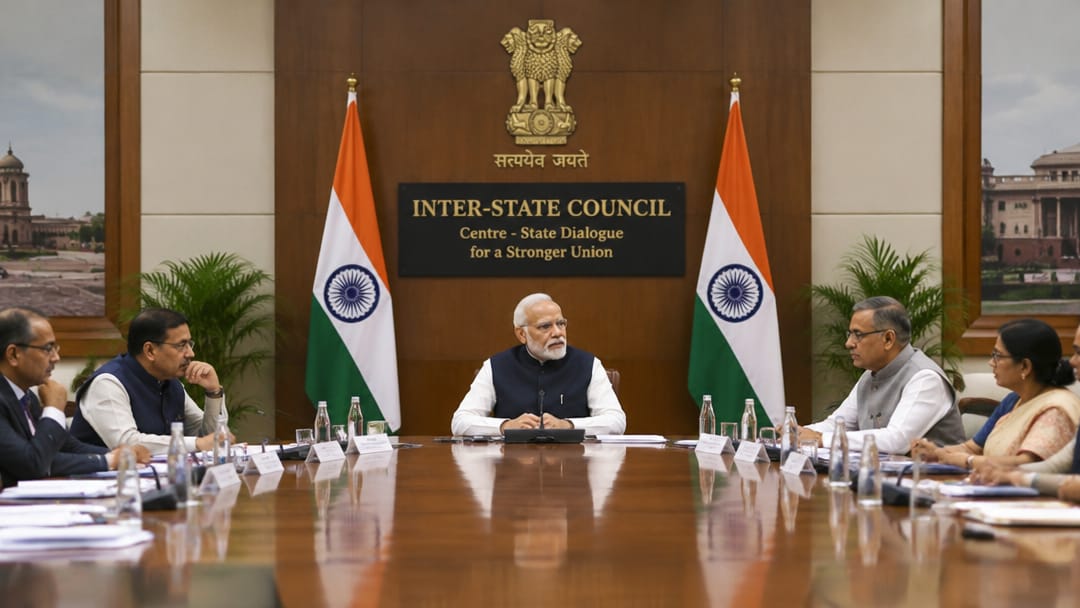
Inter-State Council exists in the Constitution but has met only twice since 2016
What happened
An opinion piece argues that India's cooperative federalism remains aspirational because the Inter-State Council, a constitutional body under Article 263 meant for Centre-state deliberation, has been largely dormant. The Council last met in 2016 and before that in 2006. The author calls for reviving it as a structured, regular forum for shared decision-making between the Union and states, noting the Constitution already provides this mechanism without requiring new legislation.
Why it matters
Article 263 of the Constitution empowers the President to establish an Inter-State Council if it appears to him that the public interests would be served by its creation. The Council is designed to inquire into and advise on disputes between states, investigate subjects of common interest, and make recommendations for better coordination of policy and action. It is not a permanent constitutional body like the Election Commission; it exists only when constituted by a presidential order.
The Inter-State Council was actually constituted in 1990 on the recommendation of the Sarkaria Commission. Its meetings have been infrequent: it met eleven times between 1990 and 2016, then went dormant. The Standing Committee of the Council, chaired by the Home Minister, handles inter-session matters.
The constitutional doctrine of cooperative federalism — the idea that the Union and states must work collaboratively rather than in a purely hierarchical manner — has been repeatedly invoked by the Supreme Court, notably in S.R. Bommai v. Union of India (1994) and more recently in State of West Bengal v. Union of India and the GST judgments. The court has held federalism to be a basic structure element, though Indian federalism remains asymmetric: the Constitution provides for residuary powers with the Union (Article 248), allows Central intervention through Articles 356 and 360, and gives Parliament overriding legislative authority in emergencies.
For CLAT PG, the key distinction is between Article 263 (Inter-State Council, advisory and coordinative) and Article 131 (original jurisdiction of the Supreme Court in inter-state disputes). The two are often confused. Article 263 is a political-executive mechanism; Article 131 is a judicial mechanism.
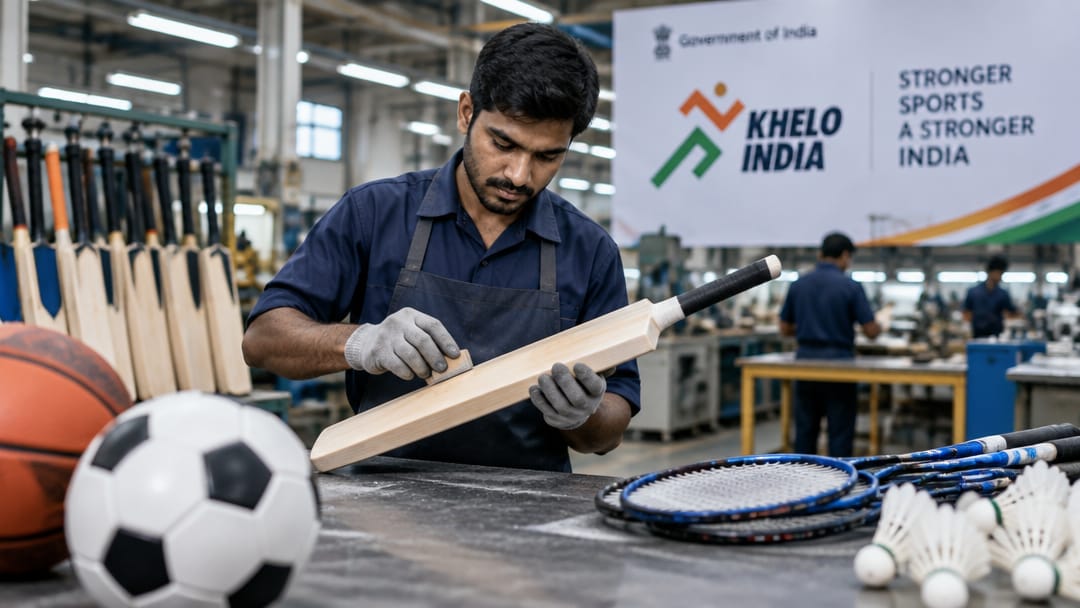
Cabinet clears ₹1,856 crore Khelo India Sports Goods Manufacturing Scheme
What happened
The Union Cabinet approved the Khelo India Sports Goods Manufacturing Scheme on 28 October 2026 with a total outlay of ₹1,856.67 crore covering FY 2026-27 to FY 2031-32. The scheme aims to boost domestic sports goods production, reduce import dependence, and position India as a global sports equipment manufacturing hub, with a focus on clusters like Jalandhar and Meerut that already dominate India's sports goods export market.
Why it matters
India's sports goods manufacturing sector is heavily concentrated in a few clusters — Jalandhar (Punjab) for leather sports goods and Meerut (Uttar Pradesh) for cricket equipment — yet these clusters remain technologically underdeveloped and heavily dependent on informal labour. India imports high-performance sports equipment while simultaneously exporting lower-value goods, creating a structural trade gap. The Khelo India Sports Goods Manufacturing Scheme addresses this by channelling production-linked and cluster-development support toward sports goods manufacturers.
The scheme sits at the intersection of three policy streams: (1) the broader Khelo India mission under the Ministry of Youth Affairs and Sports, which targets grassroots sports development; (2) the Make in India / Atmanirbhar Bharat manufacturing push; and (3) employment generation in MSME-dominated industrial clusters. For UPSC, the scheme tests understanding of how industrial policy connects to welfare outcomes — skilled employment, import substitution, and sports diplomacy. For RBI Grade B, the relevant angle is MSME credit, priority sector lending to sports goods SMEs, and the scheme's potential to improve export earnings and current account dynamics.
The five-year outlay (₹1,856.67 crore) signals medium-term fiscal commitment rather than a one-off allocation, making the scheme's financial architecture — how funds flow to clusters, whether through PLI-style incentives or direct grants — an examiner-favourite data point. The Cabinet approval date (28 October 2026) and the implementing ministry are standard fill-in-the-blank targets.
India launches 13-year Container Manufacturing Promotion Scheme to cut import dependence
What happened
The Union Cabinet approved the Container Manufacturing Promotion Scheme, running from FY 2027-28 to FY 2039-40. The scheme provides three years for facility setup and ten years of production-linked support. India currently imports most of its shipping containers, largely from China, creating a strategic logistics vulnerability. The scheme aims to build domestic manufacturing capacity, reduce freight cost volatility, and strengthen India's position in global supply chains amid rising container demand post-COVID.
Why it matters
India's near-total dependence on imported shipping containers — overwhelmingly sourced from China — became a critical vulnerability during the COVID-19 pandemic when container shortages caused freight rates to spike by 500–800%. Domestic exporters, particularly in textiles, pharmaceuticals, and agriculture, bore the brunt as container availability dictated export timelines and costs.
The Container Manufacturing Promotion Scheme addresses this structural gap by incentivising domestic production over a 13-year window (FY 2027-28 to FY 2039-40). The architecture mirrors the Production-Linked Incentive (PLI) model: a setup phase (3 years) followed by an extended production support phase (10 years). This long horizon is deliberate — container manufacturing requires heavy capital investment in steel fabrication, welding infrastructure, and quality certification, so shorter incentive windows do not justify the capital commitment.
For exam purposes, the scheme connects several syllabus threads simultaneously. From a trade and logistics angle (UPSC GS-III), it addresses Make in India, supply chain resilience, and export competitiveness. From an RBI/macroeconomic angle, lower container costs reduce the landed cost of imports and the freight component embedded in the WPI and CPI, with direct implications for trade balance and inflation. The Ministry of Ports, Shipping and Waterways is the nodal ministry, connecting it to Sagarmala and maritime infrastructure policy. The scheme also reflects India's broader industrial policy shift toward strategic import substitution in logistics inputs, not just finished goods.
Japan's Supreme Court held the state liable for inaction on Minamata mercury pollution
What happened
Japan's Supreme Court in 2004 held the national government liable for failing to regulate Chisso Corporation's mercury discharge into Minamata Bay, which caused severe neurological damage from the 1950s onward. The ruling confirmed that the state's inaction constituted a breach of its duty to protect public health. Methylmercury bioaccumulated through the food chain into fish, which local communities consumed heavily. The case established landmark principles of state environmental liability and the precautionary approach in pollution-related tort law.
Why it matters
Minamata Disease is the name given to severe methylmercury poisoning first observed in Minamata, Japan, in 1956. Chisso Corporation's chemical plant discharged mercury-laden wastewater into Minamata Bay for decades. Methylmercury entered the aquatic food chain and bioaccumulated in fish and shellfish. Fishing communities who depended on these fish suffered damage to the central nervous system — loss of vision, hearing, motor coordination, and, in prenatal cases, congenital neurological defects.
The 2004 Japanese Supreme Court judgment was a watershed moment for environmental law globally. It held the Japanese national government liable alongside the corporate polluter, establishing that regulatory inaction — the failure to use available legal powers to stop known pollution — is itself actionable negligence. This shifts the frame from 'polluter pays' to 'regulator must act.'
For Indian environmental law, the parallels are direct. India's Environment Protection Act (1986), the Water (Prevention and Control of Pollution) Act (1974), and the National Green Tribunal Act (2010) all vest regulatory agencies (CPCB, SPCBs) with powers to act against polluters. The Minamata precedent supports arguments that failure to exercise these powers can attract state liability.
The Minamata Convention on Mercury (2013), a global treaty under UNEP, takes its name from this disaster. India signed and ratified it. The Convention requires parties to phase out mercury use in specific products and processes, control artisanal gold mining emissions, and manage mercury waste — directly relevant to India's industrial and mining sectors.
For NABARD aspirants, mercury contamination of water bodies affects rural aquatic ecosystems and fishing livelihoods — a rural ecology dimension the examiner may test through application scenarios.
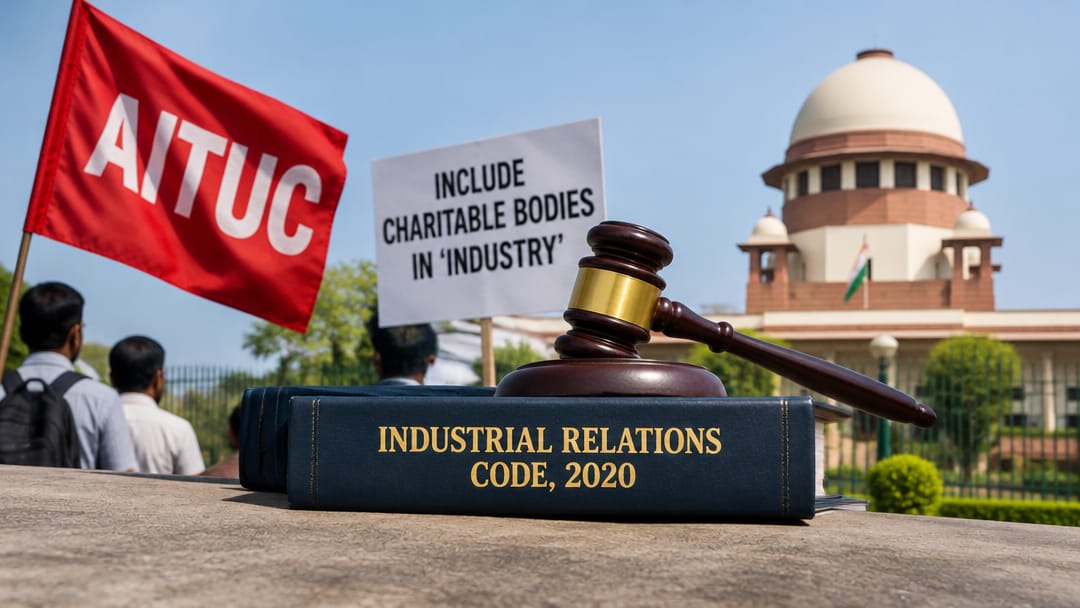
AITUC challenges exclusion of charitable bodies from 'industry' under 2020 labour code
What happened
The All India Trade Union Congress, Tamil Nadu has filed a petition in the Supreme Court challenging Section 2(p) of the Industrial Relations Code, 2020, which defines 'industry.' The petition targets specific exclusions from that definition — notably charitable and philanthropic establishments — arguing these exclusions unconstitutionally deny workers in those sectors labour protections. The Supreme Court is set to examine whether Parliament's narrowing of the 'industry' definition violates constitutional rights of workers employed in excluded establishments.
Why it matters
The definition of 'industry' is foundational to labour law because it determines which workers and employers fall within the protective framework of industrial legislation — including rights to unionise, strike, and claim reinstatement. The Industrial Relations Code, 2020 consolidates three earlier statutes: the Industrial Disputes Act 1947, the Trade Unions Act 1926, and the Industrial Employment (Standing Orders) Act 1946. Section 2(p) of the Code defines 'industry' and, crucially, excludes certain establishments such as charitable institutions, hospitals run by trusts, and philanthropic organisations.
The constitutional challenge rests on Articles 14 (equality), 19(1)(c) (right to form associations/unions), and 21 (right to livelihood). Workers in excluded sectors argue that their exclusion from the definition creates an arbitrary classification — they perform the same economic activity as workers in 'industry' but lose all statutory protection.
The landmark precedent in this space is Bangalore Water Supply & Sewerage Board v. A. Rajappa (1978), where a seven-judge Constitution Bench gave the widest possible interpretation to 'industry' under the Industrial Disputes Act, holding that even a municipality, a hospital, or a charitable institution engaged in systematic activity using capital and labour with economic output qualifies as 'industry.' Parliament's exclusions in the 2020 Code are effectively a legislative reversal of Rajappa. The Supreme Court must now decide whether that legislative reversal passes constitutional scrutiny — particularly whether the exclusions violate equality or impair the right to form trade unions under Art. 19(1)(c), which can only be restricted on grounds listed in Art. 19(4), none of which straightforwardly justify removing entire sectors from labour law coverage.